The colorful-leafed ancestor of the green plant world arrived already at max level - why does it remain popular year after year?
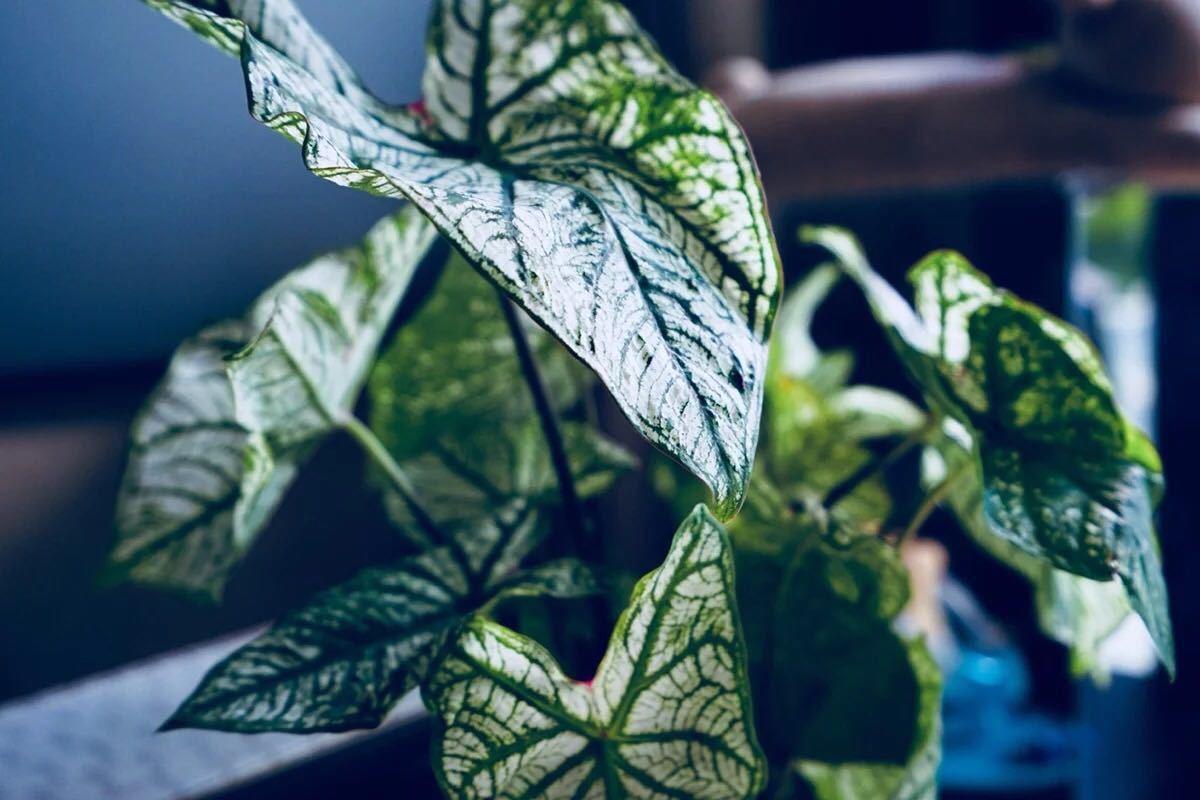
You are certainly not unfamiliar with Syngonium podophyllum (arrowhead plant); it must have been among the first plants you learned to identify. Syngonium is a perennial evergreen herbaceous plant, with the native species in emerald green, and the big green leaves on top even look a bit endearingly silly.
If it relied only on its native variety, it might have been buried in obscurity, but thanks to the emergence of horticultural cultivars, it has been able to shine brilliantly. Under human intervention, when the leaves of Syngonium appear once more, they arrive already at max level. After so many years of turnover in the green plant world, with Heuchera, Maranta, Acalypha, Coleus, and Fittonia emerging one after another, none has shaken Syngonium's status as the colorful-leafed ancestor.
It is not about having many horticultural cultivars; achieving perfection is what matters most!
There are not many horticultural cultivars of Syngonium. Unlike the ever-changing leaves of Maranta and Fittonia, it does not win by quantity but instead brings each horticultural cultivar to perfection. You will never find cultivars that cannot be told apart, causing huge harm to flower lovers with face blindness, nor will it trouble flower lovers suffering from choice paralysis.
Syngonium 'Pink Butterfly', with shield-shaped leaves, pale green, gradually transitioning from deep pink in the center to pale pink at the leaf margins.
Syngonium 'White Butterfly', with shield-shaped leaves, pale white, with green patches and markings at the leaf margins, and long petioles.
Syngonium 'Silver Leaf', with heart-shaped leaves, milky white with pale yellow on the leaf surface, green leaf margins, and long petioles.
Syngonium 'Golden Child', with arrow-shaped leaves, tender green, with irregular white patches, pale pink veins, and short petioles.
The secret to its enduring popularity still lies in knowing how to "maintain" it!
To sum it up in one sentence: the suitable temperature for Syngonium is 22-30°C; at 15°C growth is slower; below 10°C the stems and leaves stop growing. Syngonium is not cold-tolerant, so everyone should decide whether to get one based on their geographic location.
Each spring, when the temperature exceeds 10°C, new buds begin to sprout, and the growth rate of stems and leaves gradually accelerates. In summer it grows vigorously and has a high water demand, so the potting soil must always be kept moist, and frequent misting of the leaves will speed up the growth of stems and leaves - those who travel for work should ponder this point too. Simply put, that is roughly how it is; to break it down into each specific factor, you will need to read the following carefully!
"It may not be picky about soil, but you cannot fool me"
Syngonium has no particular requirements for soil; ordinary garden soil will do for growing it, but if you want it to grow better, sandy soil or loose leaf mold is better. Personally, when using soil, I deliberately added some pine bark. Syngonium's root system is rather delicate, and this greatly improves looseness and air permeability.
Although it is a shade-tolerant plant, light is equally indispensable
Syngonium is very sensitive to light. Under bright, diffused light, the leaves are larger and the leaf color becomes lighter. If the sunlight is too strong, the leaves will dry out. Under semi-shade conditions, the leaves become smaller and the leaf color leans darker. But when kept in dim light for a long time, the stems and petioles stretch out, the plant shape becomes loose, and the leaves become smaller.
When sunning it, remember to turn the pot every few days to avoid uneven growth, with one side vigorous and dense and the other side short and sparse, which would make the whole plant look very unbalanced.
Syngonium grows fast; with reasonable fertilization the leaves become even greener!
For foliage plants, fertilizer is generally nitrogen-based, with phosphorus and potassium fertilizers as supplements; for home care you can choose some compound fertilizer. Because Syngonium grows very fast, it is better to apply a light fertilizer 1-2 times a month. During fertilization, do not choose a spot close to the roots; be sure to keep it away from the roots to avoid burning them with fertilizer.
Summer is the growing season for Syngonium, requiring large amounts of fertilizer to meet its growth needs, but low winter temperatures will cause Syngonium to go dormant or enter dormancy, at which time it cannot absorb nutrients from fertilizer, so fertilization is not suitable then.
Too much water will also cause root rot - how to remedy it quickly?
Although Syngonium likes moisture, high temperature combined with high humidity and water accumulation will also cause root rot. First, pull it out roots and all, and remove the rotted roots to prevent infection from worsening.
After removal, soak the Syngonium in a 0.5% potassium permanganate solution. This not only inhibits rot but also kills pathogens and helps roots sprout. Then place it in a dark place to dry, and after the wounds heal, replant it in a pot with good drainage. Note: do not water during this period; wait until the potting soil begins to turn pale, then water a certain amount.
Is Syngonium suitable for hydroponics?
Fully hydroponic Syngonium has quite high water quality requirements; be sure to keep the water clean and clear, otherwise the stems and root system are extremely prone to rot. For household tap water, let it sit for more than 1 day before use so the chlorine in the water can evaporate. When changing the water, gently rinse the plant's root system, remove the mucus on the roots, and pick off withered and yellow leaves.
When changing the water and topping it up as usual, the water should not be too full; do not let all the roots be submerged in water, because Syngonium's roots also need to breathe, and 5-10 cm of the root system needs to be exposed to the air.
Welcome to follow Plant Fanatic - how about joining Squirrel Jun in obsessing over flowers and plants?