It looks very much like Chinese yam, is a superfood in Japan, and is widely cultivated in China yet rarely eaten there
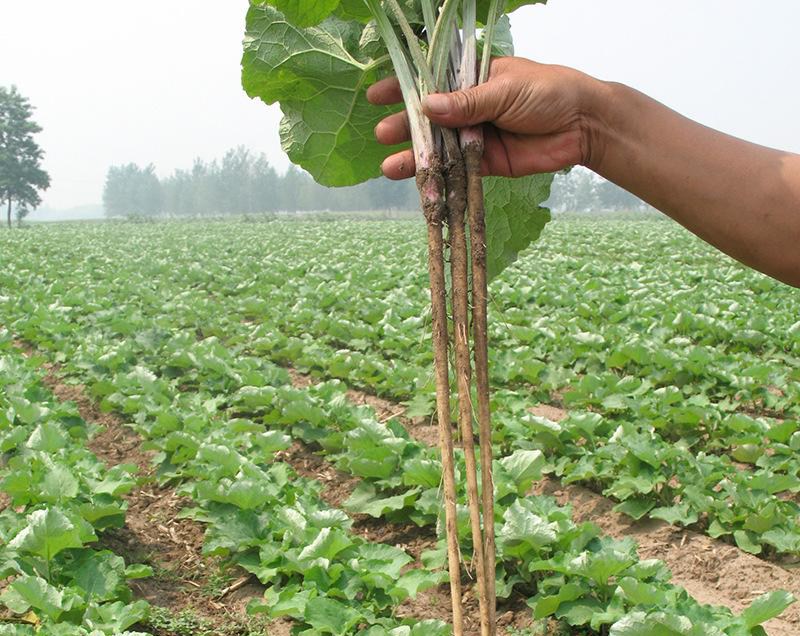
As an ingredient that is unknown in its own homeland but has risen to fame abroad and is loved by many, China cultivates it in large quantities only to export it to South Korea, Japan and other places - this is the charm of "burdock". Burdock is also called "dalizi", and there are several interesting pieces of history about burdock.
More than 1000 years ago, Japan introduced burdock from China, and after improving it themselves, it became a highly popular ingredient nationwide. Later, for a period of time, they had the people of Taiwan, China, cultivate burdock in large quantities, which also allowed burdock to take root in Taiwan, China. After many years of cultivation, it also became an important place of origin.
In China it is mainly distributed in Jiangsu Province and Shandong Province, and Shandong Province in particular has a huge planting area. Burdock's growing conditions are also rather demanding: it needs soil rich in organic matter, sufficient moisture and sufficient sunlight, and the conditions in Tainan, Taiwan, China, happened by chance to exactly suit burdock's growing conditions.
Burdock is a biennial herb. Its root is very thick and slender, fully two meters long, and the thickest part reaches about two cm. Seen from the ground it is just a clump of large leafy greens. Its root is the main part eaten, and the root is also very interesting, looking very much like Chinese yam. It produces fruit in August and September each year, and burdock is at its freshest and most beautiful at this time.
Burdock is rich in nutrients. It contains more than 150 times as much carotene as carrot, and among all root and stem vegetables it has the highest calcium and protein content. In particular, it is also rich in a variety of vitamins and minerals. For friends with the "three highs", it is also a very good ingredient; it can treat insomnia and also improve human immunity. Burdock's leaves can also have an antibacterial effect on Staphylococcus aureus.
It not only shines in various fields as a medicine; as a food therapy, a rather famous burdock soup may be something you have heard of. It was invented by Japanese people many years ago, using burdock as the main ingredient, with carrot, white radish and leaves plus shiitake mushrooms, simmered into soup in a certain ratio. This soup has good health benefits.
In Japan, burdock can be described as a "superfood" with super high popularity, and it is basically one of the everyday vegetables that every household eats. In China, however, its profile is not high, so the cultivation in the early period was all for export, and no one in China ate it. But now burdock's benefits are widely known.
Many people in China have also begun to try eating it, because it is itself a highly nutritious root and stem plant, so it is also adopted as a food therapy. In taste it is hard and crisp, and it is said to have a flavor of sweet corn.
In addition, burdock tea is also long renowned. It was once presented to the Japanese imperial family as a premium tea, and nowadays it is also becoming popular in China. Facts prove that good things will not be overlooked.
Dear friends, have you ever eaten burdock? Does anyone grow it where you are? You are welcome to leave a comment and share!