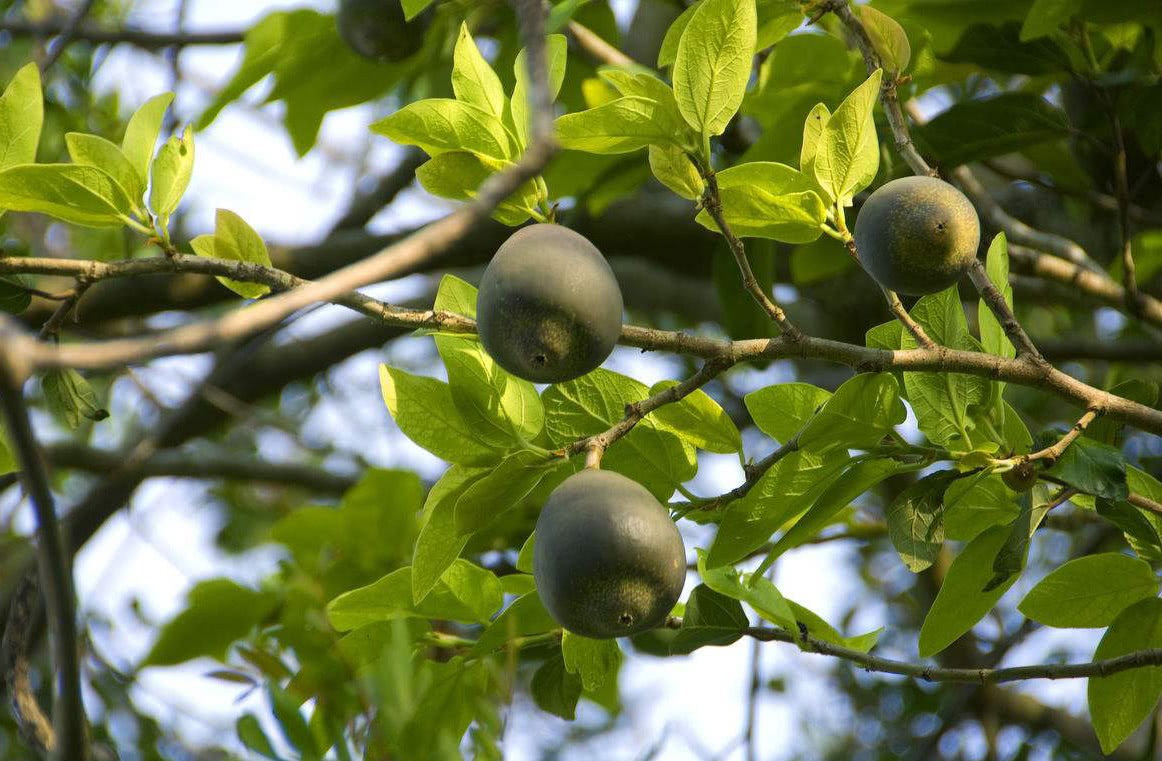
This fruit is all seeds, and it has to be pounded repeatedly until mushy before it can be eaten; it can only be found in China.
In rural areas there are many delicacies you normally cannot get, such as wasp honey, wild mushrooms, wild bamboo shoots and other natural wild foods that are both tasty and nutritious, all of which are rare finds. Not to mention that some of them are extremely dangerous to harvest, even if they were for sale, rarity makes them precious, and the price alone would make you swallow your saliva.
Rural markets mostly sell ordinary vegetables and fruits. As for precious mountain products like ginseng and cordyceps, farmers collect them together and take them to the city to sell, so even something not too expensive like wild bamboo shoots is hard to buy in some county towns, let alone those odd fruits and vegetables restricted by region and climate.
Speaking of odd, I remember a fruit unique to China's rural areas, the aiyu jelly fruit. This fruit with such a nice name is unique to China; foreigners have never seen it, and it can truly be called a rare rural treasure.
When the aiyu jelly fruit first grows, it looks like a green spore. As the fruit grows, its skin changes from dark green to light green with white spots. Although the aiyu jelly fruit does not look very pretty, it is extremely hard to eat: not only is it difficult to pick, but the process of eating it is not simple either.
The wild aiyu jelly fruit has an extensive root system, and its vines cling to other plants. It especially likes to climb tall trees; however tall the tree is, it can climb that high.
In some mountainous areas of Taiwan, China, there are many trees as tall as a dozen-story building. When farmers go out to work, they can always spot wild aiyu jelly fruits on these trees, but because the trees are too tall they dare not climb them to pick the fruit. Sometimes, with good luck, they can pick up some unrotted aiyu jelly fruits from the ground; those half-pecked by birds are taken home by farmers to extract the seeds for planting.
Like figs, the aiyu jelly fruit is an odd fruit where you can only see the fruit and not the flower. It cannot be eaten directly, because its inside is entirely seeds. What people usually eat is the "jelly" made from its pale yellow seeds; these densely packed slender seeds are wrapped in thick white flesh.
In the past, when farmers picked those just-ripe aiyu jelly fruits, they were still fairly hard. They were usually taken home and cut in half with a small knife. People removed the white flesh and dried the fruit together with the skin.
After drying, the seeds are golden yellow. When you want to eat them, take out the aiyu seeds and pound them repeatedly. After they are pounded to a mush, a sticky juice seeps out. After being left to sit for a while, it congeals into a crystal-clear "jelly", also called liangfen.
Aiyu seeds are often used to make aiyu jelly and aiyu ice. If you could drink a cup of aiyu ice in summer, it would be indescribably refreshing. Aiyu seeds can clear heat and dispel internal fire, making them a rare cooling delicacy in rural summers. The aiyu jelly fruit is very popular in China. Many foreigners, seeing it in China for the first time, think the aiyu jelly fruit can be eaten directly like an apple!
In recent years, with improved cultivation techniques, cultivated aiyu jelly fruits do not grow tangled vines like wild ones; they generally only grow to two or three meters, and their yield is getting higher and higher, so many people can eat them.
Dear friends, have you ever seen this odd fruit?