These 10 flowers can fill a pot from just one leaf - no need to spend money buying more plants
Flower lovers, here's a treat for you! Summer is the perfect season for plant propagation. The 10 flowers mentioned below by Shitou have incredibly strong propagation ability - just pick a few leaves and they will grow to fill a pot. Without spending a single cent, you can get 10 pots of beautiful, easy-to-grow flowers.
Cuttage is the main propagation method for many plants. Take the very popular succulents, for example - they basically rely entirely on cuttage propagation to produce more seedlings. There are two reasons for choosing cuttage propagation. First: cuttage propagation preserves the characteristics of the mother plant in the offspring, without easily undergoing trait changes or genetic mutations. Second: if you use seed propagation, as everyone knows, the quality of succulent seeds cannot be guaranteed, and with "fake seeds" running rampant in flower markets, who can guarantee that what you plant is what you want? Moreover, succulent seed propagation is prone to mutations, producing "mixed-up" results!
So propagating flowers through cuttage is a relatively reliable method of plant propagation. Plants like succulents, jade plants, snake plants, gardenias, camellias, kalanchoes, begonias, Christmas cacti, rubber trees, and fiddle-leaf figs all achieve new plant cultivation through cuttage propagation - it's also a broad form of plant cloning! So if you want to grow the 10 flowers below, don't go to the flower market and "waste money" - just pick a few leaves and you can fill a pot. Get moving!
1. Mother of Thousands
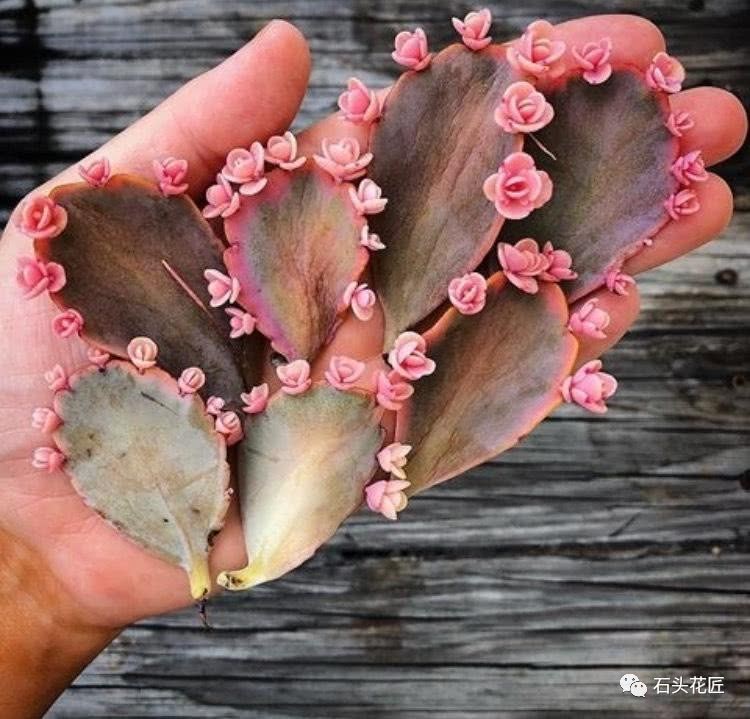
Hearing this name - Mother of Thousands - that's right, its leaves literally "take root wherever they fall." This is a succulent in the Crassulaceae family, with leaf edges covered in plump little butterfly-like growths, also called adventitious buds. As these little buds grow along the leaf, they develop many aerial roots at their base. Once they fall into a flower pot, they take root and grow into independent seedlings.
To propagate Mother of Thousands by cuttage, just 1 leaf can grow a whole pot of succulents. The cuttage method is very simple. Cut a leaf and lay it flat in a flower pot. Choose sterilized sand or a specialized cuttage medium as the substrate. Place the side with aerial roots facing down toward the ground, spray water to increase humidity, and place in a cool indoor spot. In about two weeks, all the adventitious buds will grow into independent seedlings. Continue growing them, and they will quickly fill the pot.
2. Snake Plant
Whether it's called snake plant or tiger plant, the only differences are in leaf shape and color. For propagation, both can be grown into new seedlings through leaf cuttage. The snake plant is a household flower widely loved by gardeners - easy to grow and beautiful are its hallmarks. It not only greens up your home and beautifies the environment, but also absorbs harmful substances like formaldehyde and toluene indoors. Today I'll teach you how to propagate a pot from just one snake plant leaf - no need to buy more!
Cut a snake plant leaf from the mother plant, use a blade to cut it into 10 cm segments. Be careful to distinguish the top and bottom ends of the leaf - you can mark them with a marker pen. If you plant them upside down, they won't grow new shoots! Soak the bottom end of the leaf in a 1:500 carbendazim water solution for 10 minutes, remove and let dry, then plant into a sterilized, moist cuttage medium. Place in a cool spot, and in about two weeks you'll see new shoots emerging.
Remember to sterilize with carbendazim water solution before cutting, otherwise the leaves will easily rot - not only will they not sprout, but the entire leaf will rot away. During the sprouting period, water sparingly; keeping the soil slightly dry better promotes new shoot and root growth. After three weeks, the small shoots will have grown. Transplant them into a larger pot for normal care, and you'll have a beautiful, healthy snake plant.
3. Jade Plant
The jade plant is also called "thick skin" or "pig's ear" in many places! No matter what you call it, it has one special trait - a single leaf can grow into a small plant, and very quickly! So jade plant lovers can propagate jade plants from leaves - without spending a single cent!
Jade plant cuttage is not fussy. Just remove a leaf directly from the mother plant - be careful not to damage the growth point. Then lay the leaf face-up flat on the soil surface and leave it alone. In about two weeks, you'll see small shoots emerging.
When the small shoots grow to 1 cm tall, use a blade to cut off the mother leaf, leaving the seedlings to continue growing in the pot. In about half a year, you'll see the jade plant fill the pot. Many small seedlings will grow, and you can dig them out individually for separate cultivation.
4. Kalanchoe
Kalanchoe symbolizes longevity and health, and is a must-have flowering and foliage plant for many gardeners. Kalanchoe has a very long blooming period within a year, basically flowering from December each year and continuing until August of the following year. This season is the perfect time for kalanchoe propagation - a few leaves can propagate a pot of flowers.
Many people think kalanchoe can only be propagated by stem cuttings, not leaf cuttings. How will you know if you don't try? Remove kalanchoe leaves from the mother plant, soak in carbendazim water solution for 10 minutes, remove and let dry. Place the leaf-end growth point face-down on the soil surface, cover with a thin layer of sand, spray wet, and place in a cool spot. In about a week, you'll see new shoots emerging.
5. Christmas Cactus
Christmas cactus blooms successively starting from winter each year, and by Spring Festival it's at peak bloom, adding much joy and good fortune to the new year. So every autumn, many gardeners buy Christmas cacti and wait for Spring Festival to see the flowers. Actually, propagating Christmas cactus by leaf cuttage is very simple - just insert a few leaves into a pot, and after they root and sprout, trim and re-cut them, and they'll quickly fill the pot.
Cut off a Christmas cactus leaf, cut it into small sections at the nodes, soak in carbendazim water solution for sterilization, and let dry. Plant into clean sand - note the cuttage direction here: insert the morphological bottom end of the leaf into the soil. In about two weeks, you'll see new shoots emerging from the top of the leaf.
6. Rubber Tree
The rubber tree is a woody plant with an upright trunk and large, fleshy leaves that are very ornamental. It's suitable for placement in a spacious living room and has high visual appeal! If you want to grow a rubber tree, a single leaf can produce a small plant.
Cut off a rubber tree leaf and trim the leaf tip to reduce nutrient consumption. Sterilize it the same way as for Christmas cactus. Bury the bottom end of the treated leaf under sandy soil, place in a cool spot, and in two weeks it will root and sprout. Once it grows larger, transplant it into a flower pot for normal care.
7. Tuberous Begonia
Tuberous begonia and begonia belong to the same family and genus - both are flowering plants with long bloom periods. But tuberous begonia flowers are much larger than begonia flowers, similar in size to rose blooms. A blooming tuberous begonia is very beautiful. If you like it, try propagating it from a single leaf.
To propagate tuberous begonia, cut off a leaf and soak it in a rooting powder water solution. After ten minutes, remove it and place it in clean water - the water shouldn't be too deep, just enough to cover the bottom end of the leaf. Change the water once during this period. After two weeks, you'll find roots emerging, then transplant into a flower pot for soil cultivation.
8. Camellia
Camellia is very common in southern China and is a highly popular flower. Camellias are fragrant and vibrant, with many flower colors, and are suitable for courtyard cultivation! To get camellias to produce beautiful flower colors, camellia propagation generally uses grafting and cuttage methods. Cuttage can be divided into leaf cuttage and stem cuttage.
Camellia leaf cuttage is simple to do. Cut off a leaf - be careful not to damage the sprouting point at the base. After sterilization, insert the growth point into the substrate, place in a cool spot, and in two weeks roots will emerge. After growing larger, divide and transplant for management.
9. Peperomia
Peperomia is also called the "smoke-eating ghost." If there's secondhand smoke at home, it's recommended to grow a pot of peperomia. Its fleshy leaves can absorb harmful substances like nicotine and benzene, and placing it in front of a computer can also protect against radiation. The propagation method is very simple - cutting a few leaves can grow a whole pot.
Peperomia is very easy to grow, and propagation is even simpler. Just snap off leaves directly, place them on sandy soil, water them, and keep them in a cool spot for care. Roots will grow afterward, and after new shoots emerge, cut off the mother leaf and continue growing. They can be divided later.
10. Fiddle-Leaf Fig
As a household foliage plant, the fiddle-leaf fig has huge leaves - you could say its leaves are bigger than your face - and an upright trunk. It's suitable for growing in a spacious living room and is a very simple yet elegant household plant.
Fiddle-leaf fig propagation generally uses the cuttage method. A single leaf can produce small shoots. Cut off a healthy leaf, insert the leaf end into water, and after 1 month you'll find roots growing. Later, transplant into soil for cultivation.
10 common flowers that can fill a pot from just a "plucked" leaf - gardeners who like them should give it a try! For more on flower leaf cuttage, please like, follow, and save below so you can learn to do cuttage potted plants yourself and try these "cloning machines"!
I'm [Shitou Huajiang]. Click follow, and the daily content I share will be the first thing you see!