This vegetable helps seniors live longer and kids grow stronger. Plant a few pots on your balcony, and you will have more than you can eat.
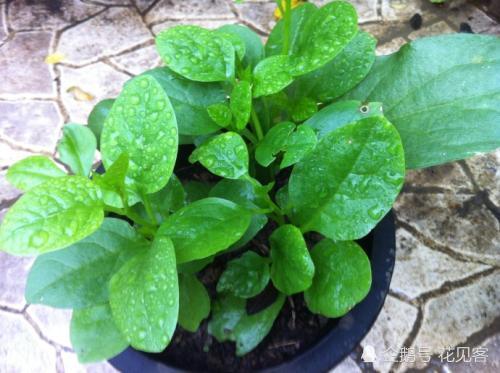
Nowadays, more and more people place great importance on health, so besides growing some flowers for viewing and to purify the air, some people also choose to grow some vegetables, which saves money on buying groceries and lets them eat pure, natural vegetables. Why not do it.
Today Hua'er will introduce a vegetable to everyone. Seniors who eat it live longer, kids who eat it grow stronger, and it also helps with detoxification and bowel lubrication. It is also ornamental in its own right and especially easy to grow.
This vegetable is Malabar spinach (Basella alba), a perennial tall herb that can reach up to 2 m at its best. Its leaves are broad, smooth and glossy, and its flowers are small, scattered like tiny stars among the foliage, giving it a distinctive charm when viewed. It is mainly eaten as seedlings, tender shoots and tender leaves. It is highly nutritious and delicious, crisp and pleasant like eating wood ear fungus, which is why it is called "wood ear vegetable".
Malabar spinach has strong vitality. When planting, you can put a base fertilizer at the bottom of the flower pot, such as decomposed bean dregs or animal manure, to increase soil fertility and let it grow quickly.
During routine care, keep it appropriately moist. Generally water every 2-3 days. In summer, when it is drier, also spray some water on the branches, leaves and surroundings to increase humidity, lower the temperature, and avoid scorched leaves, which would affect both ornamental value and edibility.
With sufficient base fertilizer, you do not need to fertilize too frequently; once every 10-15 days is enough. If the base fertilizer is insufficient, dig a few small holes around it and bury some base fertilizer. After each harvest, fertilize promptly to promote new buds, lush branches and leaves, and a faster entry into the next round of harvesting. You can apply a little more nitrogen fertilizer to promote branch and leaf growth.
That is all for the care of Malabar spinach. If fellow flower growers have other additions, you can share them with everyone in the comments section below. If you want to learn more about growing flowers, you can follow Huajianke!