Found a low-key ginseng by the ditch, Grandpa dug out the whole clump and had to rest 5 times on the way home
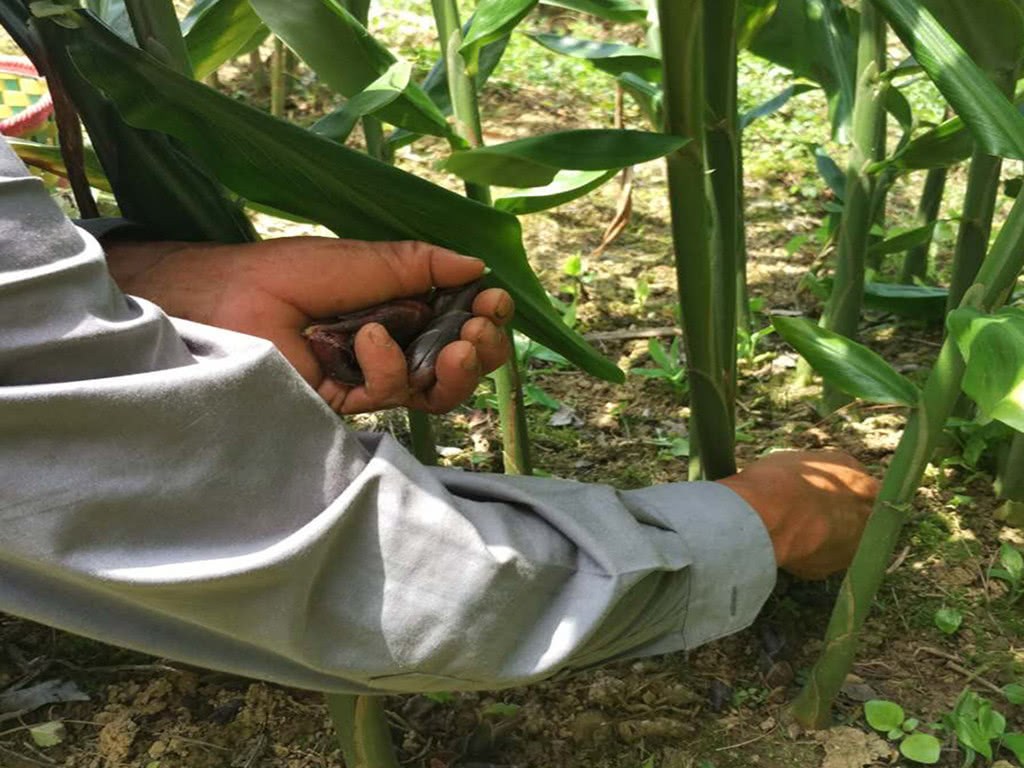
Grandpa came across this low-key ginseng by the ditch, dug out even the whole clump, and rested 5 times along the way before getting home.
Grandpa's home is in a cold, high-altitude, impoverished mountainous area, where transportation is extremely inconvenient. Normally, to buy or sell anything, you have to carry a basket on your back and go down the mountain to buy things. And so, in a place like this, although the economic conditions are not so good, there is no shortage of wild delicacies, and they are all original and natural, so you could say they are very popular with everyone.
Every year around this time, we take time out to go back to our rural hometown and visit Grandpa's house to check on her health. After all, she is 66 years old, so these past few days, taking advantage of the holiday and having some free time, we came to Grandpa's house to visit. First, to see Grandpa, and second, to look for some rural wild delicacies here at Grandpa's house. So that we could eat genuinely good things, Grandpa decided to go looking for delicacies to treat us.
So this morning, I got up very early, picked up my tools, and went into the mountains with Grandpa to look for low-key wild delicacies. Led by Grandma, we easily came upon a corn field by a ditch beside their firewood mountain plot. Grandpa, without a second thought, set down the basket and started picking, and in no time picked about a big basin's worth. Looking at such good stuff, I felt very comfortable inside; today there would be a hearty dinner again.
It turns out this thing is called Yanghe (Zingiber striolatum, a wild ginger). It is a perennial herb of the genus Zingiber, with a plant height of up to 1.5 m; the rhizome is white with a slight fragrance. The leaves are lanceolate or elliptic-lanceolate, with very sparse soft hairs to hairless on the underside; the ligule is membranous, the peduncle is long, the inflorescence is nearly ovate, the bracts are red, broadly ovate or elliptic, and the calyx is membranous; the corolla tube is white and the lobes are oblong-lanceolate. Its flavor is extremely fresh and delicious, and it is especially tasty when served as a cold dressed dish.
Yanghe has a very developed root system and is also very easy to keep alive, with no particular requirements for soil quality. But when planted in soil containing humus, its branches and leaves grow even more luxuriantly. The fruits it produces are even plumper and even more flavorful. For this reason, Grandma even deliberately cut some branches to fence in this patch of Yanghe. And she also declared: next time after picking the Yanghe to eat, she would dig it up roots and all, carry it home on her back, and plant it behind their own house, so that next year they would not have to make a wasted trip. For this, I very much approve of such an approach.
In fact, Yanghe is a delicacy that is relatively rich in nutrients. It is rich in a variety of vitamins and amino acids, and dietary fiber, and is a precious mountain treasure. Regular consumption has the effects of strengthening the body, delaying aging, and moisturizing the skin. Because Yanghe has a beautiful form, people who do not know it look at it and see the shape of corn. It even has the reputation of "Asian ginseng." Have you ever eaten such a low-key delicacy?