The top of Northeast China's Three Treasures grew a belly full of oil, and was hunted to the brink of extinction
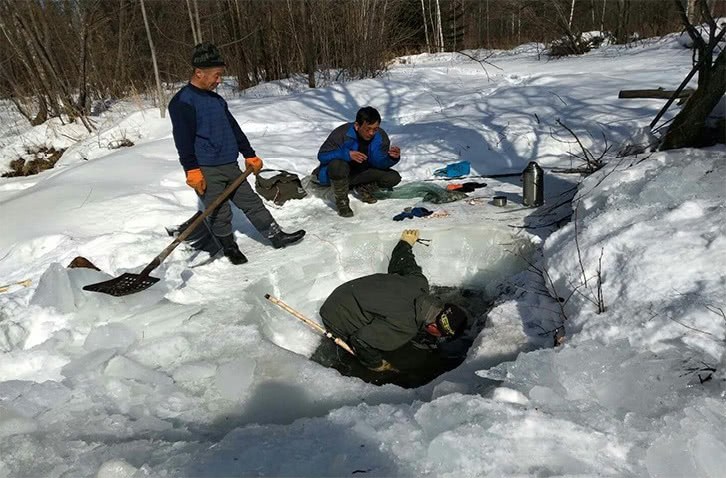
Many people have heard of the "Three Treasures of Northeast China." In the past, these three treasures were: ginseng, marten fur, and Ula sedge. With the passage of time, these three treasures gradually became three other things, and at the top of the list is the Northeast forest frog. This name may be rather unfamiliar to many people, but mention its other name, snow frog (Rana temporaria chensinensis), and probably everyone knows it.
As a tonic, the status of "snow frog" remains unshaken to this day, and the snow frog produced in Northeast China has always been the most renowned. In the Compendium of Materia Medica it is greatly praised, and it was a tribute reserved for royalty and high officials throughout the dynasties. Some people will say, isn't it just a frog? What's so special about it?
The scientific name of the snow frog is the Northeast forest frog. In Northeast China, Russia, Japan, and Korea, the forest frog can all be found. Because this forest frog has a characteristic: it hibernates for more than five months of the year, which is why it is called the snow frog.
It lives in the ice-and-snow-covered Changbai Mountain region. It is precisely because of its ability to survive in this unique environment and its tenacious vitality that it has also earned the title "crown of life." Female snow frogs begin to store up a large amount of energy after autumn to prepare for winter, so their bellies store up a large amount of oily substance, and this substance is the tonic well known to the world.
The snow frog is actually not the meat of the forest frog, but the "oil" in its belly. This oil is located in its oviduct, energy stored for breeding offspring the following year, and it is what we eat as snow frog oil. After autumn, the belly of the Northeast forest frog is full of oil, and this is when its nutritional value is at its highest.
In people's daily lives, it is believed that long-term consumption of snow frog oil can improve immunity, has effects of beautifying the skin and nourishing the kidneys and essence, is deeply loved by women, and is an indispensable tonic during confinement after childbirth.
Its nature is salty and neutral, and eating a lot of it does not cause internal heat. Research has shown that it contains large amounts of protein, amino acids, trace elements, and other active substances, making it an excellent daily tonic.
When eating it, some put the whole thing in and boil it, and there are dried products made by sun-drying the oviduct, used as medicinal material. There are many ways to prepare it as food, and it counts as an all-purpose tonic. For example, papaya stewed with snow frog has the effect of enhancing the bust and beautifying the skin; snow frog with rock sugar can treat palpitations and insomnia, cough and night sweats; lily and snow frog moisten the lungs and stop coughing; it can also be paired with peach gum, white fungus, or even watermelon.
Because the snow frog, once soaked soft and spread out, has almost no taste, and its white translucent appearance is also very attractive, and it tastes like nothing much, it goes with ordinary fruits, and can also be eaten directly with coconut milk and white sugar. Because it is itself a high-fat ingredient, it is recommended not to eat too much.
The Northeast forest frog is known not only as a tonic; it is also an expert at catching pests, and because of its large numbers it saved large areas of crops in rural areas. In addition, it can also be eaten as a meat frog, so it is an animal of great economic value. However, due to environmental destruction, large-scale human capture, and the shrinking area of primeval forest, the number of forest frogs has dropped sharply. Today the wild Northeast forest frog is on the brink of extinction and has become a nationally protected animal.
Fortunately, artificial breeding has now been achieved, and the price has gradually come down, making it a tonic that people can afford to eat.