Is your pennywort growing slowly and small? Here's one trick to make it burst into a full pot
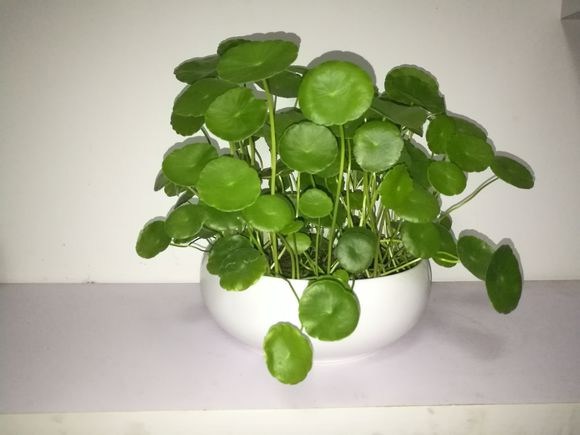
Round little pennywort, it's truly impossible not to love it no matter how you look at it. Many plant lovers enjoy keeping a pot or a tank of it at home. But some plant lovers sigh over their own pennywort: not only has it grown leggy, but it's also getting sparser and sparser. Even though it's the same pennywort, sometimes the difference really is more than just a little.
Actually, pennywort counts as one of the heavyweight champions among easy-to-grow plants. As long as you pay a little attention when growing it, you can also achieve the goal of a full pot. So today, Huahua will teach you how to make pennywort grow lush and thriving!
If your pennywort is grown in water and is growing small and sparse, and also looks especially delicate and weak, that means it's time to give it some nutrients. Because compared with soil, water has almost no nutrients, so without fuel it naturally can't grow well.
So we can add some nutrient solution to the water the pennywort grows in, which can effectively promote its growth. But don't "feed" it too much at once - if you accidentally "overstuff" it, that will ruin things. Because as long as the roots are still intact, once it absorbs nutrients it will send up lots of new shoots.
Also, if it just won't grow well in water, then we can simply switch it to soil culture. After we take the plant out, give it a trim first, and then it can be planted into a flower pot. Note that when filling in the soil, you don't need to bury it too deep - this will be more helpful for new branches to grow out.
The rice-washing water we've used can also be fermented and then used to water the flowers. For pennywort this makes a very good fertilizer, but there's one catch: it must be diluted with water, otherwise the concentration will be too high and will severely burn the plant.
When we grow pennywort, don't be fooled by its glossy green leaves - it actually loves sunlight very much. If it's kept in a shaded environment for a long time, not only will the leaves grow small and sparse, but its stems will also grow especially long, seriously ruining its looks.
So we must put it in a place with plenty of sunlight. Of course, if possible, it's best to grow it in the yard, so the leaves will grow more and more lush!