A Tree's 12-Year Growth Journey and Care Techniques: Building Branches, Defoliation, Bud Removal and Pruning
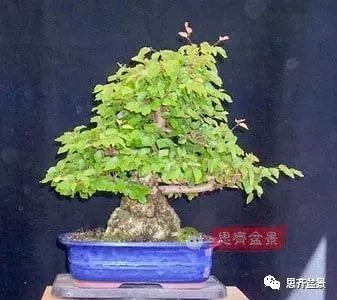
▲2006
▲This is a hornbeam specimen purchased in 2006. The transition at the base of the trunk is quite good, and the root flare is thick and stable. The drawbacks are that the transition in the upper-middle part of the trunk is less satisfactory, and the side branches are thick and straight, lacking transition and variation.
▲To solve the problem of the poor transition in the upper-middle part of the trunk, the top was cut off and a new apex was prepared to be built from scratch. Over the following years, the thick major side branches were shortened, and branches were rebuilt level by level to develop transition and variation in the branches.
▲Several years later, the new apex had gradually taken shape, and the side branches had already developed some transition, appearing more natural. Each year during the growing season, the tree was allowed to grow freely without pruning, then pruned into shape in early spring of the following year, and then left to grow out again the next year to thicken, cycling on like this. The photo above shows the tree just before early spring pruning.
▲After pruning. Some branches that still needed further development were left unpruned.
▲January 2009
▲The first branch on the right side was wired with aluminum wire to change its direction; once the direction was set, it was then cut back short to develop a secondary branch. The upward-growing branch on the left is a sacrifice branch, used to help heal a large cut on the back side of the trunk.
▲From this angle, you can see the cut next to the sacrifice branch, left after removing a large branch. The sacrifice branch can drive sap flow near the cut, speeding up wound healing.
▲The cut left after truncating the top; to the right of the cut is the new apex branch.
▲May 2009, lush with foliage.
▲February 2010
▲The branching has become further refined. Many fine twigs have grown and need pruning and wiring.
▲May 2010
▲December 2010
▲As with last year, after a year of growth, many messy branches have grown again and need pruning and wiring.
▲After pruning in December 2010
▲After pruning, the silhouette begins to show.
▲2011
▲After repotting, this hornbeam has taken preliminary shape, and the branches at all levels have gradually matured. The care from here on focuses mainly on maintaining the form.
▲May 2012
▲May 2012, summer defoliation in progress.
▲Summer defoliation is quite important for the care of deciduous bonsai. First, it allows light and air to reach the interior of the branches, so that inner branches do not wither; second, it can slow the growth of the tree, which helps in developing fine twigs; third, it also helps control leaf size. It is worth noting that defoliation must only be carried out when the tree is healthy and vigorous.
▲After defoliation is complete.
▲Two weeks after defoliation
▲Two weeks after defoliation, the inner buds sprout first. This is one of the benefits of defoliation just mentioned.
▲Inner buds sprout first
▲Four weeks after defoliation, the inner buds are the first to open leaves.
▲Inner buds sprout before outer buds.
▲The top
▲Unexpectedly, the top, which has apical dominance, still sprouts more slowly.
▲Six weeks after defoliation
▲Six weeks later, the outer buds only gradually open their leaves.
▲Eight weeks after defoliation
▲Some weak branches wither
▲Experience has proven that the hornbeam is not well suited to complete defoliation. Complete defoliation easily causes some weak branches to die. It is best to carry out partial defoliation, removing leaves only from strong branches. This allows targeted control of the tree's balance of vigor. In the care that followed, partial defoliation every summer became a fixed routine.
▲May 2013, side view.
▲November 2014
▲2015, on display.
▲May 2016
▲May 2017
▲May 2017, after partial defoliation.
▲This time only about half the leaves were removed. That autumn, some inner branches were found to have died from lack of light. It seems the defoliation was not extensive enough; the intensity of defoliation should be increased the following year.
▲Early spring 2018
The hornbeam has a very strong ability to sprout buds. For bonsai styling, this is a nice advantage. However, buds that are of no benefit to the styling need to be removed as early as possible.
The hornbeam forms buds at the base of the trunk, at the base of branches, and at sites where callus tissue has formed. If these buds are not removed in time, and are cut off only after they have formed branches, more callus tissue will form at the cut, and even more buds will form the following year.
▲Buds on the trunk
Observe frequently during normal care, and as soon as useless buds are found, rub them off promptly.
▲Buds at the base of a branch
▲Cut off with scissors
▲After cutting off
▲Buds on the underside of a branch
Buds of no benefit to the styling also include buds on the underside of branches. Generally, we rub off the buds on the upper and lower sides of a branch and keep the buds on the left and right sides.
▲Also cut off with scissors
▲After cutting off
▲The wound left after removing the bud
▲Apply healing agent to seal the wound
When caring for trident maple (Acer buergerianum), we also need to carry out bud removal. The trident maple often grows multiple buds at the same spot; if these buds are allowed to grow, a lump will form at the branch site, affecting the smooth flow of the branch line. We generally remove the buds on the upper and lower sides of the branch before they sprout, keeping the buds on the left and right sides.
▲May 2018, after partial defoliation.
▲Learning from last year's lesson, this year's defoliation was more extensive. Most of the leaves were removed.
▲July 2018, two months after defoliation, the tree quickly regained vigorous growth.
▲Elongated new shoots
▲Judging from the leaf size and the growth rate of the new shoots, the tree is quite vigorous. At this point, pruning can be used to control the growth a little.
▲Shorten the elongated new shoots, leaving two leaves.
▲July 2018, after appropriate pruning.