What should I do if the roots of a potted Zamioculcas zamiifolia (money tree) are rotting?
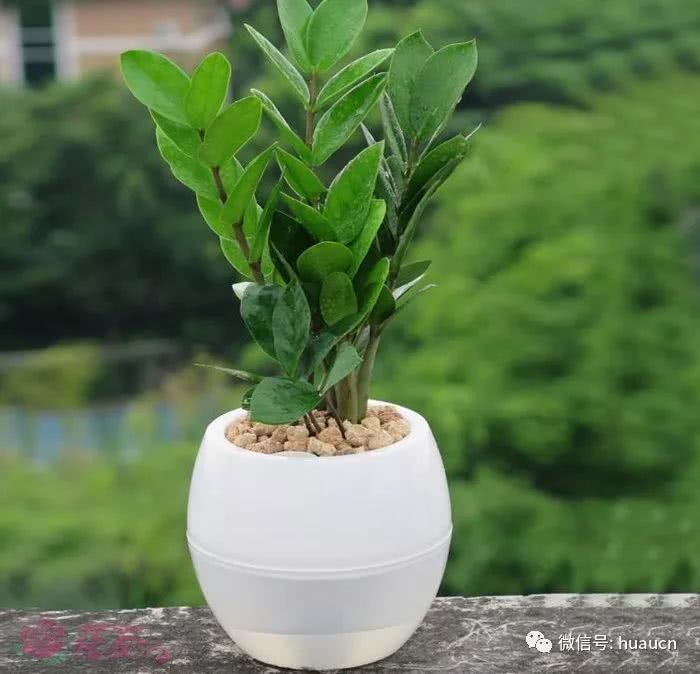
The money tree not only carries an auspicious meaning, but also has high ornamental value when grown as a household potted plant. However, many people discover during care and management that the roots of the money tree are rotting, which not only makes it lose its due ornamental value, but also affects the plant's growth. So, what should be done when the roots of a money tree rot?
Now that the problem has appeared, we need to find a way to solve it as quickly as possible, hoping to save it back before death occurs. However, we first need to find the real cause of the root rot through investigation, and only then can we take targeted remedial measures and treat the root cause, so the plant can return as quickly as possible to its former glory.
Money tree: the money tree's habits, propagation and cultivation care
Everything has a cause and effect, and the same is true when root rot occurs in a potted money tree. Below, the editor will share with you, based on personal potted growing experience, the causes of root rot in money trees and the measures for dealing with it.
The money tree has the characteristic of liking a warm, humid growing environment with ample light, so on one hand we need to investigate according to the plant's growth habits, and on the other hand we also need to look for reasons according to the symptoms of poor growth shown by the plant. Practice has found that root rot in money trees is mainly caused by the following aspects. Therefore, our investigation should focus on these aspects:
1. Overwatering
For most potted flowering plants, whether they prefer moisture or dryness, they are often afraid of overwatering, because when the root system is submerged in water for a long time, it inhibits root respiration and also hinders normal absorption activity. So root rot occurs. The money tree itself does not like moisture, so its water tolerance is naturally poor. If poor drainage in the pot and poor soil permeability cause water accumulation or excessive moisture, root rot is unavoidable.
2. Excessive fertilization
Fertilizer damage is another important cause of root rot in potted flowering plants. Even for plants that relatively prefer growing in fertile soil, once they encounter excessive fertilization, their roots are easily burned, resulting in fertilizer damage. Especially when they take in liquid fertilizer or raw fertilizer with too high a concentration, it will cause huge damage to the plant's root system, and fertilizer damage is unavoidable. Therefore, we need to carefully review whether our usual water and fertilizer management has been scientific and reasonable.
Money tree: what feng shui applications does the money tree have
3. Invasion by pathogens
Although the money tree relatively likes a warm, moist potting soil environment, if the growing space is poorly ventilated, a growing environment that remains hot and humid for a long time easily breeds pathogens. If the growing conditions are not improved in time, pathogens can invade through the plant's root system, and even stems and leaves, causing growth problems such as root rot. Therefore, when growing a money tree in a pot, it is very important to provide it with a well-ventilated growing space.
The above three aspects are the most common triggers for root rot in money trees. During usual care, everyone needs to check the plant's growth status in a timely manner and also do a good job in managing the plant. Once root rot occurs, it indicates that the plant's growing environment has been damaged, whether by human factors or natural factors, but no matter which cause it is, we should promptly change the current situation and apply remedial measures, so the plant can be saved from its diseased state as early as possible.
In response to root rot in money trees, we can usually take the following measures. As long as everyone rescues it in time and uses the correct methods, it should be possible to save it back, thereby minimizing losses. Usually we can take the following methods for remedy.
In most cases, root rot in money trees is caused by improper watering, generally overwatering. So we should immediately take drainage measures for it. If the root rot is not serious, usually we open up the potting soil, expose grooves, and at the same time improve ventilation, strengthen air circulation, and drain excess water as quickly as possible.
Money tree: prevention and control of common pests and diseases of the money tree
If water accumulation in the pot is relatively serious, the potting soil is too moist and not convenient for drainage, and the degree of root rot is relatively deep, then it is recommended to take the plant out of the original pot, rinse off the soil clinging to the plant's roots with water, and then cut off the rotten parts of the root system and the old, weak, diseased and thin roots. The purpose of cutting off rotten roots is to prevent pathogens on the rotten roots from continuing to spread and infecting healthy roots; and the purpose of cutting off old, weak and thin roots is that these roots have basically lost their absorption capacity, and cutting them off can effectively stimulate the plant, thereby prompting it to sprout new roots and improving the overall absorption effect of the root system.
After finishing root pruning, in order to thoroughly eliminate pathogens, it is recommended to use drugs such as carbendazim to sterilize and disinfect the roots; if you want new roots to sprout as soon as possible, you can also apply some rooting powder or rooting agent to the roots. Finally, replant the plant in a pot. But later on, daily cultivation and care work still needs to be done well.
If root rot is caused by excessive fertilization, we can first flush the pot with a large amount of water. The water will dilute the excess fertilizer accumulated in the soil, and then it will flow out through the drainage hole at the bottom of the pot. If the root rot is not serious, there is no need to repot or change the soil; if the root rot is serious, the handling method is similar to the above method for root rot caused by overwatering.
After root pruning, sterilization and disinfection are likewise needed. If carbendazim is not available, we can also use charcoal powder or plant ash instead. In short, disinfection and sterilization are an indispensable step. Only by thoroughly eliminating the pathogens can the plant possibly return to a normal growth state.
·END·
An interactive platform for flower growing, flower planting and green plant enthusiasts to communicate, show off and brag. An online home for sharing flower cultivation methods and household flower growing tips. A fresh flower subscription platform.
Fresh flowers: hyacinth|stock|plum blossom|carnation|camellia|kalanchoe|jasmine|gardenia|peach blossom|balloon flower|osmanthus|calla lily|lily|forget-me-not|clivia|apricot blossom|honeysuckle|aglaia|peony|sunflower|chrysanthemum|serissa|crown of thorns|tulip|narcissus
Green plants: poinsettia|money tree|pothos|spider plant|alocasia|lucky bamboo|asparagus fern|aloe|English ivy|anthurium|monstera|bougainvillea|silk tree|peace lily|schefflera|boxwood|sago palm|rubber tree|maidenhair fern|snake plant|
huau.cn
……
Search the public account "Huayou" or "huaucn" to get the latest information
Business cooperation, promotion. Please contact WeChat private account:ihuaucn