Timely chemical growth control for potatoes: topping and removing flowers at the flowering stage is what enables increased yield
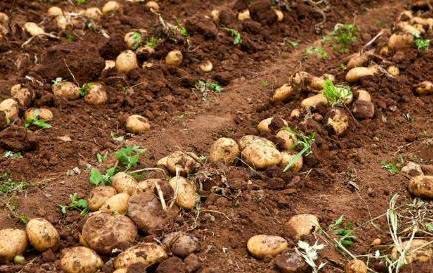
Before the 16th century, potatoes were grown as ornamental plants because of their beautiful flowers. Only later did the French discover that they were edible, and that is how they spread. The flowering stage is the most important time in potato growth, because this is when the potato tubers (that is, the edible potatoes) begin to accumulate starch and gradually swell.
Below we introduce this from two aspects: the routine management of potatoes at the flowering stage and some less commonly used, more special management measures.
Routine treatment of potatoes at the flowering stage
First, intertillage and earthing up. The height of the earth piled up should reach more than 10 cm. Generally, earthing up is done twice, once at the bud stage and once at full bloom. If labor is plentiful, a single high earthing up can be used. Earthing up is very important for potato growth, so it must not be omitted.
Second, water and fertilizer management. Fertilizing without proper water management is just playing dirty. During the potato flowering stage, watering and timely supplementation of nitrogen, phosphorus and potassium fertilizers have a huge effect on the growth of potato tubers. Field watering is best done in small amounts many times; never flood the ridges with large amounts of water. Fertilization should focus mainly on phosphorus and potassium fertilizers, and can be done by foliar spraying or field topdressing.
Third, topping and removing flowers. What is harvested from potatoes is the tuber (stem tuber). Removing the flowers in time allows more nutrients to be concentrated in the tubers, which helps to a certain extent with increasing yield.
Fourth, pest and disease control. The main potato pests are aphids, ladybirds and underground pests, which can be controlled by spraying trichlorfon or treating seeds with it. The main diseases are bacterial diseases caused by high temperature and high humidity, which can be prevented with copper sulfate.
Special management measures for potatoes at the flowering stage.
First, chemical control, mainly to prevent potato plants from growing excessively, that is, the so-called growing only in height and not in yield. Paclobutrazol can be used for control, and chlormequat, uniconazole and others can also be used. Use whichever you like, as long as you do not overdose.
Second, temperature control. This management only applies to greenhouse cultivation. Around March, the temperature in a greenhouse for potatoes can be adjusted so that the potatoes grow at the optimum temperature. The standard air temperature is 16-18°C, and the standard soil temperature is 18-21°C. At night, the temperature can be lowered appropriately to favor starch accumulation.
Third, spraying potassium permanganate. Potassium permanganate has a certain preventive effect on viral diseases.
The flowering stage is an important period that determines potato yield. Water, fertilizer, earthing up, disease control and topping are all indispensable. Special management measures can be chosen according to growth conditions and environmental conditions. If grown in a greenhouse, harvest can be moved earlier to the end of April or early May, which can fetch a good price. If grown in open fields, harvesting in June can achieve a relatively high yield.
The above comes from Kexue Xingnong.