Corn detasseling can increase yield, so why do so few people actually use it?
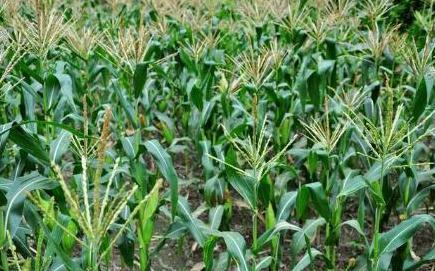
Detasseling is also a commonly used technical measure in agricultural production, especially in seed production; besides that, detasseling is also applied to increase corn yield per unit area. Detasseling sounds simple, but it actually requires a certain level of operational skill, and different detasseling operations need to be adopted for different purposes. Below is a brief introduction, hoping everyone can gain a relatively intuitive understanding.
Detasseling for breeding
Most people know that corn seed is hybrid seed, but probably not many friends clearly understand how hybrid seed comes about! In corn hybrid seed production, three methods can be used: chemical emasculation, the three-line system, and manual detasseling.
Chemical emasculation means using chemical reagents, spraying them on the stamens to cause male pollen abortion, thereby achieving the purpose of hybrid breeding.
The three-line system is also a commonly used seed production method in many crops. For example, Yuan Longping's hybrid rice uses this method. The key is to use the male sterile line, the maintainer line, and the restorer line to produce seed. The maintainer line is used to maintain the male sterile line, while the male sterile line is crossed with the restorer line to produce hybrid seed.
Neither of the above two methods requires manual detasseling, because the crops to which these two methods are applied are basically crops for which manual detasseling is extremely difficult. However, there is also a third method in breeding, which is manual detasseling. Take corn, for example: at most there are only about four thousand plants per mu, and each plant in the field has only one ear, which makes harvesting convenient; the stamens are located at the top, and the male and female parts are separate, making manual detasseling very convenient.
Below is a brief introduction to the detasseling operation: the male and female parents are planted in alternating rows. In the seed production field, by using the staggered flowering period, the female ear rows, that is, the maternal parent, are sown a little later, while the paternal parent is sown earlier so that when the maternal rows flower, they can receive pollen from the paternal rows in time. At the same time, note that when the maternal rows are about to tassel, the stamens need to be removed in time.
Detasseling for increased yield
Regarding the application of detasseling for increasing yield, Science Xingnong has also introduced it before, and here it is introduced again for friends who have not seen it. The purpose of detasseling is to reduce as much as possible the nutritional consumption of the plant's stamen reproductive growth, thereby achieving the goal of increasing yield and income. However, detasseling is indeed quite labor-consuming. Research shows that the yield increase from detasseling is around 10%, that is, the yield increase per mu is about 100 jin. Referring to the current corn price, that means an income increase of one hundred yuan, but the labor cost consumed is more than that, so to this day this technique has still not been applied in agricultural production.
The key to increasing yield through detasseling lies in removing only the stamens without damaging the leaves and affecting photosynthesis. The timing is crucial. If you choose to detassel the entire field, then you must ensure that after all the corn in the field has completed pollination, the corn stamens are quickly removed. However, this operation is still relatively difficult, so its operability in production is not very high. Most commonly, alternate-row detasseling is used, and the stamens can be removed when tasseling is about to occur.
Detasseling in the field is actually not difficult. The key is to choose the appropriate period and proper technical operations according to the purpose. As long as these tasks are done well, I believe you can do it too. Here, a few words for friends interested in detasseling for increased yield: it has scientific research significance, but its practicality is really not high.
This is Science Xingnong. You are welcome to add a follow, and let us grow knowledge together.