Fertilizing Yew This Way Can Make Its Green Leaves Lush and Its Branches Full of Red Berries
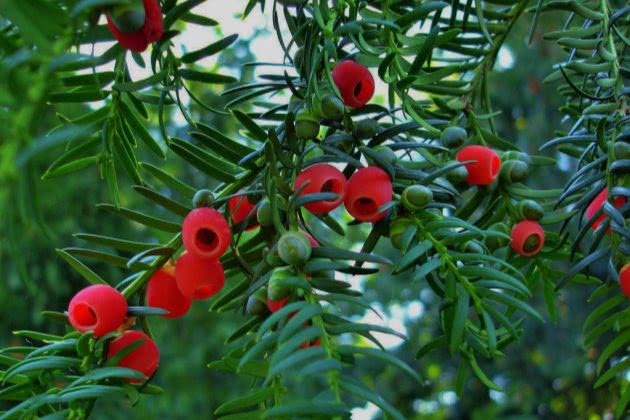
The yew is one of the more popular bonsai plants grown indoors in recent years. Leaving aside whether the yew really has good anti-cancer effects, as an excellent plant that stays evergreen all year round and is relatively easy to shape, its rise in popularity is also obvious!
The yew likes to grow in neutral or slightly acidic soil. It basically cannot survive in alkaline soil, but we can adjust the soil artificially so that it can grow in regions with slightly alkaline soil, such as the south and the north. So how should the yew be fertilized when it is being grown? Today Hua'er Gu will introduce the yew's fertilizing methods to everyone!
Yew fertilization can be divided into growth-promoting fertilizers and regulating fertilizers. Growth-promoting fertilizers are those that promote thick, strong roots and stems and lush branches and leaves, while regulating fertilizers are mainly used to satisfy the yew's need for adjustment of the soil environment so that it stays in the best growing environment.
1. Growth-promoting fertilizers
Generally speaking, the purpose of fertilizing the yews we grow is mostly to make them grow lush branches and leaves. To promote their growth, we can use a nitrogen-phosphorus-potassium compound fertilizer with relatively balanced nutrient content. Compound fertilizer can meet most of the yew's needs during its growing period. In addition, before the yew's flowering and fruiting period, we can appropriately add some phosphorus and potassium fertilizer, which can strengthen the plant's constitution, reduce the harm of pests and diseases, and also promote more flowers and more fruit! We can also use potassium dihydrogen phosphate as a foliar fertilizer for spraying, making the leaves emerald green and glossy, which can meet the plant's growth needs to a certain extent.
In addition, we can also use homemade fertilizer cake water or rice-washing water, fully fermented and then diluted with water as organic fertilizer for watering, which can also meet the various needs of the yew's daily growth. We can also use common farmyard manure; animal droppings, after being fully dried and disinfected, can be shallowly buried or deeply buried in the soil as a base fertilizer, which can promote strong branches and leaves in the yew.
2. Regulating fertilizers
The common regulating fertilizer is ferrous sulfate. Ferrous sulfate can increase the acidity of the soil and can be used in regions with slightly alkaline soil, such as the north, to adjust the soil's pH and meet the growth needs of some plants that like acidic soil. It can avoid problems such as yellowing leaves, weak and thin growth, and stems that do not grow, which are caused by slightly alkaline soil. In addition, it also has a very good preventive and control effect on iron-deficiency leaf yellowing in yews.
3. Fertilizing techniques
Generally speaking, when we fertilize the yew, if it is a foliar fertilizer, we mostly use the method of diluting it with water and spraying. Compound fertilizer can generally be shallowly buried in the soil, digging and shallowly burying it around about 5-10cm from the main trunk, or it can be added to water, fully dissolved, and then poured on. Regulating fertilizers such as ferrous sulfate and fertilizers with volatility are generally used by diluting with water and pouring.
Fertilizing is generally done in the evening, following the principle of applying thin fertilizer frequently, reducing the amount of fertilizer as much as possible to prevent fertilizer damage caused by using too much fertilizer. In summer, it is generally not recommended to fertilize in the morning, to prevent too-rapid evaporation from making the fertilizer solution too concentrated and burning the roots, which can cause problems such as dry and withered yew leaves.
The above is a brief introduction to yew fertilizing techniques brought to you by Hua'er Gu. If you also like growing flowers, then follow Hua'er Gu!