What should you do when succulents have filled the entire pot? Choose the right season and tidy them up this way
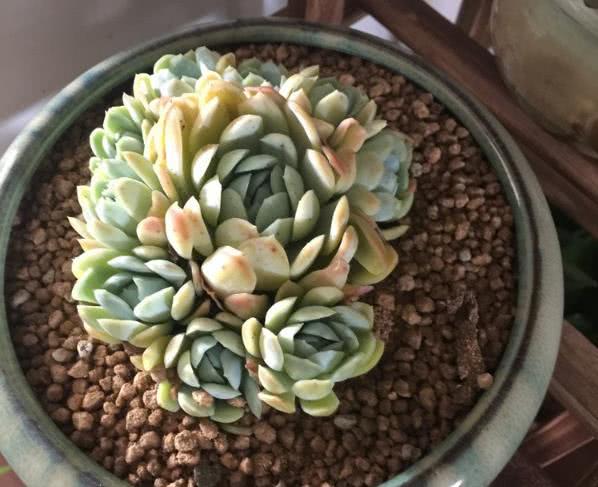
There are many varieties of succulents, and some grow relatively fast, filling the entire pot within a few months. At this point we also need to repot them, switching to a slightly larger pot so the succulents have enough space to grow, which also makes watering easier and helps them grow better. Generally speaking, the best time to repot succulents is in spring and autumn, when the temperature is suitable and they settle into their new pots fairly quickly after repotting. But if black rot strikes in other seasons, even if the environment is not ideal, we still have to repot, otherwise there will be a great many losses among the succulents. When you run into these situations, did you repot your succulents in time?
Repotting succulents in spring and autumn helps them adapt to the new environment. Generally speaking, repotting once every two years is enough. If some succulents show root rot, emergency treatment is also needed. Stop watering a few days before repotting. When repotting, shake off the soil completely, treat the roots, and cut off the roots that are in poor condition while keeping the sturdy ones. Washing the roots and trimming the roots are equally important. The purpose of washing the roots is to remove residual bacteria from the roots. Although it cannot be cleaned completely, this step should still be done. Then use scissors to trim the dried-out, tangled, broken roots, because dead and withered roots cannot absorb nutrients and, on the contrary, they also hinder the normal life activities of the succulent. Trim until only the main roots remain.
Steps for repotting succulents: Take the succulent out of the original pot and soil. First loosen the original potting soil, then slowly take the succulent out. If the original potting soil is relatively hard and hard to loosen, you can take out the whole pot of soil, then slowly loosen it and separate out the root system of the succulent. Rinse the roots under running water: after taking the succulent out, rinse the roots under a tap, but be careful that the water flow is not too strong, so as not to damage the succulent's roots. If you find that part of the root system has died, use scissors to cut off the rotten roots. Root trimming: if the succulent has been growing for a relatively long time, the root system may already have grown very messy, so when repotting we need to trim it again, which also helps the succulent's future growth.
The way to tell whether the roots have resumed growth is to hold the stem with your hand and gently lift the plant to feel whether it has a slight "grip" on the soil, which lets you judge whether the roots have taken hold. But do not use too much force and pull the plant out. Old leaves that fall off after their nutrients are used up have basically turned into a piece of kraft paper. After old leaves soften and dry out, you do not need to pick them off in advance; once the nutrients are completely used up, they will fall off on their own. If you pick them off before their nutrients are fully used up, it is equivalent to speeding up the fall of another leaf. They all fall off in order.
Do succulents need watering after repotting? Whether to water after repotting mainly depends on two situations. On one hand, if the succulent was planted with some of its original soil around the roots, there is no need to water immediately after planting; after planting, it can be placed indoors in a sunny, ventilated spot, which helps it resume growth, and after 3-5 days water it thoroughly. On the other hand, if the succulent was planted without soil, that is, planted bare-root, water it thoroughly 5 hours after planting, and place it indoors in a ventilated spot, which helps it resume growth. After repotting, succulents should not be exposed to the sun for a while, to prevent dehydration and death.
This is a gathering place for succulent lovers, sharing succulent care tips. Welcome to follow and exchange ideas.