This fruit is commonly known as the "fake lychee". Its taste is not as good as that of the lychee, yet it sells for 50 yuan per jin, and few people have ever tasted it.
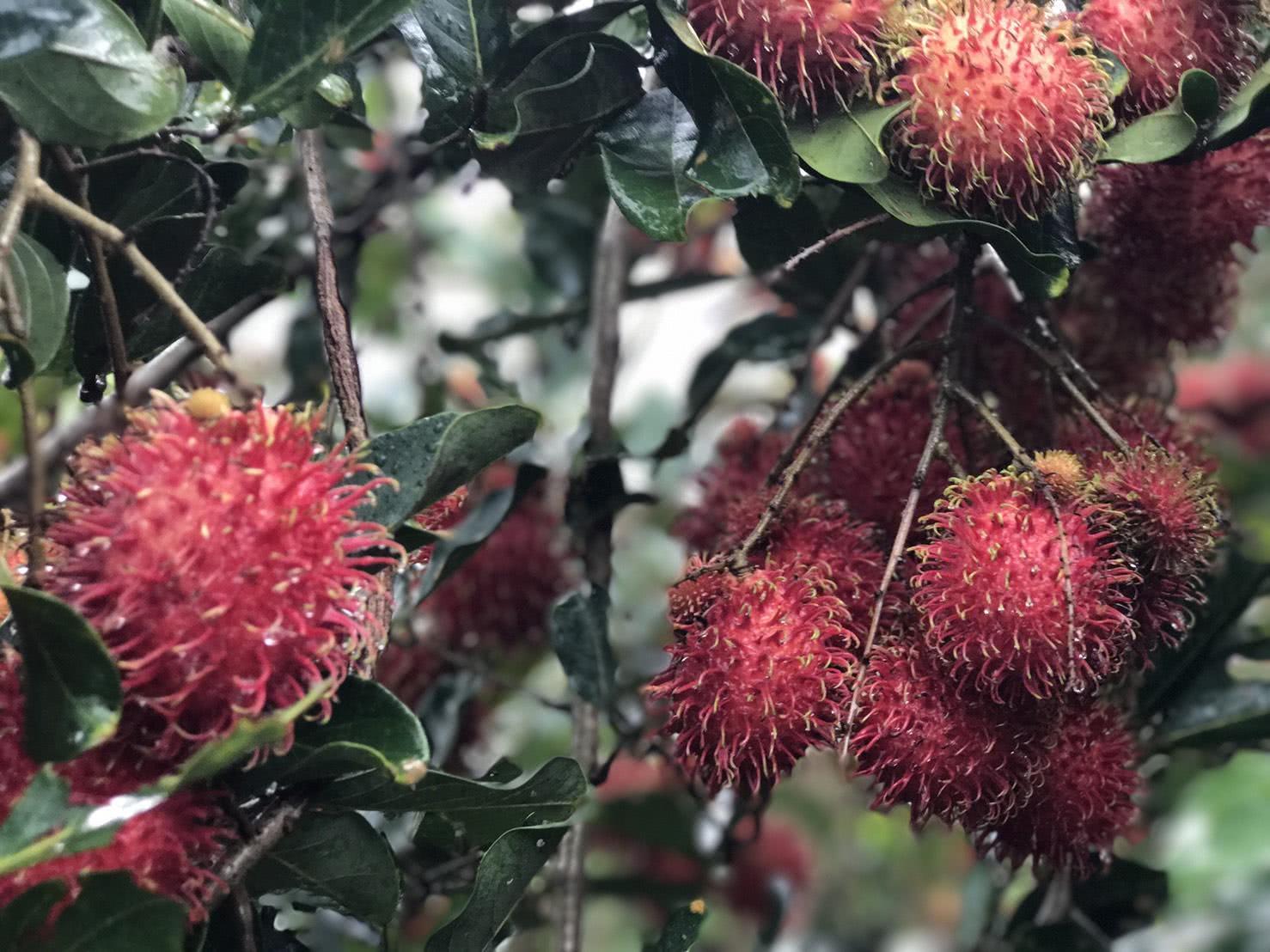
I believe that those of you who grew up in the countryside have seen all kinds of plants and fruits, because the unique geographical environment of rural areas allows some fruits that are rarely seen in cities to survive and even flourish. Today, the editor will introduce a rural fruit that is rarely seen in cities - rambutan. Rambutan is also known as hairy lychee, red hairy gall, and so on. Its appearance closely resembles the lychee, except that its surface is covered with a thick layer of hair, so it is commonly known as the "fake lychee".
03:12This fruit was not very common in rural areas before either, and is distributed only in parts of Hainan, China. Because this fruit is a tropical fruit originating in Southeast Asia, the climate in most parts of China is not very suitable for growing it. At the same time, it prefers high temperatures and humid environments, as well as low-altitude environments, so it is only distributed in small amounts in the Hainan region of China.
Although rambutan closely resembles the lychee, its nutritional value is no less impressive than that of the lychee. Its extremely high iron content has made this fruit widely sought after abroad, and it also has a certain beauty effect, with beneficial effects on hair and skin. It also contains many vitamins and various minerals, making it a fruit that can be called highly nutritious.
In the past two years, China's cultivation of rambutan has been quite successful, resulting in the appearance of quite a few rambutans on China's agricultural market, and this fruit has gradually entered people's view. However, because rambutan is a fruit with very high economic value, not only can its fruit be eaten, but the fruit tree can also serve as a tropical tree for people to admire.
At the same time, the growing conditions are very demanding, which has driven the price of rambutan higher and higher. Even though the market has gradually become saturated in the past two years, the price is still several times that of ordinary lychees, reaching 50 yuan per jin. But even in the high-end market, this fruit is not as popular as the lychee. What is the reason? It is actually just one point: the taste is not very good, and the texture is far inferior to that of the lychee.
Because rambutan closely resembles the lychee in appearance, it is inevitably compared with the lychee. Most people believe that the taste of the lychee is far better than that of rambutan. Rambutan tastes somewhat sour, and its flesh is also a bit hard and not easy to peel off. It does not have as much juice as the lychee, and it is not as sweet as the lychee either.
Like the lychee, rambutan is a tropical fruit, and eating too much of it easily causes internal heat, so it is not advisable to eat too much at one time. It is precisely for these reasons that rambutan is not widespread in China, and therefore few people have ever tasted it.
Dear readers, have you ever eaten rambutan?