Fuchsia hard to grow? The master teaches you care tips
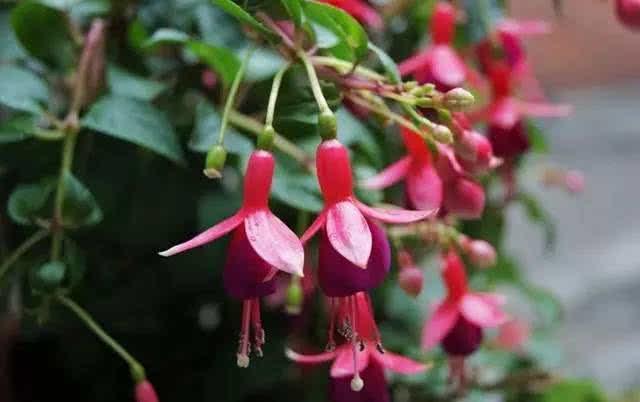
Fuchsia is often also called lantern flower, because its flowers are quite special, similar in shape to lanterns. When growing, it can be cultivated either in the open ground or in pots, and can also be hung in corridors or on supports for cultivation. It is a very good indoor ornamental plant. However, many friends have reported that fuchsia is hard to grow, because they have not grasped the plant's growth characteristics. So which aspects exactly need attention?
03:121. Light and temperature
Fuchsia is not suitable for growing under full sun conditions, and is suited to growing and developing in semi-shade. If placed indoors for cultivation, it needs to grow in a cool, ventilated environment. Especially at the seedling stage, it must not receive a large amount of light, otherwise the plant's growth will be seriously hindered.
When the ambient temperature exceeds 28 degrees, fuchsia begins to enter a semi-dormant state. At this time the plant's growth rate will clearly slow down. If it stays at this temperature for a long time, leaf drop, leggy branches and other conditions may also occur. So maintaining a suitable temperature range is very important. A temperature within 18-25 degrees is most suitable for fuchsia's growth.
2. Soil
Soil is another aspect that is easily overlooked by everyone. Often the place where many friends fail in cultivating fuchsia is that the potting soil was not chosen well. Usually sandy soil or garden soil is chosen as the main potting soil for fuchsia, then supplemented with an appropriate amount of leaf mold or river sand soil. To ensure the soil's fertility, a small amount of sufficient base fertilizer is also often mixed into the soil. At the same time, the soil of the plant must be changed every spring, otherwise the plant's new branches and leaves will find it very hard to grow robustly, and phenomena such as fragile branches and lignification often occur.
3. Water
If you want to grow fuchsia well, the watering requirements are rather strict. The potting soil should not be too dry or too wet. If too dry, it easily causes the leaves to wither; while too wet soil easily causes root rot. In spring and autumn, watering once every 2-3 days is enough. It is better to keep the potting soil relatively dry than to water excessively. Even in hot periods, the watering frequency can be more frequent, but the amount of water should not be increased. And in the dry, cold winter, you can almost avoid watering altogether.
4. Nutrients and pruning
Every year from February to April is the time of vigorous growth for fuchsia. During this period, the amount of fertilizer can be appropriately increased, with topdressing about once every 12 days. The choice of fertilizer is also relatively important, mainly organic fertilizer based on nitrogen and phosphorus fertilizer. While fertilizing, a sufficient amount of water must also be added to dilute the fertilizer's concentration.
In order to enable the plant to bloom smoothly again the following year, a certain amount of pruning must be done after each flowering. Besides cutting off the remaining residual branches and spent flowers, the branches must also be pruned to a certain extent, such as long branches, dead branches and so on, to promote the growth and differentiation of new branches.