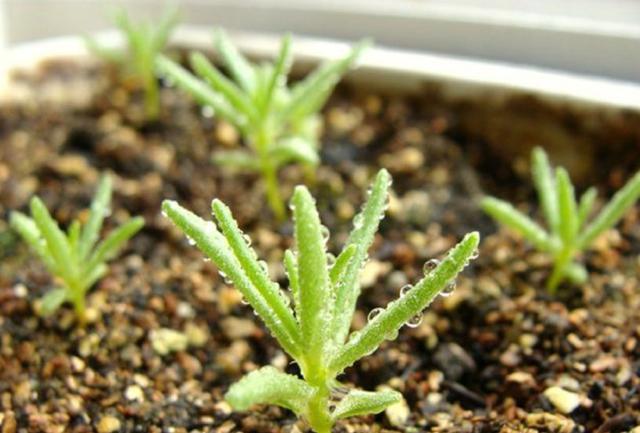
No need to buy moss rose (Portulaca grandiflora) - Mom just snaps off a stem and sticks it in the soil, it sprouts in 7 days and looks like this after 30 days
 03:12
One day, strolling around downstairs in the residential compound with Mom, we saw the moss roses blooming beautifully along the roadside, and Mom got a little selfish idea, saying she wanted to snap off a few plant stems to take home and grow. I was about to tell Mom that doing so shows no civic-mindedness and that damaging the flowers and plants is even worse, and that we could just go buy some at the flower and bird market. But before I could finish my sentence, Mom had already snapped off several moss rose stems. Then Mom said dismissively, it's just a few moss rose stems, this plant has already overflowed its pot, I'm helping divide the pot so the moss roses grow better, no need to waste money. With a mom like this, I had no choice but to let her bring the moss rose stems home.
I thought the moss rose stems Mom picked and brought home could never survive being stuck into a flower pot. But who knew that after a week, the moss roses really grew new shoots and even opened small flowers; looking at the little petals, in all colors, they were like tiny peonies, very pretty. Mom said that actually the moss rose is very easy to grow, and as long as you pay attention to some basic requirements, getting moss roses to overflow their pot is very easy.
First, the moss rose cutting method. When snapping off moss rose stems, it's best to choose the long-rooted kind. Stick the plant stems into a flower pot with no drainage hole at the bottom, and the cutting depth should preferably be 3 cm. After cutting, place the flower pot in a sunny, well-ventilated spot. The moss rose is a plant that loves sunlight, and full sun suits it well for growing. Also, since sunlight makes water evaporate quickly, you need to keep the soil moist. After waiting a week, the moss rose will take root and sprout.
Second, the most noteworthy thing in moss rose care is keeping the soil moist, and when the moss rose's flowering season arrives, remember to fertilize the plant. The moss rose's favorite fertilizer is phosphorus and potassium fertilizer, in which potassium fertilizer helps the plant's branches and leaves grow thick and strong, while phosphorus fertilizer promotes more flower buds. As for fertilization frequency, on average twice a month.
Finally, after the moss rose has grown for a certain time, you need to tidy up the plant's branches and leaves, removing the thin, long stems; these thin, long stems have no flower buds and won't bloom, they only waste the nutrients in the pot, so it's better to remove them and leave the nutrients for the plants with more buds and thick roots. In fact, when the moss rose grows tall and strong, its flowers will droop down; at this point, pinch off the top of the plant and fix it with a flower support, and naturally the flowers the plant produces will form a flower ball.
The above about moss rose growing methods and points to note, I believe everyone now has a pretty good understanding. If any friends are interested, why not snap off a few moss rose stems and take them home to root cuttings; just remember to give the plant plenty of sunlight and water, and as long as you fertilize on time and in the right amount, I guarantee your moss roses will cover the whole flower pot and bring a scene of lively vitality to your home.
Propagating moss roses by cuttings is really simple, and it can be done during the moss rose's growing season; just snap off a section of stem and stick it into a flower pot, and in a few days it will take root and survive. Generally, perennial moss roses are all propagated by cuttings. You see, my family has already planted several pots, all grown in big iron basins, so they grow fast and bloom beautifully.