2 long-life vegetables that root in water from a cut stem and can cool you down in summer
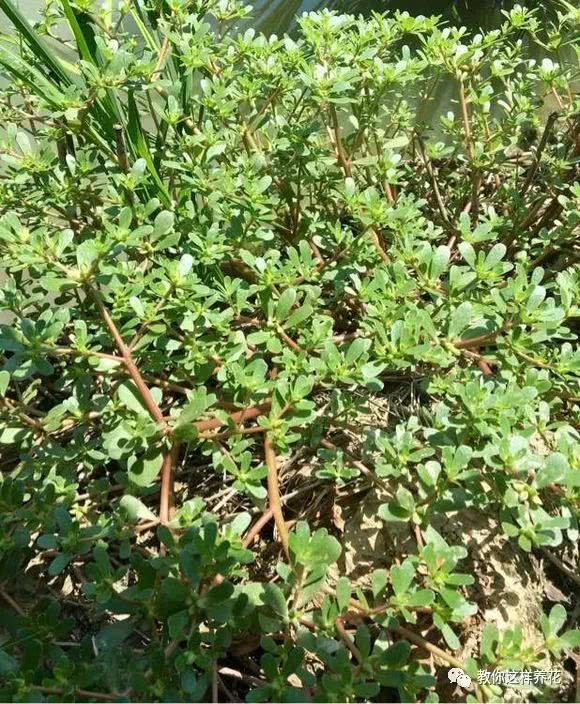
In summer the weather is hot and dry, with strong damp-heat, so you can regularly eat some long-life vegetables and cooling vegetables to clear heat and remove dampness, cool down and relieve summer heat. These vegetables are rich in protein, fat, carbohydrates, vitamins, minerals and other nutrients, and are also very high in dietary fiber, making them excellent long-life vegetables. Most of these vegetables are very easy to grow; some will even grow into a large patch when you toss a handful into water. Let's take a look!
“
Long-life cooling vegetables
- Purslane -
Purslane is a very common wild vegetable and also a famous long-life vegetable. In the past, in poorer rural areas, purslane was even a life-saving vegetable for many people; when there was no grain, they relied on wild vegetables such as purslane to get through hard times. Now that there is more to eat, many people have forgotten about purslane instead.
In fact, purslane has effects such as clearing heat and promoting diuresis, stopping dysentery and reducing inflammation, and detoxifying and healing sores. It is also effective for conditions such as gastric and duodenal ulcers and mouth ulcers, and has a certain effect on diabetes as well. However, it should be eaten in moderation, because it is a cool-natured wild vegetable, and eating too much is not good for people with a weak constitution or cold stomach.
There are many ways to prepare purslane. You can first blanch it in water, then stir-fry it quickly with minced garlic, or serve it cold dressed, and in some places it is made into dumpling filling.
Purslane can be grown from seed or from cuttings. It is generally sown in March to April, and these days many seed and supply shops sell purslane seeds. One packet of seeds can grow dozens of jin of wild vegetable. After buying the seeds, take a little and mix it with fine sand, scatter it over the potting soil, and seedlings will emerge in a few days.
You can also propagate it by cuttings. Find some wild purslane outdoors, keep 3-5 nodes, let the wound dry slightly, and stick it into the soil; it will take root and survive in 1 week, which is also very convenient.
Purslane is very simple to care for and highly adaptable, and it can adapt to ordinary potting soil. Before potting, you can apply plenty of base fertilizer at the bottom of the pot. Purslane is relatively drought-tolerant, so you can water only when the soil is dry, and water thoroughly when you do.
When it grows to about 15 cm, you can make the first harvest. You can cut off the branches and leave the roots, then apply a topdressing once and wait for the next harvest. If flower buds appear, cut them off in time, otherwise it easily becomes tough and old.
If you have a terrace or rooftop, setting up a growing box can let you harvest from the beginning of the year to the end. Purslane has very strong growth ability and is not picky about its growing environment.
(Balcony Vegetable Gardening Bar, Qingcha Yihu Qiu)
Besides soil culture, some flower lovers also use hydroponics. Cut wild-collected purslane into small sections and place them in a hydroponic container; they will grow roots in 2-3 days, which is really tough. Add some nutrient solution regularly, and they will soon grow into a large patch.
(I Love Vegetable Garden, Rufeng)
- Houttuynia cordata -
Houttuynia cordata, also called zhe'ergen. This herb is highly controversial; some people say it is the most unpalatable herb in the world, but in the Yunnan-Guizhou area people eat a little with every meal, and it is a local delicacy. Houttuynia cordata is pungent in taste and cool in nature. It can clear heat and detoxify, reduce swelling and heal sores, promote diuresis and remove dampness, and has antibacterial, antiviral, immune-enhancing and diuretic effects, making it suitable for eating in summer.
Both the leaves and roots of Houttuynia cordata can be eaten, and there are many ways to prepare them. The most commonly eaten part is the tender root, served cold dressed as a condiment, or added when stir-frying meat. The old roots can be used to make soup. The tender leaves can also be served cold dressed or stir-fried with eggs; the old leaves have a poor texture and are generally not eaten.
The simplest way to propagate Houttuynia cordata is by cuttings. In spring and summer, cut healthy branches, each about 10 cm long, and insert them into loose potting soil; they will take root in about 1 week.
Houttuynia cordata likes a warm and humid environment and is fairly adaptable. Choose loose, breathable, fertile potting soil, preferably loam rich in humus. Houttuynia cordata likes moisture and tolerates waterlogging, so normally you can water by the see-dry-see-wet method, and avoid drought. Keep it in a semi-shaded place for care, with nitrogen fertilizer as the main fertilizer and an appropriate application of phosphorus and potassium fertilizer.
After Houttuynia cordata is planted, when the seedlings are 8-10 cm tall you can begin harvesting the tender stems and leaves, and afterward harvest once every 10-20 days. The underground stems kept for propagation can be harvested as needed, and can tolerate a low temperature of -10°C. In winter, if there is long-lasting low-temperature weather, also pay attention to keeping it warm.
Everyone can grow a little of these 2 long-life vegetables
Show it to flower lovers who need it!