Succulent plants suffer from many pests, and spraying at this time can effectively control them
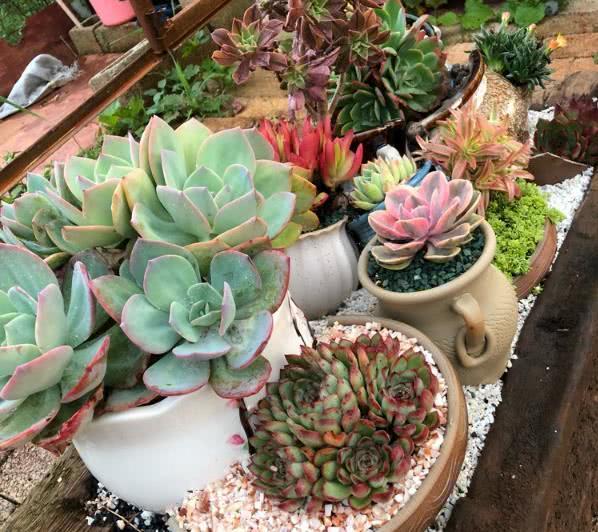
Succulent leaves can indeed absorb water, fertilizer, pesticides and the like, but when is it most effective? Think about the characteristics of CAM (Crassulacean acid metabolism): during the day (high temperatures) the stomata are closed, so it can only be most effective when the stomata are open, which means that whether spraying water or spraying pesticide, evening is the most effective. There is also a very strong piece of supporting evidence for this: Australia once tried every possible means just to kill cacti, using spraying, cannons and biological control, and in the process of spraying they reached a conclusion: spraying at night is the most effective, because cacti also use CAM, and only at night do their stomata open, which shows that cactus stomata still play a major role in the exchange of substances between the leaves and the outside.
Whether spraying pesticide or spraying water, spraying at night is the most effective, especially on a cool evening; if the temperature is too high, the stomata may not open. This can also partly explain why sometimes when succulent plants suffer from fungal diseases (not pest damage, since pest damage is not very different, and contact killing is more effective), spraying pesticide has little effect. In the past, most people, out of worry about pesticide burn, chose to spray in the evening; in other seasons the effect may be quite good, but in summer the evening is still very hot, which may have affected the effect. Note that this only says spraying at night is the most effective; it does not mean it is necessarily effective. Especially in summer, the stress resistance of succulent plants may already have been battered by the high temperatures, which then makes them more susceptible to various fungal diseases.
As for the pest problems of succulent plants, scale insects are relatively common. There are many species of them, covered with a waxy hard shell, round or oval in shape. Because they are protected by a hard shell, once introduced, they are quite difficult to eradicate. Among the affected varieties, Cactaceae, Euphorbiaceae, Liliaceae, Aizoaceae and Haworthia-like types are more numerous. Scale insects reproduce quickly. Each adult lays nearly a hundred eggs at a time, twice a year. The eggs are powdery, and after drying and cracking they fly with the wind and scatter on the stems and leaves of plants everywhere. In high temperatures, when they encounter moisture they hatch into adults. At this time the outer shell has not yet formed, making it the best opportunity for eradication. There are also treatment methods: when the number is small, they should immediately be removed with a bamboo stick or toothbrush, and the infested plants should be isolated to prevent spread, and a brush dipped in diluted nicotine sulfate solution or alcohol should be used to scrub them to kill the larvae and eggs.
If you find that some leaves suddenly turn black and are covered with a layer of black mold, that is definitely "sooty mold". Since it may cause the entire plant to turn black and rot, if you find it, remove the diseased leaves promptly, and improving ventilation is key. At the same time, do a good job of pest prevention work and spray some fungicide. There are also some inexplicable leaf-drop phenomena, where the stem or the base of the leaf turns black, or has not yet turned black, but with a slight touch the leaves fall off in droves. This is also a sign of mold infection. Think about whether there has been insufficient ventilation recently, or whether you have watered too frequently. This situation is very likely to occur in summer, and the potting medium must be selected to have very good air permeability.
Fungus gnats are the common small black flying insects in flower pots. Most of the fungus gnats found on succulents are on Crassulaceae Echeveria. They like to eat humus, and the larvae will also eat the small succulent seedlings and gnaw on the roots and stems of plants, causing the plants to develop diseases due to wound infection. Treatment methods: fungus gnats like moisture and fear dryness, and soil moisture is the key factor affecting adult emergence. When fungus gnats are found, you can use Huahuashen (or dimethoate) to soak the pot. The larvae have relatively strong pesticide resistance. The place where plants are grown should be well ventilated, and do not expose the humus soil. It is best to cover the nutrient soil with a layer of vermiculite or river sand. There is also a small folk remedy you can try: mix mosquito coil ash into the soil, which can kill the fungus gnats, and the main component of mosquito coils is pyrethrin.
When the climate is warm and humid, snails and slugs will increase in number and reproduce very quickly. Whether in cities or the countryside, these soft little creatures will appear. Have snails grown on your succulents? They all hide in moist, dark places during the day and only come out at night to look for food. They not only gnaw on young branches and tender leaves, but do not even spare old stems and leaves. Treatment methods: clear away weeds, garbage, bricks and tiles and other piled-up materials around the pots, and keeping things clean can effectively prevent them; or install mesh netting around the pots for isolation, or buy a special effective pesticide for killing snails, or you can scatter lime or salt beside the flower pot, but do not sprinkle it into the soil.
This is a gathering place for succulent plant lovers, sharing succulent care tips. Welcome to follow and exchange ideas.