The key care points for orchids to bloom in all four seasons are in winter and summer
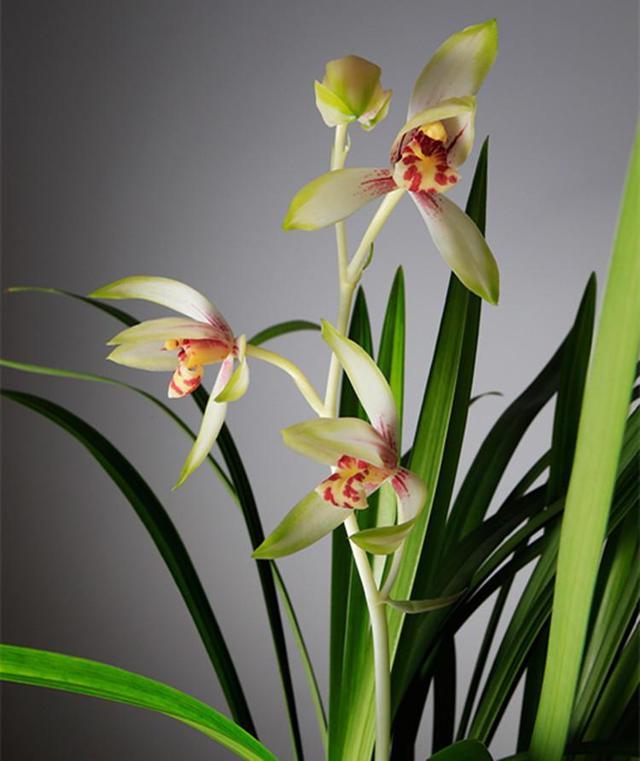
Orchids are flowering plants whose leaves, flowers and stems are all ornamental. However, when it comes to orchid care, far too many people cannot get it right. Beyond routine tasks such as watering and fertilizing, flower lovers who want to see their orchids bloom in all four seasons should have their priorities, and those priorities should be placed on "winter and summer."
Priority one: Winter
Winter care determines the growth and flowering of orchids in the coming year. Flower lovers need to do the following care methods well:
1. Bring indoors for warmth
Cymbidium ensifolium, Cymbidium sinense and Cymbidium kanran have poor cold tolerance and should be brought indoors early; Cymbidium goeringii and Cymbidium faberi should also be brought indoors when there is freezing, with room temperature kept at 5-15°C; for Cymbidium goeringii the room temperature should be controlled at 3-8°C. Generally 15°C is suitable; above 15°C has an adverse effect on the development of flower buds and flower spikes.
2. Control watering
Not dry in summer and autumn, not wet in winter and spring - this is the experience of previous orchid growers. Generally, keeping the potting soil slightly moist is enough for safe overwintering. If the potting soil is indeed already dry, then around noon on a clear and warm day, spray-water with water close to room temperature, and stop as soon as the potting soil is slightly moist. Never water heavily, to prevent root rot and freezing damage. When watering, pour in from the edge of the pot and let it gradually flow to the flower roots, until the flower roots are moist; avoid watering the leaves and the orchid core.
3. Control fertilizer and increase light
Orchids generally do not need fertilizing during winter dormancy. Orchid roots have no fibrous roots; mycorrhizal symbiosis exists within the roots. During the growth of Cymbidium goeringii and Cymbidium kanran, 0.1% potassium dihydrogen phosphate or general-purpose organic liquid orchid fertilizer can be sprayed on the leaves, and diluted 500 times to water the roots. In winter orchids need sufficient light and should be placed on the sunny side of an enclosed balcony so they can receive light in the morning and evening. If light is insufficient, supplementary lighting is needed.
4. Ventilate and change air in time
In warm spring orchids also need air circulation, and they fear pollution from smoke, dust and stale air. Keep them away from stoves; open windows for ventilation around noon on clear days, or carry the orchid pots outdoors to a wind-sheltered, sunny spot to get some sunlight, and bring them back indoors immediately after the temperature drops.
Priority two: Summer
1. Shading
Orchids like a shady, cool environment and fear direct sunlight. From late April to the end of September each year, shading should be provided, with a shading rate of 50%-70%. Cymbidium goeringii and Cymbidium faberi have higher light requirements; for Cymbidium ensifolium and Cymbidium sinense, a shading rate of more than 80% is also fine. Use shade netting for shading, and place the orchid pots near water or in a place with fresh air and good ventilation.
2. Rain protection
The plum rain season is exactly the vigorous growth stage of orchids. Continuous rainy days and overly wet potting soil will affect the growth of leaf buds, invite black spot disease, and even cause rot and death. A rain shelter should be added, and the orchids should be moved indoors before it rains. In summer the temperature is high and the light is strong, so sufficient moisture must be ensured. Besides watering, water also needs to be sprayed upward into the air, which can lower the temperature and increase humidity. Heavy rain splashing mud from the pot surface onto the orchid core or orchid leaves can cause brown rot.
3. Fertilizing
When fertilizing orchids in summer, follow the principle of light fertilizer applied frequently, using organic nutrient solution diluted 500 times, once every half month. For Cymbidium goeringii and Cymbidium faberi, apply nitrogen and potassium fertilizer in summer; for Cymbidium ensifolium, apply phosphorus and potassium fertilizer; for Cymbidium kanran, do not fertilize. Fertilizing must not contaminate the leaf surface. Before and after flowering, and during the hottest days of summer, do not fertilize.
Some images are from flower lover: _WolfGun_