How to deal with localized water-soaking in succulents: do it right and they will grow vigorously and look beautiful
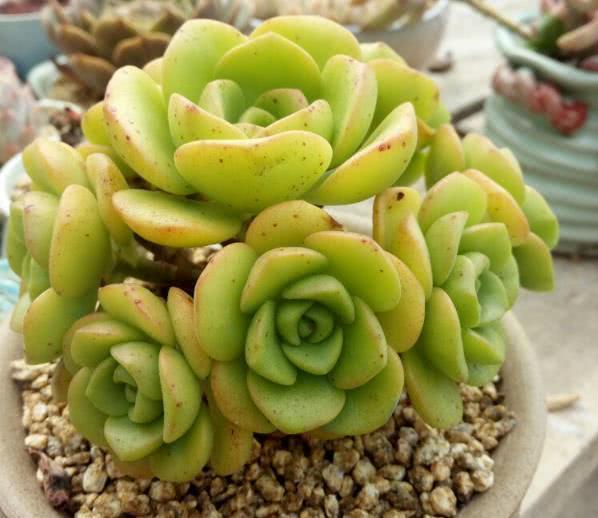
During the high temperatures of summer, the leaves of succulents are prone to localized water-soaking. When the stomata of the leaves close, part of the leaf will become water-soaked, which means the succulent is being smothered. So ventilation must be strengthened by shading the succulent and using a fan to cool it down. Water-soaking, as the name suggests, means the succulent has too much water. Most succulents are plants that grow in deserts, where water is scarce all year round, so as long as there is water, succulents will desperately absorb it. When succulents are cultivated by humans, the environment is not so harsh and water is too plentiful, so the succulent may absorb too much water and develop water-soaking.
Water-soaking in succulents has its own signs, and we need to identify the cause based on how it looks. Generally speaking, a water-soaked succulent will start with the leaves: the leaves begin to become transparent, which is a sign that the leaves are about to become water-soaked. If the whole succulent gradually becomes transparent, that means the whole plant is water-soaked. There are also ways to save it.
If it is only a few leaves, just pluck off the water-soaked leaves, then control watering and provide more light, or more precisely, less water, keeping it dry rather than wet. If the leaf core is water-soaked, then the head of this succulent is useless and needs to be beheaded. After beheading, place it in a ventilated spot to let the wound heal; if the root and stem are kept, it may still grow pups. If the entire root and stem are water-soaked, then this succulent is already beyond saving, so deal with it early to avoid black rot spreading to other succulents.
Ways to prevent water-soaking in succulents: before summer begins, when the high temperatures have not yet arrived, add some phosphorus and potassium fertilizer to the succulent to improve its own resistance, mix an appropriate amount of fungicide into the water to purify the internal soil environment, and increase appropriate and necessary light and bottom ventilation to speed up internal metabolism. Before rainy days arrive, water must be controlled in advance. If there are consecutive rainy days, consider adding artificial supplemental lighting. The most important task in summer is still good ventilation. For water-soaked leaves on succulents, you can spread some volcanic rock on the soil surface, so the leaves are less likely to rot.
During leaf propagation of succulents, you may encounter the phenomenon of leaf water-soaking, that is, the leaf becomes soft, turns transparent, and releases water when squeezed. When this happens, handle it according to the situation. If this leaf has neither rooted nor sprouted, then decisively throw it away to avoid affecting the other leaves. If the leaf has already rooted but has not yet sprouted, you can wait a little and see how things go before deciding.
When succulent leaves get sunburned, the sunburn will not show immediately. Usually over the following week, the leaves will change, for example, they may dry out from the sun and fall off, or in more serious cases the succulent will rot and become water-soaked. For sunburned succulents, you can first move them to a place with less intense light, and the sunburned leaves will gradually be used up. If the sunburn is relatively severe and the leaf core is sunburned, you need to cut it to induce the succulent to sprout new shoots.
This is a gathering place for succulent lovers, sharing succulent care tips. You are welcome to follow and exchange ideas.