How do you train a single-stem rose into a multi-branched, well-rounded plant? Here are the tricks
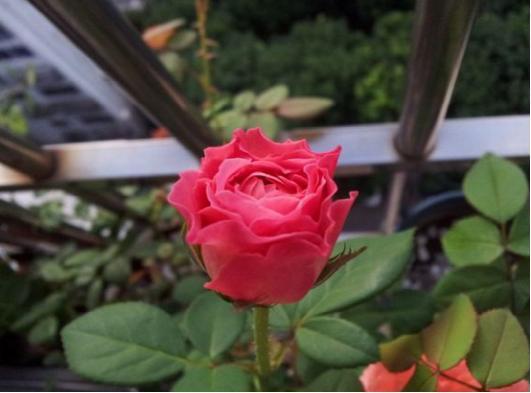
Actually, getting a rose to branch continuously is not just about achieving a perfect plant shape; there is another unexpected benefit: continuous branching can make the plant bloom all over the pot. There is a principle behind this. Flowers generally bloom on newly grown branches, so new branches determine the number of flowers. So? Are these reasons enough for you? Do you feel like getting hands-on?
How do you turn your single-stem rose into a full, rounded plant with "multiple basal branches"? Some people say it is very difficult and they simply cannot find the way! Do not worry, there is always a way. The editor here knows some tricks to encourage branching, and there are three: bending branches, horizontal pulling, and side-pot placement.
Let us first talk about the first trick, bending branches, which emphasizes "breaking the lotus root but keeping the fibers connected." That is, when bending a rose branch, you do not need to break the whole branch off. Instead, the wood and bark of the branch are broken halfway, and the bark on the lower part must remain connected; otherwise the broken branch will wither. Breaking the whole branch is not a good thing for the rose, because then the rose cannot carry out photosynthesis and the whole plant can easily die.
After bending, you can press the broken branch down horizontally a little, so that the plant's nutrients no longer "travel" to the broken branch, while the nutrients produced by photosynthesis in the leaves of the broken branch also "travel" toward the roots. Thus the two routes begin to converge at the position from the break to the roots, forming what we usually call apical dominance.
Horizontal pulling does not require breaking the branch. If the rose's branches are relatively soft, horizontal pulling is easier. You can pull horizontally "with both hands drawing bows," so that many new branches will sprout from the base. There is also a little trick: how do you maintain the just-pulled position? You can tie a suitable heavy object to the branch tip.
The side-pot method is for situations where the rose is asymmetrical from left to right. If you are still not quite satisfied after bending branches and horizontal pulling, you can try side-pot placement. Side-pot placement also uses the principle of apical dominance; it is always the same fundamental principle. First cut the main branch off 10 cm above the base, then place the side that grows slowly, or the side where you want new branches to grow, facing upward, so that nutrients will flow to the new branches.
So have you learned a move or two? What the editor shares is all practical stuff, and learning even a little is no small thing. Even just a little can help you get through after on the road of rose care!