This fruit has 200 times the vitamin C of grapes, tolerates temperatures as low as -50°C, and bears an abundance of fruit
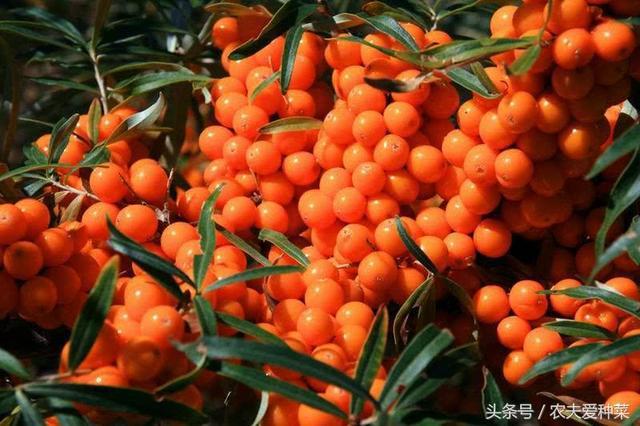
Sea buckthorn, this kind of berry, looks extremely delicious; when ripe, golden-orange fruits hang all over the branches, the color is especially beautiful, and the berries are very plump. It is also recognized as one of the fruits with the highest vitamin C content.
Sea buckthorn berries have long been known as the "king of vitamin C." In every 100 grams of sea buckthorn juice, the vitamin C content reaches as high as 1000 mg, roughly equal to 3 times that of kiwi, 70 times that of hawthorn, 80 times that of tomato, and 200 times that of grapes.
In fact, sea buckthorn berries are not very common, mainly because sea buckthorn grows mostly in relatively arid environments. It is widely planted in the northwest region, mainly for desert greening, and is currently the precious tree species with the most types of natural vitamins in the world.
Both sea buckthorn berries and sea buckthorn oil have medicinal value. The berries used as medicine also have the effects of relieving cough and reducing phlegm, strengthening the stomach and promoting digestion, and promoting blood circulation and dissipating blood stasis. Among them, sea buckthorn oil is the most valuable part of the sea buckthorn berry.
Sea buckthorn oil contains 206 kinds of active substances beneficial to the human body, contains large amounts of vitamins, has special pharmacological properties such as anti-fatigue and anti-cancer effects, and also lowers cholesterol, helps prevent and treat high blood lipids and high blood pressure, and promotes wound healing.
If eaten on its own, sea buckthorn berries actually do not taste as good as they look; they are a little sour and astringent, and are generally used to make various food products, such as sea buckthorn juice, sea buckthorn vinegar, sea buckthorn jam, sea buckthorn wine, and so on.
Sea buckthorn is a tree species that is very easy to grow. It likes light, tolerates cold, tolerates extreme heat, tolerates drought, resists wind and sand, has strong adaptability to soil, can survive on salinized land, is easy to grow and tolerates barren soil, and is therefore widely used for soil and water conservation.
And it is not very strict about temperature requirements; the extreme minimum temperature can reach -50°C, and the extreme maximum temperature can reach 50°C. It is the most tolerant of both cold and heat among plants, and it feels like there is no tree species easier to grow than it. Now it can also be planted as an ornamental tree, and its abundant fruit also has great ornamental value.