A Detailed Guide to Growing Rootless or Sparse-Rooted Orchids
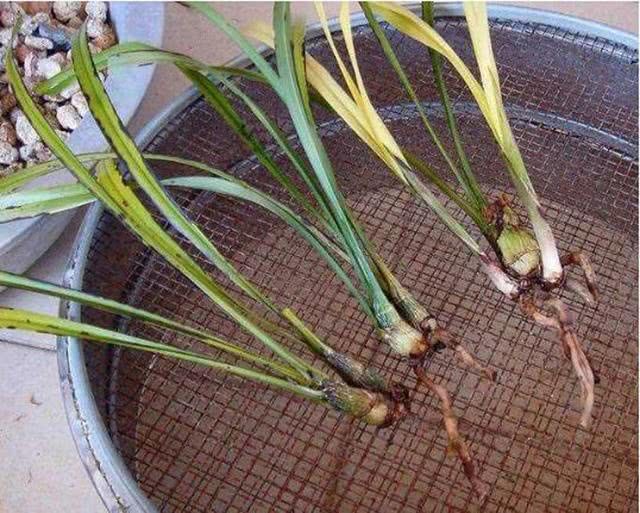
Rootless orchids or orchids with few roots are generally caused by improper watering, poorly aerated potting medium that easily waterlogs, or fertilizer that is too concentrated. Each of the factors above can cause orchid root rot and hollow roots. Because rootless and sparse-rooted orchids have severely damaged roots, their roots absorb nutrients very poorly or have already lost the ability to absorb nutrients. They will rely entirely on their basal pseudobulbs or the surrounding pseudobulbs and surrounding old growth that is declining to provide nutrients. If effective measures are not taken in time, they will quickly perish. Today I will explain the growing methods for rootless and sparse-rooted orchids.
1. When you discover a rootless orchid or an orchid with few roots, first clean up the diseased areas, remove the bad leaves, and cut off the rotten roots. Then soak the whole orchid plant in fungicide for about 20 minutes. The potting medium and pots must also be sterilized and disinfected; steaming or boiling is safest, as this can kill pathogens and pests, laying a good foundation for subsequent planting and reducing the occurrence of pests and diseases. Commonly used fungicides generally include carbendazim, chlorothalonil, thiophanate-methyl, and others.
2. There are two methods to rescue a rootless orchid. It is worth noting that 100% survival is impossible; you can only save it to the greatest extent possible. The first method is to directly cut off all the leaves from above the pseudobulb, then use moist potting medium to bury it deeply and induce budding or rooting. The potting medium must be clean for this. Generally, sand, peat, Songli Wang, Ishi-gold, and tree-fern peat are used to "coax the old head." Here "old head" refers to the pseudobulb, because rootlessness generally occurs on the pseudobulbs of old growth, and later within the community it came to be broadly called "coaxing the old head." The second method is to cut the leaves off 10-15 cm above the pseudobulb. This allows the leaves to still carry out photosynthesis and also helps us later use foliar fertilizer, and it also prevents the leaves from being too long and increasing water consumption. After cutting, pot it normally using a clean, hygienic potting medium with good moisture retention and fast drainage. You can use Songli Wang and small-particle Ishi-gold at 1:1 for planting. When planting, the potting medium must cover the pseudobulb to a thickness of 2-3 cm. The wounds from cutting the leaves in the above two methods must also be sterilized and disinfected, preferably with a fungicide that both disinfects and seals, so it can both disinfect and seal the cut. The planting method for sparse-rooted orchids is the same as the second method for rootless orchids. After potting, they enter routine management.
3. Watering rootless and sparse-rooted orchids is relatively simple. Since they originally have no roots or few roots, and the potting medium is airy, and no fertilizer is applied, there is generally no root rot problem. The moisture in the pot can be kept relatively moist. You can also lay moss over the surface to keep the pseudobulb moist, and appropriately spray water on the leaves. Be careful that when water gets into the leaf center, it should be dried promptly with a fan. To prevent excessive evaporation of water, light intensity should be appropriately lower, and direct sunlight must absolutely be avoided.
4. Scientific fertilizer management is the key issue in growing rootless and sparse-rooted orchids well. For rootless and sparse-rooted orchids, after potting you can spray foliar fertilizer once every three days, and the concentration must be very low. Because rootless and sparse-rooted orchids do not have a good ability to absorb nutrients from the potting soil, foliar feeding is the best and only method. On windless cloudy days, spray both the front and back of the leaves; the stomata on the underside of the leaves are larger, making it easier to absorb fertilizer than the upper surface. After early spring (temperatures above 12°C), give them some appropriate sunlight to enhance photosynthesis. Spray water on the leaves as appropriate and begin fertilizing, continuing to strengthen the nutrition of the mother plant and promote the formation and sprouting of young buds. After the young buds emerge from the soil, the quality and status of fertilization are the key issues determining whether the seedlings can grow into mature plants, so this must be given great attention. Because new roots have already emerged at this stage, foliar feeding and root drenching must be carried out simultaneously. To ensure continuity of nutrition, also add a small amount of fertilizer when watering. Because this stage is in a period of vigorous growth, concentrated fertilizer should be applied, with the concentration kept within a safe range. Author: Mei Fei, founder of the Orchid Bar Forum, secretary of the Jingshan City Orchid Association in Hubei Province, and an orchid-industry influencer on major self-media platforms! I publish orchid knowledge and pictures every day, taking you to understand orchids in depth and teaching you to grow orchids easily. If you have any questions about orchids, you can ask me anytime or leave a comment below. If you like it, you can follow me or save and share it to help others!