What to Do When a Cactus Ball Rots? Cut Off the Rotten Flesh and Graft on a Christmas Cactus, and It Will Still Bloom
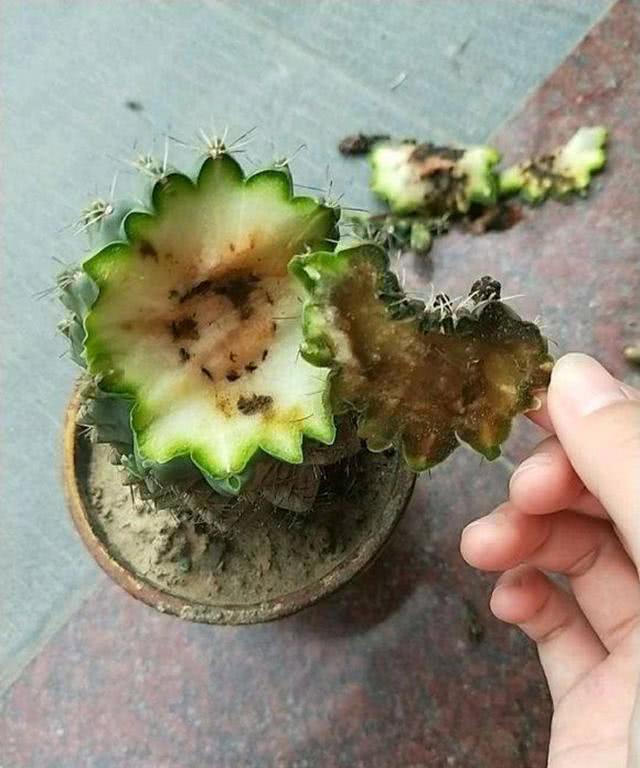
As more and more people take up gardening, various proven potted-plant methods spread everywhere. I had always been itching to try propagating my own green plants from cuttings, but never got the chance. Unexpectedly, today I discovered that the cactus ball that had been keeping me company while I worked at the computer had actually rotted. I couldn't bear to throw it away, so I cut off the rotten part. As an aside, when cutting, the feel was actually quite satisfying. In the end, only half of the cactus ball was left intact, looking like half a cut green watermelon. I suddenly remembered the cutting tutorials I had seen, so I stuck a Christmas cactus from another pot onto the half cactus ball. Guess what happened next?
Cactus balls rot most often because of frequent watering, which makes the soil too moist. Summer is the peak growing season for cactus balls, so their water demand is greater than in other seasons, and they need to be watered thoroughly. Note that you should not water at noon, when the temperature is high, because watering then can easily scorch the cactus ball. Water in the early morning or evening when the temperature is lower. Also, try not to water from the top, because over time this easily causes spots to grow and affects its appearance. If you are in a high-temperature plum rain season, water appropriately less. Spring and autumn have no special requirements; morning and evening are both fine.
In winter, because the temperature is low, the plant goes dormant and its growth rate slows, so watering frequency should be reduced. As long as the soil is not extremely dry, that is enough, and the lower the temperature, the drier the soil should be. Watering should be done on a sunny morning. When the temperature gradually rises again, begin gradually increasing the frequency and amount of watering.
When watering, water thoroughly in one go, and afterward loosen the soil regularly so that the soil stays loose and does not clump, promoting the cactus ball's absorption of water. When the cactus ball has sunken areas, avoid letting water enter the sunken parts, otherwise it will easily rot; pay special attention in the evening.
In summer, cactus balls in their growing period can also be fertilized appropriately. You can choose fully decomposed, dilute liquid fertilizer, and apply it about once every ten to fifteen days. If it is grafted onto a three-ribbed arrow cactus (Hylocereus undatus), fertilizing is even more necessary. As autumn gradually arrives, reduce the frequency of fertilizing to once a month, and by early October you can stop fertilizing completely. This is because if the cactus ball is fertilized continuously, the body becomes tender, and the risk of getting through winter greatly increases. Note that when fertilizing, do not let the body touch the fertilizer; if it does touch, rinse it immediately with clean water.
Base fertilizer should be mixed into the potting soil when repotting or potting up. Fully decomposed oil cake meal, bone meal, chicken and pigeon manure, and the like can all be piled together with soil for a period of time before use. Topdressing should be judged according to the plant's growth state; for example, during vigorous growth in spring and autumn, you can apply a topdressing of fully decomposed feather, hoof and horn or oil cake fertilizer water once every two weeks. However, fertilizer should not be applied during both high and low temperatures. Because the root osmotic pressure of cactus-type flowers is very low, the fertilizer water must be diluted before use, and when fertilizing, simply cover all the soil.