Large plants become the new favorite of the wealthy, elegant in style and bringing good luck
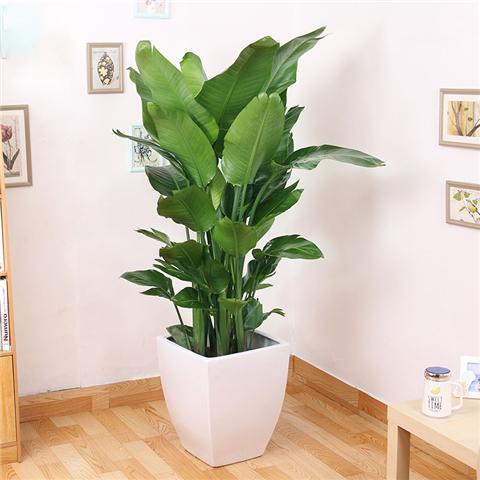
The bird of paradise is also called the crane's-bill orchid; its flower shape resembles a bird, and its blooms are truly breathtakingly beautiful, symbolizing freedom and good fortune. The bird of paradise is also called the bird-of-paradise flower and carries the meaning of longevity. The flower language of the crane's-bill orchid is passionate love and embracing one another, wishing those in love happiness and joy. So keeping a large potted plant like this at home lets you admire its elegance and grace, and can also bring a feng shui effect to the home environment. Below, the editor introduces the care methods for the bird of paradise!
(1). Light:
The bird of paradise needs at least no less than 12 hours of light per day. Whether the light is sufficient determines whether it blooms, so be sure to remember that light is very important. However, in summer you must also provide shade to avoid scorching the young leaves and affecting the ornamental effect. In winter, when temperatures are low, it needs to be moved indoors for care; if conditions allow, a fluorescent lamp can be used for supplemental lighting, which is beneficial for plant growth and flowering.
(2). Watering:
The bird of paradise is not tolerant of waterlogging, so when watering, be sure not to overwater. Water accumulating in the potting soil is bad for root respiration and leads to root rot, and the consequences are difficult to deal with; in severe cases it may cause the plant to die. When watering, pay attention to watering lightly and frequently, keeping the potting soil moist. During the summer growing season and the autumn and winter flowering period, sufficient water must be ensured, requiring watering once every day, which helps promote flowering and ensures a longer flowering period. When it blooms in early spring, watering should be appropriately reduced, watering once every 2~3 days.
(3). Fertilizing:
The bird of paradise is a fertilizer-loving plant, so fertilizing is essential; sufficient nutrients are what ensure rapid plant growth and flowering. Generally, fertilize once about every 15 days with an active humic acid liquid fertilizer, which can make the flowers more brilliant. When repotting or planting, an appropriate amount of phosphorus and potassium fertilizer needs to be added to the soil to prepare for flowering. After the flowers fade, promptly cut off the spent flower stalks to avoid nutrient consumption. After mid-October, stop fertilizing to improve cold resistance, which is beneficial for safely overwintering.
(4). Temperature:
Temperature is very important for the bird of paradise. If you want the bird of paradise to grow well and bloom abundantly, you need to keep the daytime temperature at 20~22°C and the nighttime temperature at 10~13°C. From March to October, keep the temperature at 18~24°C. After October, keep the temperature at 13~18°C; this temperature control is helpful for the plant's growth. The bird of paradise is not cold-tolerant, and the winter temperature must not be lower than 5°C, otherwise the plant is easily damaged by freezing.