Pruning orchids can promote blooming, but are you pruning them correctly?
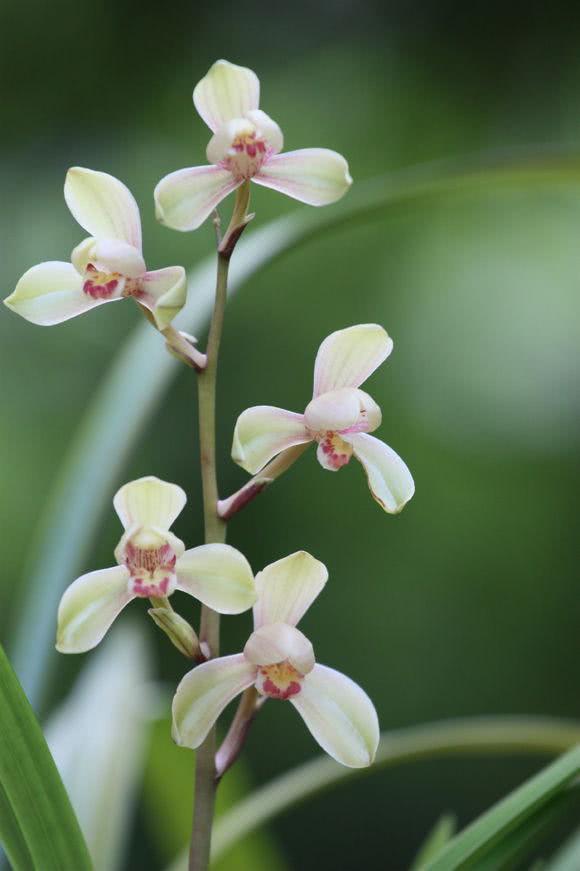
We all know that proper pruning of orchids can promote sprouting, grow new flower stems, and produce more flower buds. However, pruning also requires the right method. Are you sure you are pruning correctly?
Orchid pruning methods
Pruning orchid leaves
For orchid pruning, the lighter approach is pruning orchid leaves. Old leaves, dead leaves, and yellow leaves should all be cut off. This not only improves ventilation but also reduces nutrient consumption. If you see dried leaf tips on the orchid, cut them off as well. Leaves damaged by pests and diseases should especially be removed to avoid infection.
Pruning orchid stems
After orchids finish blooming, the flower stems should be cut off in time. A relatively safe method is to cut the flower stems about 3 cm above the pot surface. After some time, the old stems should be cut off, so the wound surface will be smaller and the occurrence of pests and diseases will be reduced. If you have carbendazim or potassium permanganate at home, you can dilute it with water about 1000 times and spray it, which can have a sterilizing effect. At home, you can also use white vinegar diluted about 100 times once a month to spray the potting soil, which can have a very good sterilizing effect and promote root growth.
Pruning the roots
The roots of an orchid are where its lifeblood lies. Although what we admire is not the orchid's roots, the orchid's roots are crucial to its growth. Pruning method: take the orchid out of the pot, soak it in water or shake off some soil, so that the root system can be seen clearly. Old roots, diseased roots, hollow roots, or broken roots should all be cut off accordingly, then spray with azoxystrobin diluted 1000 times, air-dry in a cool place for 3 hours, and then it can be repotted. Be careful to handle it gently and do not damage the root system.
Precautions for orchid pruning
Orchid roots are fleshy roots, and once infected by bacteria they rot very easily. Therefore, when pruning the root system, be sure to disinfect the scissors, and also properly disinfect the roots to avoid wound infection. In addition, the cut is best made at an angle, and the wound should be relatively smooth.
Care precautions
To improve the orchid's resistance, you should not only know how to prune, but also supplement enough nutrients. An organic nutrient solution rich in nitrogen, phosphorus, and potassium, fermented from sugarcane stalks, promotes vigorous plant growth, abundant blooming, a strong plant, and strong resistance to pests and diseases.
Orchids like a semi-shaded environment with diffused light. Do not place them under blazing sun, and do not place them in an overly dark environment. Blazing sun will scorch the leaves, while darkness will affect the leaves' photosynthesis.