Blackened roots on pothos: to restore those big white roots, you have to put in some effort
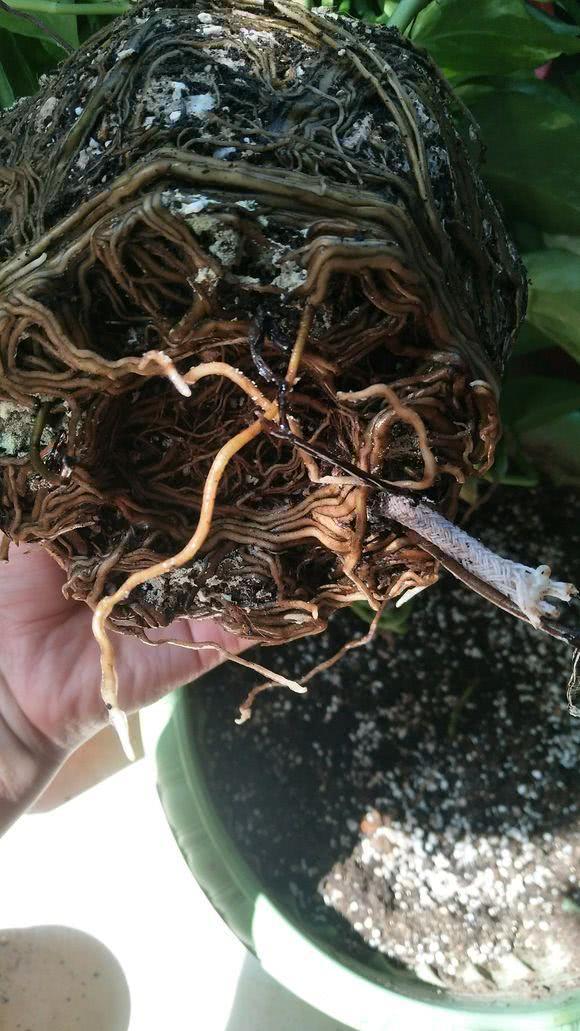
Pothos is known for its glossy green leaves and for being easy to grow, but many plant lovers simply can't keep it alive - either the roots rot or the leaves turn yellow, or it just lingers in a so-so state. Look at this pothos: it has already grown black roots, and if you don't deal with it in time, it will be very hard to get those big white roots back.
For pothos to restore its big white roots and grow into that glossy green state, you still need to put in some effort. When the roots turn black, we first have to find the cause, understand the underlying principle, and treat the problem accordingly.
Causes of blackened pothos roots
Blackened pothos roots are mainly caused by improper watering. If the soil in the pot stays too wet for a long time, it easily breeds bacteria, which infect the roots and turn them black. So when watering pothos, the key is "dry then wet" - wait until the potting soil is completely dry before watering again, giving the pothos a normal process of root moisture evaporation.
If the potting soil is too wet, and you add muggy weather with poor air circulation, pothos becomes even more likely to die. During holidays, don't shut all the doors and windows tight - leave one small window open for the pothos, and don't draw all the curtains either. With poor air circulation plus insufficient light, it's hard for pothos not to get sick.
How to deal with blackened pothos roots
First take the pothos out of its pot. If the problem isn't very serious, just cut off the small portion of blackened roots. Then use a dedicated fungicide, such as carbendazim or kresoxim-methyl, a professional sterilizing agent, usually diluted about 1000 times with water, and spray it on the root area of the pothos. Then put it in a cool place to let the roots dry, about 4 hours or so, and then repot the pothos.
When repotting the pothos, it's best to choose fresh nutrient soil. Pothos likes soil rich in humus, loose and fertile, and slightly acidic. Mix 1 part leaf mold, 1 part base fertilizer, 6 parts loess, 1 part charcoal residue, and 1 part sand thoroughly, and you can pot it directly. If you still want to use the original nutrient soil, you need to break up the soil and take it out to bake in the hot sun, or heat it at high temperature in a microwave - though this method still isn't recommended, as it's a hassle to clean up, and you might even get a scolding from your mom.
How to pot pothos
First add 1/3 of the soil to the pot, place the pothos upright in the pot, then add a certain amount of soil until the pothos roots are completely covered by soil. Be careful not to press the soil down - if the soil is too firm, it actually becomes less airy. As long as the soil can just hold the pothos, that's enough, then smooth the soil surface a little.
After planting the pothos, water it once with a settling water. You can add a few drops of organic nutrient solution to the water - it not only supplements nutrients but also repairs root wounds, promotes rooting, helps the pothos quickly recover its condition, boosts the plant's resistance, and encourages the pothos to grow vigorously.
After potting, caring for pothos is very simple - just water appropriately. For plant lovers who don't know how to tell whether a pothos is short of water, you can wait until the leaves look slightly listless before watering. Better dry than wet is the golden rule for growing pothos, because the danger of root rot is clearly more serious than leaves wilting from lack of water.
Once the pothos gradually grows bigger, to make it more vigorous with more thick stems, you can also do some pruning as appropriate. For example, thinner, weaker stems can be cut off. Longer stems can be cut back between the aerial roots, but note that the cut stem should not exceed 1/3 of the whole stem - unless the pothos is sick, in which case the entire stem must be cut off.