These 5 succulents are most prone to black rot in summer, and if you don't prevent and deal with it in time, only the pot will be left
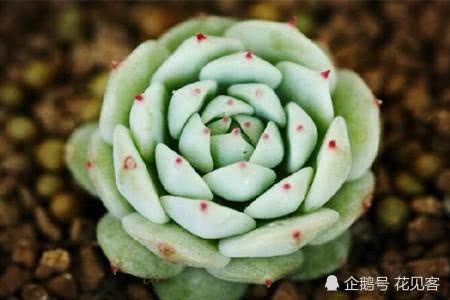
They all say that once you get into succulents, it's as deep as the sea, especially in the hot summer, when the succulents at home show signs of black rot, especially these 5, even if they are grown indoors, they are particularly prone to black rot, and if you don't prevent and deal with it in time, only the pot will be left.
1. Echeveria derenbergii
Echeveria derenbergii is a particularly common and ordinary succulent, and there are many on the market too, with thick and plump leaves, red leaf tips, small and exquisite, very lovable, but in summer it is very prone to black rot, especially for those that have just been potted recently, when kept indoors for care, attention should be paid to ventilation, and there should also be a little scattered light every day, so it can get through the summer better.
2. Echeveria runyonii
Echeveria runyonii is also a succulent liked by many flower lovers, its growth is robust, and its vitality is very vigorous, so logically speaking, getting through the summer should not be a big problem, so why is it prone to black rot?
In fact, this has a lot to do with watering. If water accidentally splashes onto the leaves while watering, water will accumulate on the leaves, and if it is also kept indoors for care, it cannot evaporate in time, so it is prone to black rot. Therefore, when watering Echeveria runyonii, if you are not sure whether water has splashed onto the leaves, you can gently shake the stems, then place it in a well-ventilated spot for care, letting the water evaporate.
3. Graptoveria 'Titubans'
Graptoveria 'Titubans' has succulent stems, leaves and flowers, very thick and solid, with leaves from grayish white to grayish green, and a light white powder on the leaf surface. It is prone to black rot mainly because of watering problems. Because it itself contains a large amount of water, its drought tolerance is relatively high. In summer's high temperature and humidity, it will trigger black rot. You can move it to a south-facing windowsill for care, maintaining a dry environment with sufficient light.
4. Cotyledon tomentosa
Cotyledon tomentosa is named because its leaves closely resemble bear paws. What is common in summer is also black rot, and the main sign is leaf drop. When the summer temperature exceeds 35°C, it enters dormancy, growth stalls, and activity in all aspects decreases. When you find leaf drop, you must pay attention, observe whether there is blackening, and if so, deal with it in time, prune off the infected parts and surrounding branches and leaves, and in severe cases directly behead it, then disinfect with potassium permanganate.
5. Echeveria 'Minima'
The small leaves of Echeveria 'Minima' are tightly arranged in a rosette shape. Although it is very beautiful, it is especially difficult to grow in summer, and black rot is especially common. Before summer is even half over, there may already be only the pot left. When caring for it indoors, it is best to place it near a vent, let it receive more scattered light, spray some water around it during the day to lower the temperature, or directly place it in a small container with water.
That's all for the introduction of these 5 succulents. If flower lovers have other additions, you can share them with everyone in the comment section below. If you want to learn more about flower-growing knowledge, you can follow Huajianke!