Xing Jinke Bonsai Works Appreciation, Fully Showcasing the Beauty of Bonsai Art
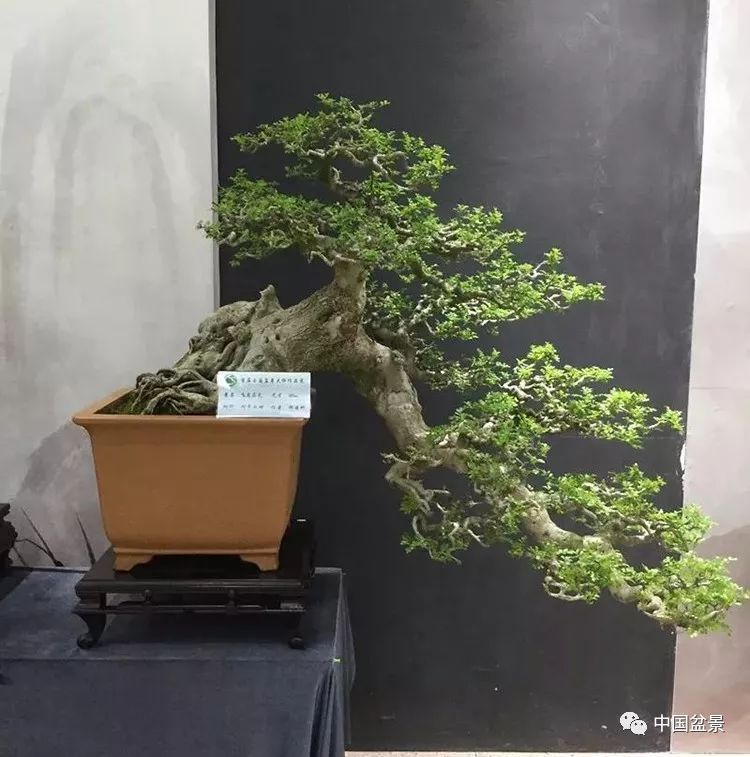
Title: Flying Dragon in the Sky
Specifications: 120 cm
Tree species: Chinese Ash (Fraxinus chinensis)
Author: Xing Jinke
Contemplating Motion and Stillness -- Xing Jinke
By | Jiang Zhiqi
"Shanghai Botanical Garden" also published
The beauty of mountains and rivers has been discussed since ancient times. Only those with refined sensibilities can appreciate the beauty of natural scenery where motion and stillness are in harmony.
Xing Jinke was born in 1951. In 1979, Xing Jinke, carrying great enthusiasm for bonsai art, devoted himself to the creation of bonsai art. In 1984, he studied under Master He Gansun, systematically learning the theory and creation of "dynamic bonsai." In May 2001, he was awarded the honorary title of "Chinese Bonsai Art Master."
Title: Zhe
Specifications: 106 cm X 96 cm
Tree species: Chinese Ash (Fraxinus chinensis)
Author: Xing Jinke
Dynamic bonsai aims to seek "motion" and express it through "momentum." In dynamic bonsai styling, the contradiction between the two states of "motion" and "stillness" must be fully utilized. The works created by Master Xing have a fresh style and vivid tree forms, as if bearing the expression of having been struck by a great wind. They not only display momentum and spirit, making people feel emotion at first sight and striking the eye, but also remain appealing over time, with every branch resounding and every foliage pad having voice. Motion and stillness combine, alternating repeatedly, with countless subtle variations therein, exerting a positive influence on the development of contemporary "dynamic bonsai." His representative works include "Raising the Spear Immediately," "Praise at Seventy," "Looking to the Future," "Gazing at the Rolling Clouds," "Setting Sun Red," and others, all of which have won various major awards.
While focusing on creating bonsai, Master Xing Jinke is also diligent in writing, publishing a large number of bonsai-making and professional papers in publications such as "Flowers and Bonsai," "Jingmen Daily," and other newspapers and magazines. Moreover, Master Xing Jinke has been lecturing and giving production demonstrations in Zhongxiang, Jingmen, and Jingshan cities and counties, and his valuable creative experience and theoretical insights have left a deep impression on colleagues in the bonsai world.
Master Xing Jinke is down-to-earth and humble, open and candid. He emphasizes that only by inheriting the finest from predecessors and drawing on overseas experience can we better carry forward our country's bonsai art and showcase Chinese bonsai to the world.
You and I Violin Solo
Theme song of the 29th Olympic Games
Chen Qigang
00:00/01:00
Getting to Know Master Xing Jinke
Original author | Zhang Xianjue Photo report
Master Xing Jinke can surely be considered an expert in working with Hubei's unique tree species, Chinese Ash (Fraxinus chinensis). Zelin, Mingxiang, Xiaobing, and I were invited on January 14, 2017, to make a special trip to the Master's home for a gathering. There was much to reflect on along the way, and now I will share with everyone my personal impressions of how Master Xing over many years has devoted himself to studying bonsai art, worked diligently, striven to create, and adhered to the advantages of local style in bonsai art.
The newly built bonsai garden is not yet complete, but the gilded plaque reading "Jingmen Bonsai Garden" on the gate is very eye-catching.
We went straight to the main subject of the bonsai garden. Before the host and guests had finished laughing and chatting, we had already arrived at Master Xing's base of about 10 mu, with nearly a thousand large and medium-sized Chinese Ash bonsai cultivated in open ground or semi-open ground. Although they are still planted in the ground, each bonsai has already been over-developed and formed. What look like very ordinary tree stumps, after years of devoted work by the owner, in such a large quantity, without hiring helpers, without missing the seasons, rising early and working late, doing everything himself, have been brought to form and completion in step -- truly remarkable. Every trunk and branch is vigorous and powerful, and every styling follows the momentum and has extraordinary composition. The pictures bear witness.
Master Xing explained the origins and creative approach of each bonsai as he walked.
Bonsai garden photo
Nearly a thousand bonsai have basically been brought to form in step.
Bonsai photo
In order to see clearly the branch direction of the ground-planted bonsai, we tidied the backgrounds of several Chinese Ash bonsai.
Master Xing said that after the bonsai are potted, the roots and branches will then be refined in detail.
Trunk and branch photo
The transition of the branches has become perfectly natural, very flawless.
Everyone look closely: Master Xing's Chinese Ash bonsai have two exceptional qualities:
1. There is no color difference between new and old branches; the bark color transition of the branches is natural.
2. There is not a single reverse-growing branch. (Thick above and thin below, or swollen nodes -- this is a technical difficulty in controlling the overgrowth transition of Chinese Ash trunks and branches, and also a common problem of Chinese Ash. Therefore, during the growing period of Chinese Ash, one must constantly observe the transition ratio between trunk and branches, and prune, wire, or trunk-chop at the right time. Achieving this is extremely difficult. Master Xing has done this piece well -- something beyond what ordinary people can do.)
Root photo
The extending roots are gnarled and intertwined, gripping the ground with force.
The treated Chinese Ash deadwood has clear grain and mottled scars and holes, with qualities even surpassing pine and cypress.
Some works that have won national-level major awards
"Chu Clouds Layered in Green"
"Praise at Seventy"
"Looking to the Future"
"Raising the Spear Immediately"
"Journey Through Wind and Rain"
Xing Jinke recalls with deep feeling Teacher He Gansun's years of instruction and support, saying there is no reason not to carry forward the cause of bonsai art -- this is our responsibility.
An inscription by Teacher He to encourage Xing Jinke's successful exhibition.
On the Jingmen trip, old and new bonsai friends left an unforgettable memento in front of the "Tianqu Tower" inscribed by Professor He Gansun.
Master Xing Jinke has, for decades, devoted himself to the love and tireless pursuit of bonsai art, creating a batch of outstanding bonsai works. Since studying under Teacher He Gansun, his attainments in bonsai art have truly reached mastery. Master Xing is low-key, not only diligently cultivating his own bonsai world, but also making selfless contributions to driving the development of bonsai art in surrounding provinces and cities. In 2001, he was awarded the title of "Chinese Bonsai Art Master" by the Chinese Society of Landscape Architecture. We look forward to Master Xing Jinke advancing even further on the road of inheriting and developing our country's bonsai art.
Goodbye! Master!
This article was reported by Teacher Zhang Xianjue, selected from Teacher Zhang Xianjue's Meipian
Wonderful replay:
Chinese bonsai welcomes you!
Enjoy at any timeAppreciateBonsai exhibition hall
Promote bonsai culture, exchange bonsai skills!
Enjoy bonsai art, share a happy life!