Painter and Calligrapher Wang Hua's Dream of Ink and Color and His Journey in Search of the Masters
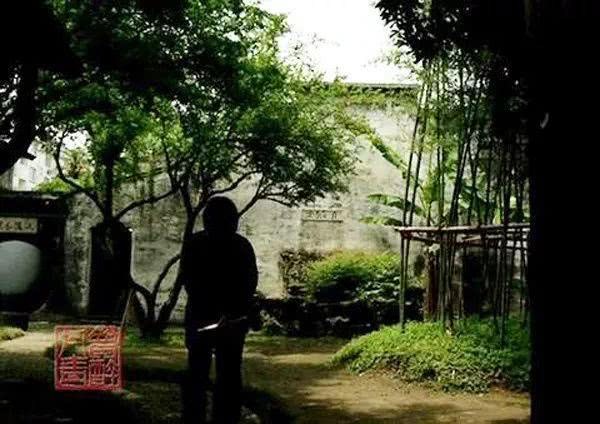
This is the former residence of Xu Wei. The moment you step into the Green Vine Studio, his former home, you are greeted by green bamboo, banana plants and pomegranate trees. It is a very tranquil courtyard with white walls and grey tiles, in the Huizhou architectural style. And Xu Wei's study is filled with a rich literary atmosphere.
Painter and calligrapher Wang Hua said: "When I walked into the studio of Xu Wei's former residence and browsed the authentic works the master left behind, at that moment I felt a kind of purification of the soul, a dialogue deep within the soul. When you draw near to the master, it is as if you have returned to three hundred years ago. When I saw the master's authentic works, I felt the master was right before my eyes, with the ink seeming not yet dry."
The reason Xu Wei became the founding father of freehand flower-and-bird painting lies in the fact that his flower-and-bird paintings absorbed the strengths of various schools without being confined by them, boldly innovating and possessing tremendous creativity. His freehand paintings, whether of flowers or of flowers and birds, were all completed in a single burst of the brush; with his exquisite brushwork, between likeness and unlikeness, he created a broad aesthetic world for the viewer.
Qingyun Pu in Nanchang, Jiangxi, is the former residence of Bada Shanren. It sits on a very broad lake, surrounded by water on all sides, with a building of southern characteristics in the middle. Bada Shanren centered his life on painting; in painting he was renowned for his large-scale ink freehand works and was skilled at splashed ink, and he was especially celebrated in the world for his flower-and-bird paintings. In creation he took nature as his model, with concise brush and ink, achieving much with little, creating a lofty and sweeping style.
Painter and calligrapher Wang Hua said: "I am by nature a person who loves to dream, and several times I have dreamed of Bada Shanren. Bada Shanren's works are very profound to me. This time, when I visited Bada Shanren's former residence in Nanchang, the moment I stepped across his threshold, what I saw was a statue of Bada Shanren. Standing before the statue, I felt very close to him, with a sense of having met him before. Bada Shanren was a man of stubborn temper but rich in feeling. His brush and ink are free and unrestrained. It seemed I could hear Bada Shanren saying that painting does not take formal likeness as its standard; painting is meant to express what is in the heart, to depict the images in your heart. Use the brush in your hand to express your own thoughts, to capture its spirit and charm. These words inspired me greatly."
This is the former residence of the modern art master Wu Changshuo, located in Zhangwu Town, Anji County, Huzhou City, Zhejiang Province. It is a deep, large courtyard house in the siheyuan style. Within the courtyard a stream murmurs, and lotus blossoms cast their reflections. In his creation he constantly innovated, using extremely concise and condensed brush and ink to express profound artistic conception and give voice to rich thoughts and feelings.
Painter and calligrapher Wang Hua said: "Wu Changshuo was a master artist since the late Qing Dynasty who was accomplished in poetry, calligraphy, painting and seal carving. At a seminar on Wu Changshuo, I listened for three days to accounts of his life, and only then did I begin to understand his painting. Through that understanding, I felt that Wu Changshuo's paintings carry an extraordinary temperament. He did not simply paint the shapes of objects, but painted a spirit, a temperament. The plum blossoms he painted are firm as iron and bone, with brushwork vigorous and seasoned."
Painter and calligrapher Wang Hua's journey in search of the masters allowed him to see with his own eyes the finest artistic heritage the masters left behind, to pursue their spirit and the realm of their artistic creation. In reviewing the masters' artistic journeys, Mr. Wang Hua was inspired to firmly walk his own path in art.
"Retracing the masters' road, a journey of ten thousand li resounds; drunk in dreams, unwilling to wake, joyfully wandering among mountains and waters. In pursuing the worthy I have not shirked hardship; in visiting the sages, why fear difficulty? Before I have met the masters' faces, I often regret my heart has not yet gone far enough." This poem expresses Wang Hua's unique spiritual feelings on the journey in search of the masters, and his reverence for the masters of earlier generations.
In poverty, one cultivates oneself alone; in prosperity, one benefits all under heaven. Mr. Wang Hua is both an artist diligent in cultivation and skilled in exploration, and also a kindly, amiable philanthropist who delights in doing good and giving generously. Over the years he has several times taken the lead in donating money and goods during disaster-relief donation drives. For many years he has actively participated in calligraphy-and-painting charity donations and charity sales organized by the China Disabled Persons' Federation, schools in poor mountain areas, the national Project Hope, the Red Cross and other organizations, and has thereby won widespread praise from leaders at all levels and received broad respect and attention from society.
Although Mr. Wang Hua labors in the garden of calligraphy and painting, he loves reading, delights in studying literature and history, and is skilled at reflection. Whether writing prose, composing poetry, filling in ci lyrics or drafting couplets, literature and art may truly be said to be interconnected in him. His essays, miscellaneous talks and informal sketches are witty and humorous, with a sharp and incisive style. Decades of creative practice have formed a distinctive and uniquely personal style.
Painter and calligrapher Wang Hua is a man who has had dreams all his life. His study bears the elegant name "Dream Flower Studio." In pursuing and fulfilling his dreams, he enacts the dream of life's ideals, the dream of ink and color.
The journey in search of the masters let the seeker experience the masters' spiritual world, gain purification of the soul and the code of life, obtain the predecessors' and masters' insights into art and their pursuit of life, and feel the masters' grand boldness in courageously innovating in art and seeking breakthroughs through reform.
The reason the outstanding culture of the Chinese nation endures unbroken and flourishes with abundant branches and leaves is precisely because of the unremitting pursuit and quiet cultivation of painters and calligraphers like Wang Hua, which will bring a cultural spring of a hundred flowers in full bloom and brimming with vitality.