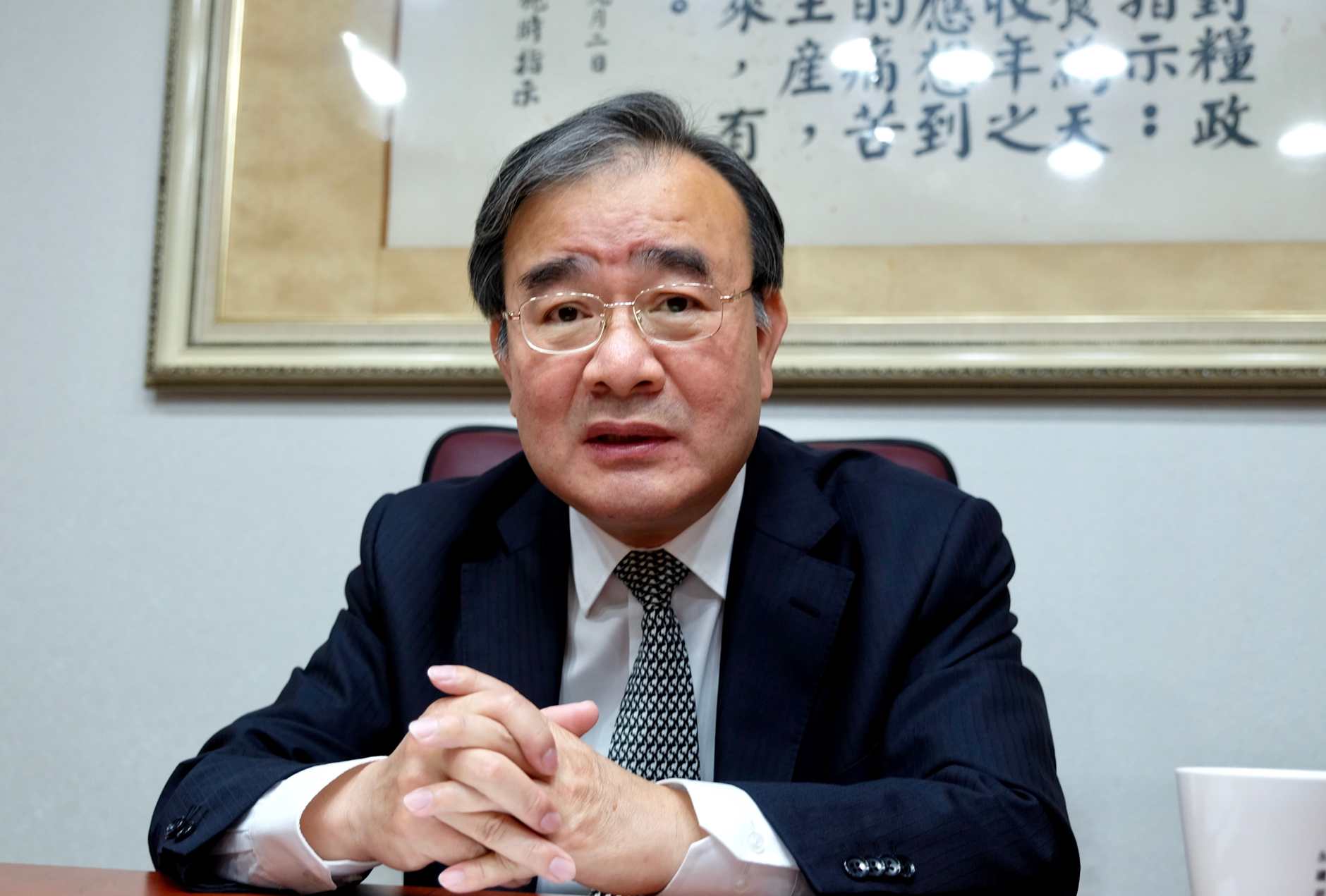
Exclusive interview with new Director-General of the Agriculture and Food Agency Hu Chung-yi: Taking office at a critical moment to transform the agricultural system
Amid extreme climate and globalization, agricultural production is plagued by problems, and the traditional government department operating model is like a slow elephant, clumsy at coping. Since the start of this year, multiple crop production and marketing imbalances have repeatedly sounded alarm bells. In mid-July, Hu Chung-yi took office at a critical moment as Director-General of the Agriculture and Food Agency.
Hu Chung-yi holds a doctorate in agricultural economics from the University of Tokyo in Japan, and has conducted in-depth research on Japanese agricultural policy, farmers' cooperative organizations, and food and agriculture education. He started as a technician during the era of the Department of Agriculture and Forestry, and rose step by step through the ranks as technician and senior technician, having served in the Farmland Water Conservancy Division, Planning Division, Guidance Division, and the Representative Office in Japan. He has a broad network and is extremely familiar with Taiwan, China's farmers' association system and Japan's agricultural circles.
The Agriculture and Food Agency previously emphasized production while marketing was weaker. What Hu Chung-yi excels at is precisely linking agriculture with the consumer side. In the past, he was the first to advocate traceability, industrial strategic alliances, and local production for local consumption, but these were forced to stop due to a change of government. Now he is rolling up his sleeves again, though the challenges are even more severe.
Except for forests and farmed animals, all crops grown on the land fall under the Agriculture and Food Agency, including rice, coarse grains, fruit trees, vegetables, flowers, and seedlings. Of the Council of Agriculture's 120 billion budget, 30 billion is allocated to the Agriculture and Food Agency for implementation, but fallow land subsidies, public grain procurement, and fertilizer subsidies account for most of it, leaving little for flexible use. With limited funding and an outdated image, how will this veteran of agricultural extension lead the heavy elephant that is the Agriculture and Food Agency to dance? "Upstream and Downstream" conducted an exclusive interview, presented in full in a question-and-answer format.