Can a leggy succulent still be saved? Sharing practical remedies
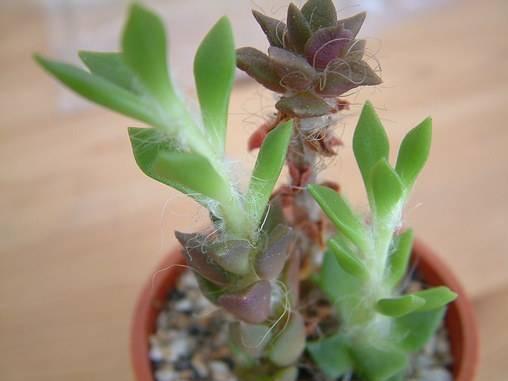
Seeing a succulent grow leggy is truly a sad thing, just like a beautiful young lady from a distinguished family who, in less than two months, has fallen to the level of a roadside beggar, not only growing thin and tall, but also with leaves that are neither plump nor green, the whole thing looks like it is malnourished yet shooting up rapidly.
So what should you do when a succulent has already grown leggy? Of course, immediately stop fertilizing (especially nitrogen fertilizer, as nitrogen fertilizer is the most likely to make succulents grow leggy), control watering and supplement light, and move it to a ventilated place for care. These measures can all, to a certain extent, prevent its growth from continuing to worsen.
But for a succulent that has already grown leggy, it is already very difficult to reverse the situation once it has grown like this. At this point, if you want it to quickly regrow thick stems and plump leaves, you can also consider giving it a "surgery". There is no other way; a succulent that has already become this ugly can only be given a "makeover".
This method is beheading! This is actually based on the principle of apical dominance in plant growth, where nutrients tend to be transported to the highest branches. The long stems of a succulent cannot shorten themselves. After beheading the succulent, its apical dominance is removed, and nutrients can be transported downward to the lower branches and leaves in a more dispersed way.
As for the length to prune, you can start cutting according to the leggy condition of the succulent, at the place where the spacing between leaves is relatively large. My suggestion is to cut off half or 2/3 of the entire succulent. The cut-off section can also be planted separately and become another pot of succulents. First place the cut-off section of the succulent in a cool place to dry, and after the wound heals, plant it in a pot.
In this way, the newly planted half section of the succulent is shorter in height, nutrients can be transported more evenly, and the leaves will more easily grow plump. As for the old succulent still in the original pot, after beheading, it will easily grow more side branches, which is what we often call growing into a "multi-headed" form. The newly grown branches and leaves will also become compact and plump.