What basic principles should be followed for summer pruning of bonsai
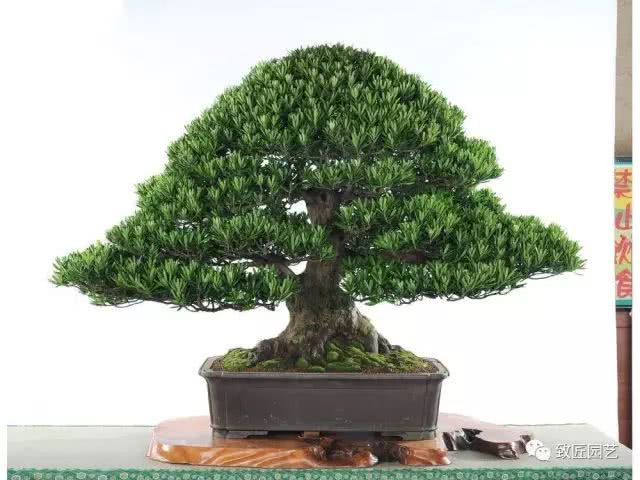
Pruning is a very important part of seedling cultivation and maintenance work. According to the growth and dormancy periods of seedlings, pruning can be divided into growth-period pruning and dormancy-period pruning, also known as summer pruning and winter pruning. Winter pruning is from December to January of the following year, while summer pruning is from April to August of the same year. Summer pruning is mostly carried out during the growing season of flowering plants or after flowering. It mainly involves tip pruning, pinching, leaf removal and cutting out dead branches, diseased branches and leggy branches, and should be carried out at the right time according to the growth vigor of the seedlings and cultivation requirements.
Summer pruning of landscape seedlings is very important. Through summer pruning, nutrients, water, hormones and other substances needed for growth in the plant can be reasonably distributed, and the effect is faster than winter pruning. At the same time, summer pruning can reasonably and promptly reshape or maintain the tree crown form, adjust the density of branches in the crown, and improve ventilation and light conditions, thereby improving the ornamental effect of landscape trees and increasing their flower and fruit quantity.
Basic principles of summer pruning
1. Maintain ventilation and light penetration in the tree crown. Ventilation and light penetration are not only beneficial to tree growth, but can also effectively reduce the occurrence of pests and diseases. Therefore, some overly dense branches should be thinned out to keep the tree ventilated and exposed to light. This is especially important for flowering shrubs such as elm-leaved spirea and ornamental peach, and measures such as leaf removal can be taken when necessary.
2. Pinch back promptly to prevent branches from growing leggy, which helps increase the degree of lignification of new branches and is also somewhat beneficial to flower bud differentiation.
3. Promptly thin out or cut back some diseased and pest-infested branches to prevent the spread of pests and diseases.
4. Promptly remove root suckers. Tree species such as plane tree and redbud are very prone to producing root suckers. Removing root suckers promptly can not only reduce nutrient consumption, but also prevent root suckers from disrupting the tree form.
Basic pruning requirements
1. The cut should be smooth and must not split.
2. When cutting back a branch, an outward-facing bud should be retained, and the cut should be 1 cm above the retained bud.
3. When pruning large branches and thick roots with a diameter of more than 2 cm, the cut must be trimmed smooth and coated with preservative.
Different pruning requirements for different seedlings
1. For newly transplanted trees, summer pruning is crucial. Newly transplanted trees, especially those transplanted in spring and topped by trunk truncation, will produce a large number of new branches below the cut. When these branches grow to about 40 cm, the main branches should be selected and retained. The retained branches should each occupy one direction, with spacing between the upper and lower branches, so that no choking occurs, and the remaining branches can all be thinned out.
2. For shaped seedlings, branches affecting the tree form should be thinned out or cut back promptly, such as shaped small-leaf privet, large-leaf boxwood, grafted white ash and shaped Chinese pine. It is worth mentioning that many people think summer is the vigorous growth period of trees, so shaped seedlings can wait until autumn for pruning. However, once shaped seedlings grow wildly, it is very difficult to achieve the best ornamental state with only a temporary effort. Therefore, during the growth period of shaped seedlings, it is wise to prune branches affecting the shape at any time.
3. For flowering shrubs that bloom in summer, pruning should be carried out immediately after flowering, such as Japanese honeysuckle, Amur honeysuckle, Japanese spiraea and rose of Sharon, to prevent fruiting from consuming nutrients.
4. For shrubs that bloom multiple times, such as Chinese rose and crape myrtle, spent flowers should be cut off at any time so that they form terminal flower buds early, bloom early and bloom more, and the flowering interval is shortened.
5. For some fruit-ornamental tree species, fruit thinning should be carried out reasonably so that the retained fruits have a higher ornamental effect.
Pruning methods for different seedlings
01Arbor trees
1. Tall deciduous trees with an obvious trunk should maintain their original tree form, with appropriate branch thinning, and the retained main and side branches should be cut back at healthy buds, with 1/5 to 1/3 of the branch removable.
2. For deciduous trees without an obvious trunk and with dense branches, trees with a trunk diameter of more than 10 cm can have branches thinned to maintain the original tree form; for seedlings with a trunk diameter of 5 to 10 cm, several side branches on the trunk can be selected and retained, and the original tree form maintained while cutting back.
3. Evergreen trees with dense branches and a round-headed crown can have branches thinned appropriately. Seedlings with branches and leaves clustered at the top of the trunk may not be pruned. When evergreen trees with whorled side branches are used as street trees, 2 to 3 layers of whorled side branches at the base can be cut off.
4. Evergreen conifers are not suitable for pruning; only diseased and pest-infested branches, dead branches, weak-growing branches, overly dense whorled branches and drooping branches should be cut off.
5. For arbor trees used as street trees, the trunk height should preferably be greater than 3 m, all branches below the first branch should be cut off, and branches above the branching point should be thinned or cut back as appropriate, while the original crown shape should be maintained.
6. The crowns of precious tree species should be lightly thinned.
02Shrubs and vines
1. Bare-root seedlings with soil balls or with native soil in humid areas, and flowering shrubs that differentiated flower buds the previous year, are not suitable for pruning; dead branches and diseased or pest-infested branches should be cut off when present.
2. Large shrubs with dense branches can have branches thinned appropriately.
3. For grafted shrubs, shoots sprouting from the rootstock below the graft interface should be cut off.
4. For small shrubs with obvious branching and flower buds borne on new branches, appropriate heavy pruning should be carried out according to their growth vigor to promote new branches and renew old branches.
5. For trees and shrubs used as hedges, shaping and pruning can be carried out after planting according to design requirements. For hedges already formed in the nursery, they should be trimmed after planting.
6. For climbing and trailing seedlings, overly long parts can be cut off, and for climbing seedlings trained onto a trellis, crossing branches and horizontally growing branches can be cut off.
Featured content