If you come across a "zouniaogou" on a mulberry tree, don't miss it, for it is now worth a fortune.
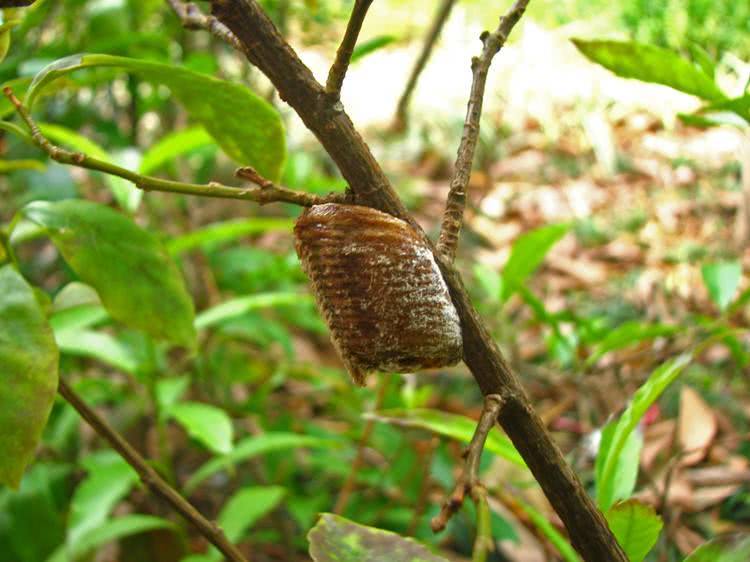
Speaking of folk "home remedies" for treating illnesses, they are all bizarre and varied, yet they are said to work wonders on even the most stubborn cases. Some of these folk prescriptions really do hit the mark with remarkable accuracy, but their raw materials are rather peculiar. Especially for children who grew up in the countryside, chances are they all have various childhood traumas inflicted by folk remedies.
Everyone experienced bedwetting as a child. If it happened too frequently, the family would start looking around for some folk remedy to treat it. The name of this bedwetting remedy is quite vivid and descriptive. Let's hear it: "zouniaogou" - eat it and you can "walk your urine" (stop bedwetting). Is the effect really that miraculous?
The raw material of zouniaogou actually has nothing to do with its name. It is the egg case of a praying mantis - put plainly, it is the eggs of the mantis. Its surface has a grayish-brown hard gelatinous protective shell, and it generally grows on the branches of mulberry trees and small shrubs.
In traditional Chinese medicine books, it has a specific name: "sangpiaoxiao" (mantis egg case). According to records, this medicine has the effects of securing essence and locking up urine, and tonifying the kidney. It specifically treats spermatorrhea, enuresis, turbid white urine, premature ejaculation, and impotence. It is also effective for gynecological inflammation with burning and leukorrhea in women. It can be decocted in water for internal use, or ground into powder for external use. So using zouniaogou to treat bedwetting does have some basis.
Zouniaogou is a common thing in the countryside, so farmers doing farm work can usually pick quite a few along the way. They are roasted dry over the stove and then given to children to eat. But making children eat this kind of egg case is rather heavy-going; many children refuse to eat it no matter what, so it is ground into powder and slipped into their food without them knowing. Quite a few rural kids ate it when they were young.
Zouniaogou, which could once be found casually in the countryside, is now worth a lot of money. In its place of origin, it reaches over 300 yuan per jin, and at the lowest it is still over 200 yuan per jin. This price is quite considerable. If you see it on a mulberry tree, don't miss it.
So gradually, more and more places have started farming piaoxiao (mantis egg cases). Because it is very difficult to breed, supply is scarce, making it one of the high-quality goods with considerable market appeal and little competition. The folk remedy of eating zouniaogou for bedwetting has long been rarely used. Bedwetting in children may also involve many underlying issues: at four to five years of age, 20% of children will experience enuresis. Secondly, enuresis may also be caused by high psychological pressure on the child or a lack of care. If the enuresis is psychological in nature, then zouniaogou is helpless to do anything about it.
Now traditional Chinese medicine is protected as a world intangible cultural heritage. Fewer people use this kind of folk remedy, but it will not disappear because of that.
Dear friends, have you ever seen this thing called "piaoxiao" before? Do you know about it? Feel free to leave a comment and share your views!