Put this flower on the balcony and leave it alone; it blooms whenever it rains, and with just watering it can burst into a full pot of flowers.
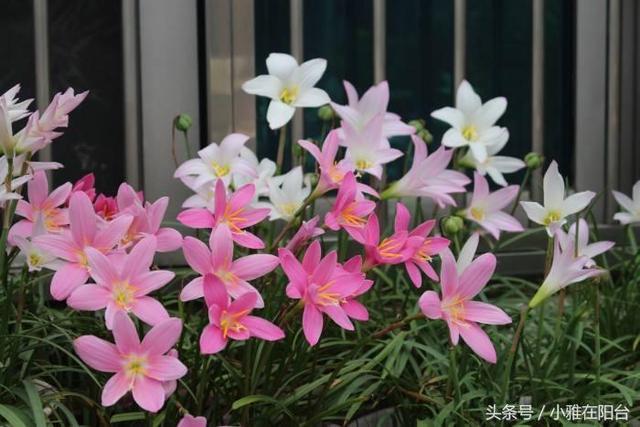
Rain lily (Zephyranthes) is a flower grown by many gardening enthusiasts, with colors including pink, pale yellow, red and so on, but rain lilies and autumn zephyr lilies (also Zephyranthes) are different: rain lily leaves are flat and thin, while autumn zephyr lily leaves are round. Rain lilies will, after a bout of rain, suddenly burst into beautiful flowers. They can bloom many times a year.
How to plant and grow rain lilies: methods and tips
Rain lilies are very easy to grow. Their rhizomes look a bit like scallions. Don't underestimate these rhizomes: just pull a few of them back from a friend's or relative's place.
Plant them in a flower pot and cover with about 3 to 4 cm of soil. Any pot except porcelain can be used. They are not picky about soil either; almost any soil will do. They can be planted in spring or autumn, and generally within a month they will grow tender green leaves.
Rain lilies love rainwater, so they are more suited to outdoor planting and growing on a terrace, though they can also be kept on an indoor balcony. They are not afraid of blazing sun, as long as the potting soil does not run short of water.
But you can put more granular soil into the mix, such as coal cinders or coarse sand, so that when it rains the water will not accumulate, which would otherwise rot the rain lily rhizomes. As long as the waterlogging is not especially heavy, they will grow tenaciously, and their growth will be excellent.
Generally, in a flower pot about 15 cm across, if you plant two or three rain lilies, after a year the pot will have multiplied into more rhizomes, growing packed full, and it will bloom more and look even better.
You can also dig the rhizomes out of the potting soil and divide them into separate pots, and you can grow many pots of rain lilies.
It is a very tough, hardy plant, with almost no pests or diseases. In winter the leaves will decrease somewhat, but the next spring it sprouts even more leaves on its own, and after a bout of rain it suddenly bursts into brilliant flowers, beautiful beyond words. Year after year it sprouts and blooms on its own, and keeping it for many years is no problem at all.
Put this flower on the balcony and leave it alone; it blooms whenever it rains, and normally with just watering it can burst into a full pot of flowers.