A Detailed Guide to the Care and Management Methods for Chinese Ash Bonsai
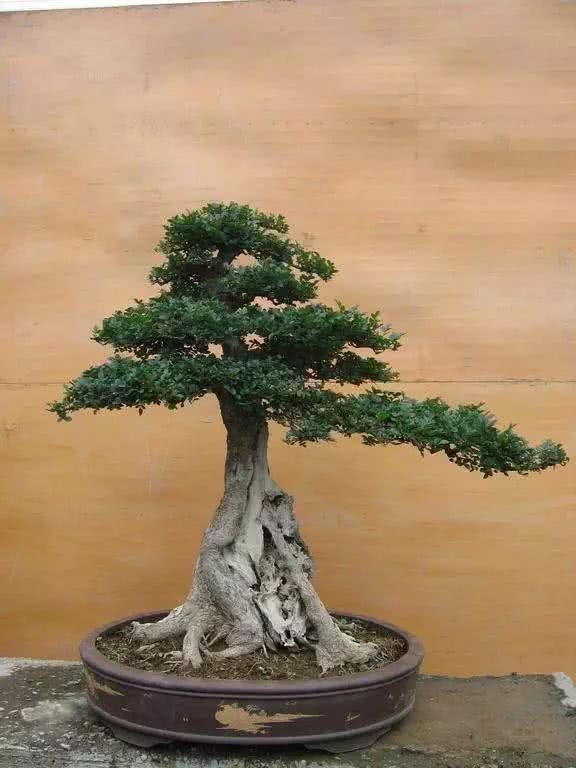
The Chinese ash (Fraxinus hupehensis) has strong sprouting ability and grows fast. In today's fast-paced world, it happens to provide bonsai enthusiasts with creative space and a medium. I believe this is exactly where the Chinese ash's advantage over other bonsai tree species lies. In the process of growing Chinese ash bonsai, such situations often arise: near an already formed branch pad, a new bud suddenly appears at a better position. I then unhesitatingly cut off the already formed branch pad and use the new bud to cultivate a new branch pad. Although this delays the time it takes for the bonsai to take shape and affects the bonsai's circulation, bringing short-term economic losses, the sense of accomplishment brought by the improvement in the work's quality cannot be measured in money.
Methods and steps:
First, timely bud removal.
Every year the Chinese ash has two peak growing seasons, in spring and autumn. In spring, all things revive and the land is full of warblers flying and grass growing, and it is also the time when the Chinese ash sprouts the most new buds. At this time, new buds growing in unwanted positions should be promptly removed. After the Chinese ash passes through the brief dormancy of midsummer, it welcomes a second growth peak in mid-to-late August each year. Although the new buds this time are fewer than in spring, they must also be removed in time.
Second, dryness and moisture
?The most important thing in keeping a Chinese ash bonsai at home is to master dryness and moisture well, generally following the principle of "do not water if not dry, water thoroughly when you do." So-called dry means the surface soil of the pot is about to turn pale, feels non-sticky when rubbed by hand, and starts to dust, indicating it is time to water. The watering amount is best at a volume of two-fifths of the pot. Generally, there is a certain water-holding space from above the surface soil to the pot rim. Fill it once, and after no standing water is seen, water once more for best results. In spring and autumn, about once every three to four days; in summer, once a day; in winter, once a week or even longer, depending on the amount of water evaporation. Usually, the best watering time is around eight or nine in the morning. For bonsai placed outdoors, attention should be paid during the rainy season to promptly clearing accumulated water, to prevent the plant roots from dying of suffocation due to lack of oxygen.
Third, light intensity
All things grow relying on the sun. In spring, summer, and autumn, bonsai must be placed in a place with ample sunlight (except for intermittent shading in midsummer to avoid direct strong light). For bonsai that must be placed indoors for home display, they must also be placed on a balcony for at least one day every three days. All things grow relying on the sun. In spring, summer, and autumn, bonsai must be placed in a place with ample sunlight (except for intermittent shading in midsummer to avoid direct strong light). For bonsai that must be placed indoors for home display, they must also be placed on a balcony for at least one day every three days,
Third, ambient temperature
Generally, the suitable ambient temperature for bonsai is 20°C to 35°C. Below 15°C, the plant enters the winter dormancy period and stops growing. Below 5°C, frost damage can occur, and southern plants basically cannot survive at this ambient temperature. Above 35°C, some plants may also exhibit summer dormancy. The timing of moving bonsai into a greenhouse must be grasped well. In autumn, they can be brought indoors about ten days after Frost's Descent. Bringing the plant indoors after it has experienced one or two light frosts is beneficial for the next year's sprouting and flowering. In spring, they should be brought out around Grain Rain. Bringing them out too early will cause spring frost damage due to the obvious alternation of cold and warm. The Chinese ash has extremely strong adaptability, with no adverse reactions or diseases from low temperatures of -20°C to high temperatures of 40°C, so do not worry too much about temperature.
Fourth, shape control
Generally, what we buy are already established stock, and the major aspects usually do not need modification. Prune the leggy branches, and during pruning maintain the original form. But you can also prune according to the shape you want. The extent of pruning basically causes no harm to the tree. The main pruning seasons are spring and autumn.
Fifth, potting soil
The growth of bonsai cannot be separated from potting soil, but the potting soil must be nutritious. For household bonsai cultivation, generally eggshells, as well as chicken and fish bones, are crushed and mixed into the potting soil. This little bit of fertilizer is not enough for bonsai growth. We also need to regularly replace the potting soil, generally once every 2 to 3 years is fine.
Sixth, pests and diseases
Insect pests are generally invisible to the naked eye. If the branches and leaves at the affected area have obvious beetles, a small number can be scraped off manually. If there are many, you can spray with essential balm mixed with water. For aphids and mites, insecticides are needed.
If you like it, tap follow and share.