How to grow spider plants without yellowing leaves? Remember these 3 methods, and they will be full of little spider plant babies
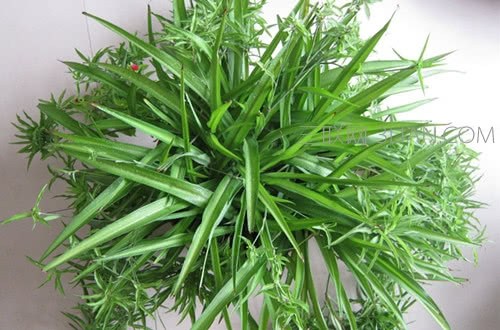
The spider plant (Chlorophytum comosum) is one of the foliage plants grown in pots by gardening enthusiasts. This plant has glossy green leaves, stays evergreen all year round, and when placed indoors it can also filter dust, giving it high ornamental and air-purifying value. The spider plant is not difficult to care for; as long as you master a few little tricks, you can grow it beautifully, and it will rapidly send out "little spider plant babies".
Next, let me share how a veteran gardener who has grown flowers for more than ten years cares for spider plants. He simply does these "3" things well year after year, and that is why his spider plants grow more and more vigorously. What are these three things?
1. Regularly give spider plants "rice water" to drink
Spider plants like to grow in loose, fertile, humus-rich "slightly acidic" soil. Regularly watering with rice water can adjust the pH of the potting soil to slightly acidic. This in turn benefits the rooting and growth of spider plants. There are also some finer points when using rice water, for example it needs to be fermented first. Some gardening enthusiasts say you can just water flowers with rice water directly. If it is not fermented first, it will ferment in the pot after watering, easily generating a large amount of heat that burns the roots.
Rice water sealed for half a month is enough to complete fermentation. To reduce the odor, you can add a little orange peel during fermentation.
2. Regularly feed spider plants "rotted soybeans"
As everyone knows, if you want the leaves of flowers and plants to grow green and sturdy, nitrogen fertilizer is indispensable. And for the spider plant, a foliage plant, if nitrogen fertilizer is sufficient, it will naturally grow like crazy and rapidly send out little spider plant babies. Soak soybeans, then cook them and seal them in a mineral water bottle; fermentation is complete in half a month. The fermented soybeans can serve as a natural organic nitrogen fertilizer. Bury a few grains in the spider plant's pot every month, and it will naturally grow more and more vigorously.
3. Regularly "change the pot and soil" for spider plants
The root system of spider plants grows very fast. In a small flower pot, the soil is limited to begin with. Once the roots become thick and strong, the potting soil will become more and more nutrient-poor. Even if you do not repot for a year, there will be no soil left. At this time, be sure to remember to repot often, so as not to block the spider plant's roots from drawing out and absorbing nutrients. A veteran gardener who has grown flowers for many years usually repots once every half a year - really diligent, isn't he? This is also what makes his spider plants better than anyone else's. Repotting can be done in autumn or spring, either is fine.
If you care for spider plants according to these "3" methods described above, they will definitely fill their pots quickly, and never mind little spider plant babies - even getting them to bloom will be no problem! Thank you for reading!
Remember to like and share~