Tang Monk sometimes recognizes demons yet still stops Sun Wukong from striking them, because he understands the hidden rules of Lingshan
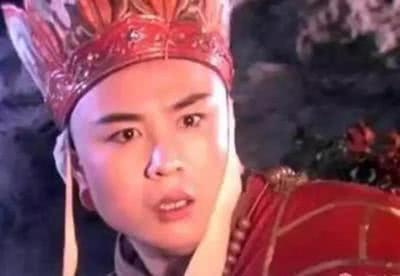
(Snail Watches Journey to the West, Issue 1930)
Text by Fanfan Jishu
As for Tang Monk in the original novel Journey to the West, we can sum him up in eight words: timid and fearful, pedantic and foolish. But is that really the case?
Timid and fearful is understandable. After all, Tang Monk is a mortal monk with no heaven-reaching powers, and on the road to the West, where demons run rampant and danger lurks everywhere, he is an obvious weakling. Although he has several disciples to protect him along the way, he cannot avoid being imprisoned and living in constant fear, and it is no small feat that he did not develop psychological problems during that time.
Compared with being timid and fearful, Tang Monk's pedantry and foolishness do not deserve so much pity, and he becomes even more a target of criticism. During the Three Strikes on White Bone Demon, he failed to tell loyalty from treachery and drove Sun Wukong away, causing the greatest injustice, and it is hard to say how many tears this drew; at Little Thunderclap Temple he stubbornly clung to his own view and walked right into the trap in the Yellowbrow Patriarch's cave, nearly ruining the great undertaking of fetching the scriptures; and before the Bottomless Cave on Trapped-Air Mountain he was even more muddle-headed, still rescuing the demon even after the demon had exposed itself, showing that his foolishness was beyond cure.
The one in the Bottomless Cave on Trapped-Air Mountain is another female demon. Female demons on the road to the West are not often seen, but there are a few formidable ones, such as the earlier White Bone Demon and Scorpion Demon. Besides their beauty, they all share one common trait: they want to outwit Elder Tang. But unlike the previous two, the White-Haired Mouse Demon not only outwits Tang Monk but also infiltrates the enemy's ranks, clearly a cut above the rest.
The White-Haired Mouse Demon had probably studied Tang Monk and his disciples beforehand and had a very accurate grasp of their weaknesses: Tang Monk has only mortal eyes and a mortal body, has an innate fondness for beautiful women, calls them "Bodhisattva" the moment he sees them, and has no sense of guard or caution at all; Sun Wukong had suffered a loss before, and "once bitten by a snake, one fears a rope for ten years", so even when he recognizes a demon he dares not fall out on the spot; Bajie and Sha Seng are entirely servile in nature and, without distinguishing right from wrong, will only side with their master. So as long as she wins over Tang Monk and pays a little more attention to the monkey, the plan can succeed.
Winning over Tang Monk is very easy; she only needs to disguise herself as a more miserable and weaker figure to succeed. Sure enough, the Mouse Demon transformed into a woman in distress, tied herself up in the woods, and with just a few soft cries summoned Tang Monk over. Tang Monk was very cooperative and immediately wanted to rescue the demon. Sun Wukong's fiery golden eyes saw through the trick and in the end managed to talk him out of it.
Although the first exchange failed, it strengthened the Mouse Demon's confidence. Tang Monk did leave with the monkey, but he was extremely conflicted inside. This proved that her earlier judgment was correct, and that with just a little more fuel, she could succeed. Therefore, she shouted out a sentence from afar that completely captured Tang Monk's heart: "Master, if you will not save a living person's life, what scripture are you fetching with a false heart toward Buddha?" The book says that this sentence, carried by a favorable wind, blew directly into Tang Monk's ear, and the several disciples did not hear it.
This sentence from the Mouse Demon was indeed very powerful, striking directly at the core values of Tang Monk: if one does not relieve suffering and save the distressed and deliver all living beings, what use are meditating on Zen, cultivating Buddhism, and discussing scriptures and the Way?! At this, the old monk completely surrendered and made up his mind to rescue the demon. Sun Wukong tried to dissuade him again, but Tang Monk could no longer take it in as before; instead, he put on the face of a master: "Disciple, the ancients said, 'Do not fail to do a good deed because it is small; do not commit an evil deed because it is small.' Go and save him." These words not only explained his own reasoning but also carried a note of criticism toward the monkey. The monkey was quite displeased on hearing this: "Since you insist, Master, it is just that this burden is one old Sun cannot bear. If you want to save him, I dare not keep urging you; if I urge you a while, you get angry again. Save him if you will." The monkey threw a tantrum and shirked the task, and Tang Monk's stubborn temper flared up too: "Monkey, say no more! You sit here, and wait for me and Bajie to go save him."
Tang Monk returned a second time and rescued the demon, and the key was that sentence she had just said: "Master, if you will not save a living person's life, what scripture are you fetching with a false heart toward Buddha?" These words were extremely effective, and presumably the Mouse Demon had thought them out carefully. However, this sentence is only useful against foolish people like Tang Monk; applied to anyone else, it would probably have quite another effect. After meeting the Mouse Demon, Tang Monk had several conversations with her, but he never mentioned his own identity. If she were truly a weak woman in distress, how could she know that this old monk was going to the West to worship Buddha and fetch the scriptures? The one going to the West to fetch the scriptures was only Tang Monk and no one else; could this weak woman know things before they happened? Because the Mouse Demon's words were too targeted, they lost their concealment and laid herself bare.
Tang Monk did not notice such an obvious flaw, and still with the best of intentions wanted to save her, even stubbornly falling into conflict with his disciple. No wonder Sun Wukong said of him: "When Master starts being kind, there is no medicine that can cure him."
Recklessly dispensing kindness while also being extraordinarily stubborn, this is probably the root of Tang Monk's foolishness. Many people in real life are like this too: without distinguishing black from white, right from wrong, loyalty from treachery, good from evil, they blindly practice benevolence and universal love, and are especially insistent on their own views and stubbornly obstinate. The result is often being deceived, harming others and themselves, and regretting that they were too foolish back then.
However, some people also point out, could Tang Monk really not see through those demons? Or, having once suffered a loss, why must he suffer losses again and again? In fact, he understood one hidden rule of Lingshan: if he reached the West too smoothly and did not go through the eighty-one tribulations, he still could not obtain the true scriptures! Facts proved this to be so: after Guanyin did the accounting, they were one tribulation short, and it was made up for them!