Why do succulent leaves become lighter in color and grow long and thin?
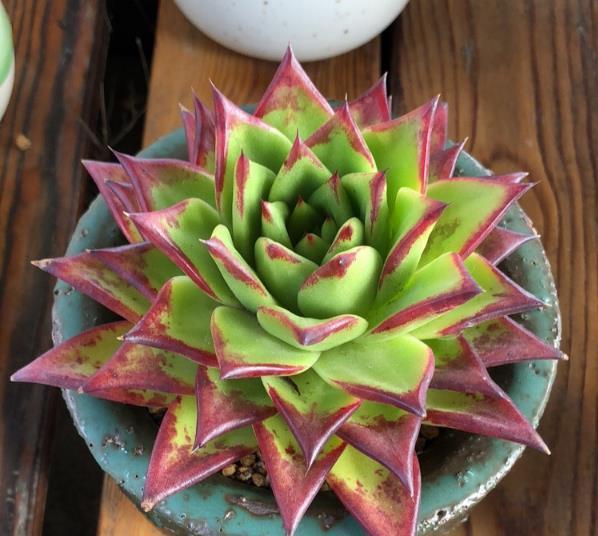
When succulent leaves become lighter in color and grow long and thin, this indicates the succulent is etiolated. Poor light and too much water cause succulents to etiolate, growing taller to increase the area exposed to light. If you want to ease or prevent succulent etiolation, you need to give them more sun, with strong light for long periods. Succulent leaves are very thick and fleshy; with strong light for short periods, succulents stay relatively short.
If you want succulents to become plump and beautiful, the most important thing is to give them more sun. Apart from needing shade in summer, they need sun in both spring and autumn. The longer the sun exposure, the better; during the growing season, it is best to exceed 8 hours, and not sunning through glass but in direct outdoor sunlight. Sunning through glass is not very effective, because glass blocks a lot of ultraviolet rays. Of course, if you do not have an outdoor growing environment at home, then place them in the spot at home with the strongest and longest light, and give them more sun. Some fragrant succulents only develop their fragrance after being sunned; the longer they are sunned, the richer the fragrance.
Many flower lovers think that watering can make succulents grow plump, but that is not the case. Too much water only makes succulents keep growing taller, and then they become etiolated. It is not more water that makes them plump; only after controlling water and giving succulents the concept of water shortage will they, over time, use their own leaves to store water, and the leaves will slowly become plump and thick.
Recently, what flower lovers discuss most is none other than that the succulents have turned green again, become etiolated, and turned ugly, to the point that they no longer even have the enthusiasm to photograph them. Still, I firmly believe that ugliness is only temporary. Summer has arrived, can autumn be far behind? In autumn and winter, they will make a comeback for everyone to see. So gladly accept their summer state, and many succulents are still adorable in summer. Even after shedding their gorgeous coat, being green and healthy is also a kind of beauty.
When growing succulents in summer, you must control water. Do not give in to the urge to water too much, because summer is both muggy and hot, and often after a thunderstorm comes strong sun. Not only do the leaves become covered with water droplets and get scorched as soon as they are sunned, but the damp soil is also muggy and hot, which the roots certainly cannot stand, making black rot extremely likely. In winter, watering should also be reduced; basically watering once a month is enough. Winter is the same: water once a month, a small amount each time, choosing a sunny noon to water, and keep the water temperature close to room temperature. If it is too cold, the roots cannot stand it. Do not water below 5°C.
In spring, it is very easy for succulents to color up; just ensure sufficient light. In summer, however, no matter how much you sun them, it is useless. Even if they get sunburned, the succulents are still green. Besides the effect of light, what other factors make succulents color up? What exactly suppresses the colorful hues of succulents in summer? Some flower lovers may already know: it is temperature and temperature difference.
Generally, 5-30°C is the suitable growing temperature for succulents. Within this range, the lower the temperature and the greater the temperature difference, the more favorable it is for anthocyanin synthesis. The higher the temperature, the faster anthocyanin degrades, while chlorophyll and anthocyanin rise and fall inversely. When the temperature reaches around 30°C, this is exactly the environment in which anthocyanin degrades quickly and chlorophyll synthesis is favored. This is also why succulents do not color up during high-temperature summer weather.
This is a gathering place for succulent plant lovers, sharing succulent care tips. Welcome to follow and exchange ideas.