How should you deal with an unhealthy root system in succulents to promote growth?
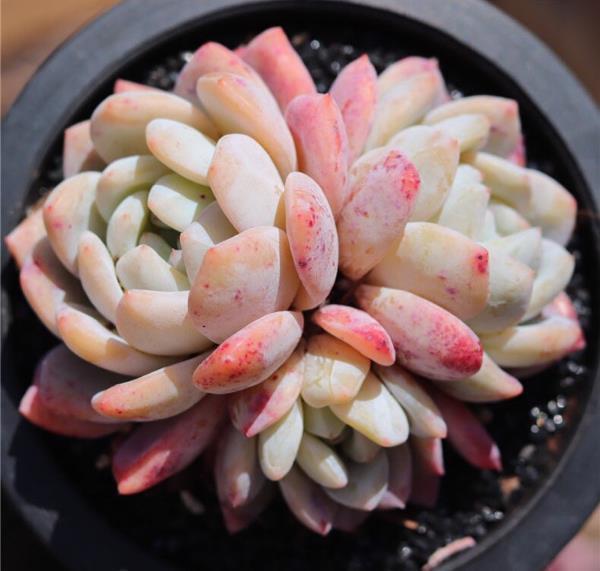
When a plant has been growing in its original pot for some time, it usually needs repotting or a soil change; there are many reasons for repotting and changing the soil, such as repotting to check the roots for pests and diseases, or simply moving the plant to a larger pot, and the interval can range from as short as a few months to as long as several years. When to repot still depends on the size of the pot as well as the variety being grown and the environment, so if at this point you find that a succulent's root system is unhealthy, how should you handle it to promote growth?
Some of a succulent's roots are problematic, and once you notice this you must remove them promptly; old roots and the like can also be cut off, because for a succulent's growth, the clearer the root system's goal, the clearer its goal of absorbing nutrients and supplying nutrients. If you find insect eggs on the roots, not only should you carefully remove the excess soil with a sponge, but after trimming the roots you must soak them in a carbendazim solution, then dry them, and once they have healed on their own, move the plant to a new pot. After repotting, the succulent should be kept in a ventilated, shady place for about 2 weeks, and once you see growth, gradually introduce it to sunlight.
When repotting succulents, check for insects; insects spread very quickly, and if they are not cleaned off thoroughly they will harm other plants. The treatment is also very simple and requires no chemicals at all; just wash with water, and if there are many insects, soak the plant in clean water for 10 minutes, then rinse it again. Simple washing and soaking may not remove them completely. You can use carbendazim to soak the succulent. Carbendazim cannot kill insects, but it can reduce the chance of mold infestation and can also improve the succulent's resistance later on. After washing, the succulent must be dried before planting; although it can be planted without drying, it is prone to disease. The drying time is 2-3 days, and during drying you should avoid direct sunlight and keep the plant in a well-ventilated, dry place.
You can choose to repot before the warmth of spring arrives; many people say changing the soil is necessary every year, but the cacti we usually grow are not repotted every year, while some plants do need repotting every year, such as Lithops. Trim the roots of the Sedum; many Sedum may carry old leaves, so remove the old leaves and trim the roots. Sedum whose roots have been trimmed should be left to air-dry for a few days so the wounds dry out, or you can apply carbendazim to the wounds and let them dry. Gently place the Sedum whose roots have been trimmed and whose old leaves have been removed on the growing medium, without burying it deeply; if the roots have not been trimmed, you can use tweezers to hold the roots and insert them into loose growing medium. Around the Sedum, spread your preferred granular growing medium, such as small stones, to hold the Sedum in place. The root crown of the plant, that is, the spot without fibrous roots, does not absorb water or nutrients and is also the part most prone to rotting; covering it only with small stones and not burying it in soil also helps with ventilation and air flow.
Everyone should not be afraid to touch a succulent's roots; in fact they are not as fragile as we imagine, and sometimes we need to take the initiative. For example, for newly purchased succulents, it is highly recommended that you trim the roots right away. And when watering a healthy succulent, just water until it flows out from the bottom of the pot; do not pour it directly on the plant, but water around the edge of the pot, and do not use the soak method. Whether watering is needed depends on the plant's condition, following the principle of watering thoroughly only after the soil has dried out completely. Light has a great effect on plants, and spring, summer, autumn and winter will all cause different changes in plants; the leaves of Sedum types tend to turn red or yellow, while Haworthia types need semi-shade light.
Remove the succulent from its original pot, and be sure to use a gentle technique, trying not to damage the plant's stems, leaves or roots. For the specific method of removal, you can refer to this approach: first support the upper part of the plant with one hand, then slowly turn the pot upside down, and then slowly pull the plant out of the pot, being sure to be gentle, otherwise the plant's stems, leaves and roots will certainly be damaged. In fact, repotting succulents is difficult if you make it difficult and not particularly difficult if you do not, and as long as you remember a few of the key techniques, there is nothing to fear about repotting, and when repotting you must avoid the plant's dormant period!
This is a gathering place for succulent enthusiasts, sharing succulent care tips; you are welcome to follow and exchange ideas.