Air plants die easily when watered like this. Are you watering them correctly?
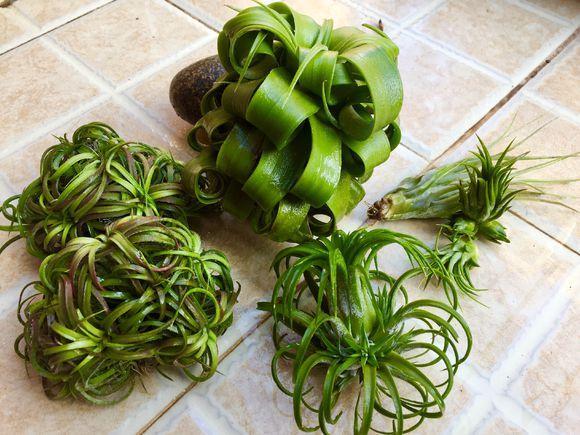
First of all, many people have not shifted away from their usual habits of growing green plants, thinking that air plants simply need a bit less water, so when they water them they pour water on the roots, and fearing the plant will die of thirst, they drench the whole plant, as if it must have a full-body bath.
If you have this idea, please stop right away. Or if you have already done the above and your air plant has not died yet, I also ask you to stop at once. It is truly a miracle your air plant is still alive. Air plants can be soaked in water, but only when they have gone a very long time without watering (for example, you were away on a long business trip and not at home) and are already extremely drought-stressed, and only for a short soak (I strongly recommend never exceeding two hours).
Key point! Beginners are absolutely not advised to use this method! And watering an air plant does not mean pouring water on its roots! Everyone needs to shift away from their usual watering habits! Its root system has actually degenerated and serves only a fixing, purely ornamental role. What it truly relies on to survive are its leaves! And specifically the countless tiny hairs on the leaves!
Now you know why air plants all look so fuzzy, right? These hairs are their weapon for absorbing water and nutrients. So when watering, spray water onto their leaves (use a spray-type water bottle). At this point, pay attention again: sometimes when you spray too much, the water droplets run along the leaves toward the middle of the plant.
At this point you should stop watering, or change the direction of spraying, for example you can also spray the back of the leaves. When spraying, try not to let water accumulate in the middle of the plant, as it rots easily. This further shows that the amount of water sprayed each time for an air plant should not be too much; you can spray a little at a time, more often. And it needs very little water.
Air plants are very drought-tolerant. Even in hot summer with high evaporation, spraying once every two days is already enough. In other seasons with less evaporation or high air humidity, the interval between waterings should be lengthened even more. The most important thing is to ensure the care environment is well ventilated, do not let it suffocate, and do not expose it to strong sun; placing it in bright, indirect light is the best choice.