Appreciation of Fine Sichuan-Style Bonsai: Discovering the Beauty of Traditional Bonsai Art
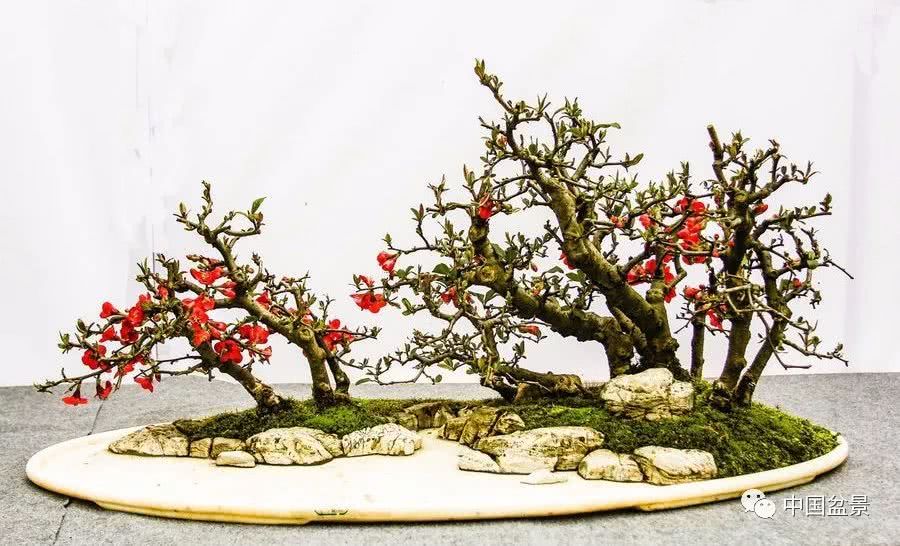
[Bonsai Enthusiast's Reflections]
Text | Fujian Xiamen @Zhou Yingzhi
When you are in the right, do not be unforgiving; when you are angry, do not lash out at others; when you feel resentful, do not target people; when you are capable, do not look down on others. Some things you see very clearly, yet cannot explain; some people you know very deeply, yet cannot figure out; some reasoning you cannot make sense of, yet it works in practice. When water is deep, it flows slowly; when speech is measured, a person is esteemed. There are two hardest things in the world: the first is to put your own thoughts into someone else's head, and the second is to put someone else's money into your own pocket!
[Highlights Replay] Appreciation of Fine Sichuan-Style Bonsai
Original photography | zero76 (Erwa Snapshots)
Shooting location: Wenjiang Park, Wenjiang District, Chengdu
Shooting date: 2015-02-12
Sichuan-style bonsai is one of the most influential bonsai schools in Chinese bonsai art. In 2011, the Sichuan-style bonsai crafting technique, with its distinctive artistic charm and unique crafting technique system, was inscribed on the third batch of the national-level intangible cultural heritage list, becoming a national-level intangible cultural heritage project and opening a new starting point for the centuries-old inheritance and development of Sichuan-style bonsai art.
Sichuan was called Ba-Shu in ancient times. In the first year of the Zhenguan era of the Tang Dynasty (627 AD), the Jiannan Dao was established, so Sichuan-style bonsai was also formerly called "Jiannan bonsai." After Emperor Xuanzong of Tang, the provincial seat was moved to Yizhou, which is present-day Chengdu, and its jurisdiction covered not only Sichuan but also parts of Yunnan and Guizhou.
The unique mountains and rivers of Bashan and Shushui, through a long historical process, gave birth to the distinctive Ba-Shu culture. According to the Records of the Kings of Shu and the Chronicles of Huayang: "From Kaiming up to Cancong, thirty-four thousand years accumulated," and "The founding of Shu as a state began with Renhuang." The Sanxingdui site in Guanghan is also sufficient to prove the long history of Ba-Shu culture.
The 6th Sichuan Provincial Bonsai Exhibition and the 1st Wenjiang Bonsai Art Festival, themed "Trees and Stones in Splendid Beauty, Spring Returns to Wenjiang," were held from February 28 to March 4, 2014, at Wenjiang Park. The exhibition area of this bonsai show was nearly 2000 sq m. From 1000 bonsai submitted by more than 100 units, including cities, prefectures, districts and counties across Sichuan Province, various parks, cultural institutions, vice-chairman units of the Sichuan Bonsai Artists Association, the Chengdu Wuhou Shrine Museum, Yiyuan, Sanyi Company, Chengdu Xinxianfeng Bonsai Flowers and Trees Professional Cooperative, Wenjiang Baihua Bonsai Professional Cooperative and the Chen Family Flower Group, nearly 200 fine bonsai were selected for display.
Highlights replay:
Chinese bonsai welcomes you!
Enjoy at any timethebonsai exhibition hall
Promote bonsai culture, exchange bonsai techniques!
Appreciate bonsai art, share a happy life!