Orchids enter a critical growth period in summer; master 4 points to easily achieve a full pot
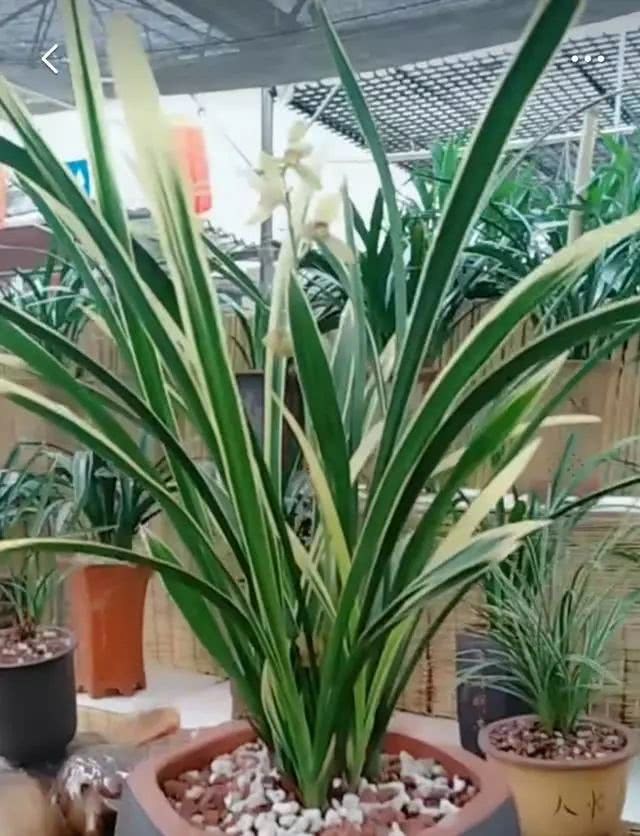
In summer, as temperatures rise, various orchids enter their growth period. Orchids like warm environments but should avoid harsh sun exposure, so summer safety issues are an important concern in orchid care. Summer is the peak growth season for orchids and a very critical one. Today I will share a few key points on summer orchid care, hoping to help you.
1. Provide appropriate shade
Summer temperatures are high. Attention should be paid to shading, ventilation and other cooling measures. Orchid temperatures should be kept within 28°C as much as possible. Open windows for ventilation so as not to damage the growth of orchid buds, which would cause orchid buds to rot and degenerate prematurely. On balconies, we must pay attention to air humidification, and install misting equipment in summer. When the sky is clear with no rain, a small amount of spraying can be done on the leaf surface, with the amount being just short of dripping, spraying about once every 3 days. When the weather is stuffy, hot and humid, do not spray the leaves, to prevent orchid buds from rotting.
2. Watering.
Orchids need eight parts dry and two parts moist. Watering should follow the principles of "water when the potting soil is dry, stop when it is wet" and "slightly on the dry side." When dry, water thoroughly; do not give half-measure watering. Watering in the early morning or evening is best. Avoid watering at noon and avoid watering directly overhead. Orchids prefer slightly acidic water, and rainwater is best. Well water and tap water that contain no salt or alkali can also be used. Avoid letting the orchid's growing medium be heated by the sun and then watering with cold water, as such a large temperature difference will damage the root system and affect normal absorption. Summer orchid root rot, black spots on leaves, rotting leaf buds and other problems are mostly related to improper watering.
3. Pay attention to fertilizing.
Orchid fertilizing should use a fertilizer complete in nitrogen, phosphorus and potassium, and the concentration must be low; very dilute organic liquid fertilizer can be applied. Generally, when there are new shoots, a small amount of liquid fertilizer can be used several times. It is best to fertilize in the evening, then water it again in the early morning of the next day. When orchid leaves are yellow and thin, they are lacking fertilizer. They should be given a topdressing. If leaf tips are scorched, it means too much fertilizer has been applied, and fertilizing should be stopped. Rainy days and high summer temperatures are not suitable for fertilizing. In summer, a potassium dihydrogen phosphate solution can be sprayed on the leaves once every 10 days at a ratio of 1:1000 to promote leaf growth. Newly planted orchids, orchids infected with disease, and weakly growing orchids must not be given root fertilizer.
4. Pay attention to pruning,
Generally, for orchids 3 years or older, the upward part of the pseudobulb has little value and should be pruned off. In addition, promptly remove leaves with pests and diseases, which can reduce infection of nearby orchids and avoid spread. After flowers fade, the spent flowers and withered grass should be cut off promptly to promote new flower growth and avoid excessive consumption of nutrients. Generally, for 3 robust Cymbidium goeringii seedlings that have produced 2 new shoots, 1 flower bud should be retained; for 2 robust Cymbidium ensifolium plants that have newly produced 4-5 shoots, no more flower buds should be retained; Cymbidium sinense has strong adaptability and stress resistance, so some buds and flower buds can be appropriately retained; Cymbidium kanran and others are not as good as Cymbidium sinense in conditions, so if there are few plants, fewer new shoots should be retained and no flower buds should be kept.