Commonly known as "intestine-clearing sand," this giant wild edible has extremely strong toxicity, yet it makes a superb tofu.
A recently trending internet-famous snack, konjac shreds, tastes spicy and refreshing. Similar products include konjac vermicelli, konjac noodles, tripe-style konjac snacks, and other tastebud-pleasing items, and there is even nutritional meal replacement made from konjac, such as weight-loss lotus leaf konjac powder, oat konjac biscuits, and other handmade coarse grains. Can you believe it? This delicious and healthy internet-famous konjac actually looks like a corn cob growing on a mallet, and the whole plant is toxic?
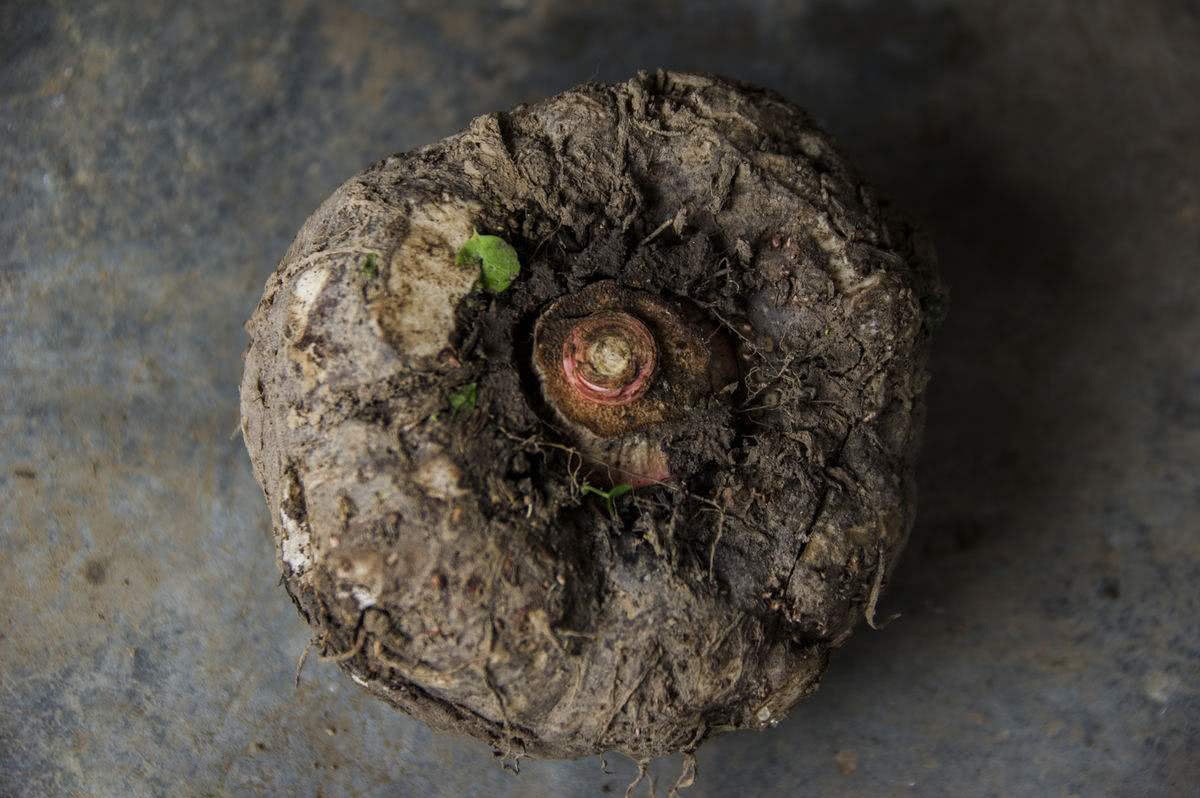
First, let's understand what konjac actually is: konjac, scientific name Amorphophallus konjac, is a perennial herbaceous plant in the Araceae family, genus Amorphophallus. In Jiangxi, people call it many names: huagenglian, tiger palm, snake-head-root grass, flower-umbrella handle, and wild taro. It grows in open woodlands, and the plant is 40-70 cm tall. The tuber growing in the ground is oblate-spherical and very large, about the size of a pumpkin, making it truly a "giant" wild edible. The stem is relatively smooth, the petiole is thick, the flower is large and foul-smelling, and the crown bears oval seeds that look similar to a corn cob.
Konjac smells foul, and combined with its rather bizarre appearance, the konjac flower somewhat resembles a carnivorous flower, so in ancient times it was also called "demon taro." The entire konjac plant is toxic, and the toxicity is extremely strong. If eaten raw, it causes poisoning; after poisoning, the tongue and throat feel as if they are on fire, itchy and painful, and the tongue swells to twice its size. The most toxic part of konjac is the tuber.
However, when the konjac tuber is ground into powder, it makes a superb tofu, known as "konjac tofu" and commonly called "intestine-clearing sand." Whether stir-fried or cooked in hot pot, it works well, and it tastes almost like meat, with a very good flavor that makes people unable to stop eating it.
Konjac has cultivation bases in many provinces in China, including Yunnan, Guizhou, Sichuan, southern Shaanxi, and western Hubei. One ton of konjac seeds can plant 10 mu of land, and grasping the planting density is also very important. According to the characteristics of the variety, calculating the ratio of underground tubers to aboveground space and interplanting different varieties can improve land utilization.
Konjac also prefers shade. If only one variety is grown, it can be intercropped with tall crops such as corn, and corn can also provide some shade for konjac plants, improving resource utilization. The climate and terrain of the southwestern region are quite suitable for konjac growth. In some villages in the southwestern region, the whole village grows konjac to develop the economy. Because market demand for konjac is large, the economic income from growing konjac is also relatively considerable.
Konjac can be eaten by everyone, and it is especially an ideal food for people with diabetes and for obese people. There are also many ways to eat konjac in daily life. Besides making konjac vermicelli or konjac noodles, the most common home-style dish, cold-dressed konjac cubes, is simple to prepare.
If you want to eat konjac for weight loss, konjac lotus leaf powder is also an option. However, both konjac and lotus leaf are cold in nature. Taking a small amount can clear internal heat and remove toxins, achieving a certain degree of weight-loss effect, but women generally have a cold constitution, so it is not suitable for long-term consumption.
Dear friends, have you ever eaten konjac tofu or konjac shreds? You are welcome to leave a message and share!