Everyone has eaten the king of fruits, but few recognize the tree whose valuable wood sinks the moment it hits water.
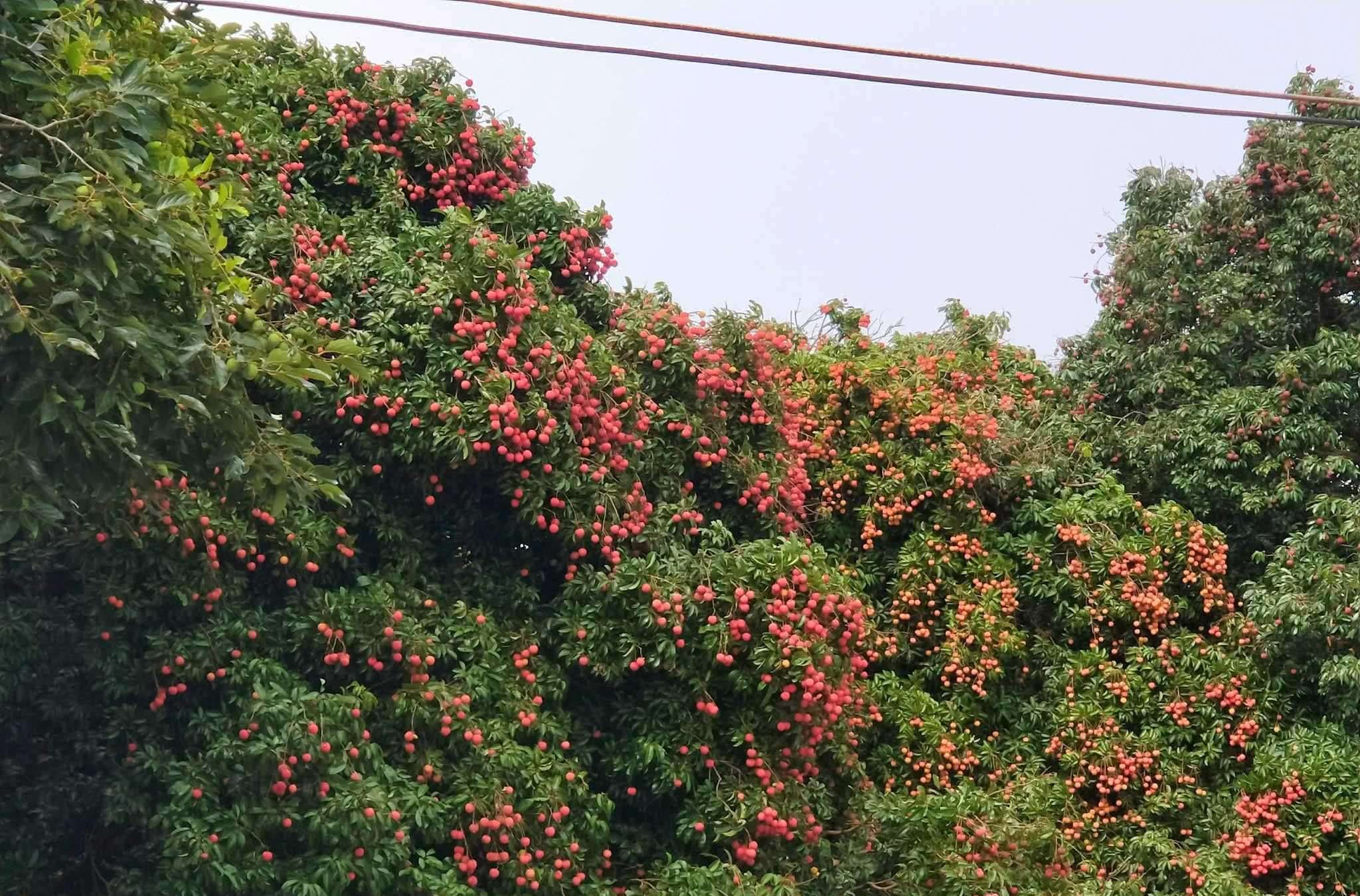
In the scorching summer, the sun's blazing heat drains people of their energy, and in such high temperatures, it seems all joy comes with steam rising off it. At times like this, I love to push open the window and take a look outside at the lush greenery, and my mood instantly lifts. Oh, look at those red fruits weighing down the branches - aren't they lychee trees? Around the time of Major Heat, it is the perfect season for lychees to bear fruit. The lychees at this time are each fresh and juicy, making people's mouths water. Things that grow under high temperatures simply have a different kind of presence.
Speaking of lychees, they are common in rural areas everywhere, yet people only eat the lychees and forget the value of the lychee tree itself. Not to mention that the lychee tree alone is a treasure, yet many farmer friends use it as firewood, which is truly a pity.
I think there is no need to say much about the benefits of lychees. How famous are lychees? Yang Guifei, the beauty of the Tang Dynasty, loved lychees, and Du Mu left behind the verse "A rider raises dust as the concubine smiles, no one knows it is the lychees arriving," while Su Dongpo had the food-lover's famous line "If I could eat three hundred lychees a day, I would not mind being a lingnan native forever." Thus, as early as ancient times, the ancients called the lychee the "king of fruits."
The grand scene back then is easy to imagine. As a native of this country, the lychee's history can be traced back over two thousand years. The origin of the name "lychee" is also somewhat interesting. When we go to buy lychees, we can see that they are kept on the branch, because if they are picked directly, they spoil immediately. Picking them with the branch attached was a preservation technique discovered by the ancients. Li Shizhen, because it rots once separated from the branch, took Bai Juyi's phrase "li zhi" (leave the branch), which eventually evolved into "lychee."
Lychees are crisp when bitten into, sweet and juicy, with an excellent taste. They are in season right now, so what better time to try them fresh?
But don't get your lips smacking just yet. Today's main character is not the lychee but the forgotten hero, the lychee tree, also called "lychee wood." Although it does not look especially tall or burly, generally only around ten meters, it has luxuriant branches and leaves, blooming in spring and bearing fruit in summer and autumn. In propagated lychee trees, the lateral roots and fibrous roots are well developed with no taproot, so the branches look crooked and winding, which is actually a major characteristic of the tree.
Many people may not know that lychee wood is actually very precious. It has extremely strong vitality and can live for over a hundred years, and it is also a Chinese medicinal herb. Lychee root has effects such as relieving stomach cold, treating qi stagnation in the chest, and seminal emission, with the effects of warming the middle and dispelling cold, and strengthening the spleen and kidneys.
In addition, lychee wood can also be used as a dye. In earlier years, fishermen who went to sea would boil lychee roots in water and dye their clothes with it. The clothes would end up brownish-red, and the dyed clothes became considerably more water-resistant. Because of the characteristics of the material, it also sparked a trend.
Now, apart from old traditional Chinese medicine doctors, many farmer friends use it as firewood, because lychee wood sinks when it enters water, and many people think it is useless. Few recognize it or know its uses, so its value is wasted.
Dear friends, do you know about lychee wood? You are welcome to leave a comment and share your thoughts!