The best succulents to grow in summer are tough and prone to filling out their pots, and the hotter it gets, the better they look
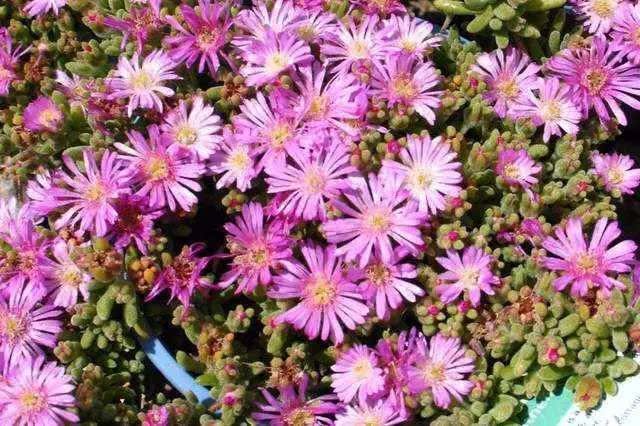
Today I'm sharing a few succulents that are very well suited to summer growing, "tough" and prone to "filling out" their pots, and the hotter it gets, the better they look! You could almost say they're unafraid of the scorching heat.
1. Drosanthemum hispidum
The leaves of Drosanthemum hispidum have a layer of transparent, light-reflecting bumps, so they look semi-transparent and richly grainy, very cute. It also has stems, and it clusters very easily. A large cluster in bloom is truly spectacular. Super tough, it can handle anything, in summer it dries down to a straw-like state, and in spring it really does grow back into a grassy clump.
2. Kalanchoe thyrsiflora
Kalanchoe thyrsiflora also belongs to the group that easily sprouts all kinds of side shoots. Water it too much in summer and the roots rot easily, but even if the roots rot, Kalanchoe thyrsiflora simply will not die. When caring for Kalanchoe thyrsiflora normally, note that it likes sun and tolerates partial shade, so it should be given plenty of sunlight. Because with sufficient light the leaves are short and broad, and when it is cool with plenty of sunlight, the leaf edges of Kalanchoe thyrsiflora take on a beautiful pale purplish-red, very attractive. In addition, Kalanchoe thyrsiflora likes dryness and tolerates drought, and hates waterlogging. Therefore, succulent growers should use a special succulent spray bottle to water appropriately, keeping the soil moist but not overly wet. Also, when watering, prevent water from splashing onto the leaves, so as not to wash off the white powder on the leaf surface.
3. Haworthia cooperi var. pilifera
It really is heat-tolerant, really does not die in summer, and also clusters and pups out in all sorts of ways. Haworthia cooperi var. pilifera is easy to care for, easily grows side shoots from the base to form clusters, is robust in habit, and cheap, making it suitable for beginners to grow. Normally it does not need much light, and is suitable for indoor growing and enclosed growing. Normally indirect light or a small amount of light is enough. If you find the leaves spreading out flat with signs of etiolation, you should increase the light a little; if you find the plant's leaf color turning gray or red, then the light is too strong and you should reduce the light.
4. Sedum adolphi
It very much likes warmth, and also requires full sun, so this succulent is very well suited to growing in summer. It likes water relatively much; during the spring and autumn growing seasons it must not be too shaded; water it thoroughly, keeping the potting soil moist, but it must not stay waterlogged. When the air is dry, spray water on the plant to keep the leaves fresh.
5. Sedum rubrotinctum 'Aurora'
The leaves are like little purple grains of rice. It likes plenty of sunlight, is purple all year round, and looks very pretty dotting a potted plant. In summer it produces small pink flowers, and the flowering period is relatively long, blooming on and off from early summer to early autumn. It is also a succulent very well suited to summer growing. The peak growing season for Sedum rubrotinctum 'Aurora' is spring and autumn; water by letting the soil dry out completely then watering thoroughly, give it plenty of sun, and with a bit less water the color turns even redder. During the high-temperature period in summer, shade it appropriately, and only give water after it is very dry. In winter, if the temperature cannot be kept above zero, it is better to give a bit less water. When the potting soil is dry, it can tolerate a low temperature of minus 3 degrees.
If you think the article is good, share it with your friends too
Reply "e-book" to get a professional flower-growing e-book!
Reply: plant name (such asmoney tree): to view the growing method