Soybeans Growing Too Vigorously Need Timely Growth Control to Avoid Yield Reduction
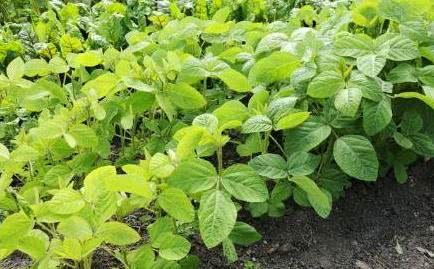
In recent years, more and more growers have been planting soybeans, and the soybean planting area has also been continuously increasing. However, many farmers are still not very familiar with the problems that may arise during soybean cultivation, so more problems tend to occur. For example, the problem of soybeans growing too tall mentioned today.
Signs of Soybeans Growing Too Tall
Soybeans growing too tall is what we commonly call excessive vegetative growth. The main signs of excessive vegetative growth in soybeans include very vigorous growth during the growing period, oily green leaf color, dense leaves, overly tall branches, and difficulty entering the field. In addition, smaller inner leaves, yellowing, and few flower clusters all indicate that the soybeans are experiencing vigorous growth and excessive vegetative growth.
Causes of Soybeans Growing Too Tall
The main causes of soybeans growing too tall are insufficient grower experience and inadequate field management. In addition, unreasonable fertilization during the soybean growing period, excessive use of nitrogen fertilizer, large water supply, and sufficient light can all cause soybeans to grow too tall.
Consequences of Soybeans Growing Too Tall
When soybeans grow too tall, the main stem becomes too thin and lodging resistance weakens. In addition, because of excessive height, nutrients are mainly supplied to the leaves, causing flower and leaf differentiation to be too late and reducing flower clusters. Also, when soybeans grow too tall, the plants become weak and their disease resistance decreases. The soybeans stay green late, seed setting is delayed, and this directly causes soybean yield reduction.
How Should Soybeans Growing Too Tall Be Controlled?
For soybeans growing too tall, the natural solution is timely and reasonable growth control.
First, in terms of fertilizer, reduce or stop using nitrogen fertilizer. This is because nitrogen fertilizer promotes soybean leaf growth and can easily further cause soybeans to grow too tall. In addition, soybean roots have rhizobia, and rhizobia themselves have a very good nitrogen-fixing effect.
Second, remove leaves in a timely manner. When soybeans grow too tall, overly dense leaves reduce air circulation and light penetration between soybean plants, leading to lower flower bud differentiation. Generally, when thinning leaves, cut off one leaf every other leaf according to the plant's growth condition. Properly pinch off the tips, and some side branches with fewer flowers and pods can be considered for direct removal so that nutrients are supplied to the main branch.
Third, common growth-control chemicals can also be selected for reasonable spraying, generally paclobutrazol. However, the use of growth-control chemicals must be well controlled in terms of timing and concentration. The timing is generally at the early flowering stage of soybeans; you must wait until the soybeans flower, and if they have not flowered, the chemical must not be sprayed. The concentration must also be mixed according to the product instructions, and do not adjust the concentration arbitrarily.