What to do about succulent etiolation in summer? Improve the care environment to make the leaves compact and plump
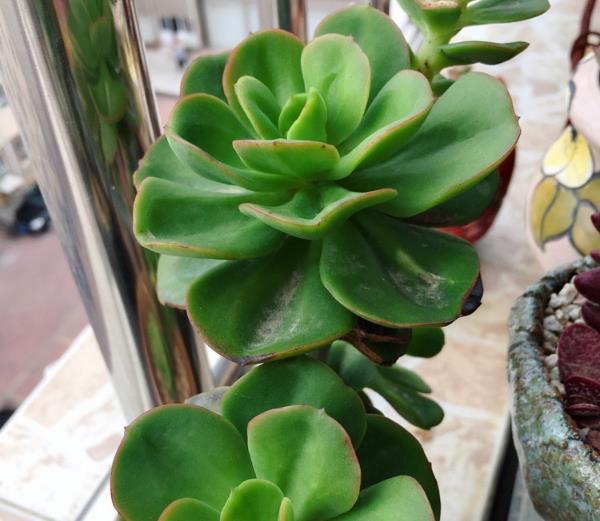
In summer, everyone says succulents need shading to prevent sunburn, but shading also causes etiolation. Generally, after shading for one or two weeks, you may notice some succulents starting to etiolate, with symptoms such as the leaf bases of the middle-layer leaves of some succulents turning white, or the growth center stretching a bit. This is really a frustrating problem. Today let's talk about etiolation and its relationship with sunlight, hoping it will help flower lovers get their succulents through the summer.
The essential cause of succulent etiolation is insufficient light. Although shading is needed in summer, etiolation should still be avoided. Etiolated succulents have poorer resistance, especially if they etiolate in early summer, making the rest of the summer even harder to get through. In addition, succulents that still etiolate in summer often indicate that they are not very sensitive to high temperatures and still have growth needs. For these succulents that etiolate as soon as they are shaded, the best solution is to increase the light a bit, giving these etiolation-prone succulents more light resources, for example at the edges of the shade net, where they receive more angled light (midday light is quite harsh and should be avoided).
When we grow them at home, due to the obstruction of high-rise buildings, the duration of direct sunlight on a balcony is generally only about 3 hours. Compared with open-air or wild succulents that get about 10 hours of sunlight a day, the sunlight duration is clearly insufficient. Under such conditions, succulents are prone to etiolation. Some balconies, however, get sunlight in both morning and evening, with a duration of more than 5 hours; open-air succulents, because shade nets are put up, have sufficient sunlight duration but insufficient sunlight intensity, which also causes succulent plants to etiolate.
Light: Winter-growing succulents basically stop growing in summer, so direct sunlight should be avoided, but they should not be placed in a dark place with no light either, otherwise etiolation may occur and affect their appearance. It is recommended to place them in a bright spot in the southwest position, or in a place that avoids direct sunlight, and pay attention to ventilation. Temperature: Although the places of origin of succulent plants are in hot regions, if the temperature stays above 35°C, attention should also be paid to ventilation and cooling. If grown at home, they should be placed indoors and kept in air circulation; when someone is home, the windows can be opened, and when no one is home, it is best to leave a gap in the windows. In addition, spreading a layer of white stones on the surface of the potting soil to reflect sunlight can also help lower the temperature.
In short, turning green in summer is acceptable, but etiolation is not so good. If it is not just a small number of succulents etiolating but a collective etiolation, then you should consider reducing the shading effect of the shade net, for example by switching to a shade net with a lower needle count, or raising the shade net higher to increase the time of angled light. Indoors, you can even consider using grow lights. After etiolation, controlling water is of little significance; it will only make the succulents grow long and thin, making it even harder for them to get through the summer. Also, by no means give etiolated succulents, or succulents that have become long and thin after water control, fertilizers such as nutrient solution. It will not make them plumper; instead, it will make them even longer.
During the rainy season, spraying water on the soil surface is also inadvisable. On sunny days, the water sprayed on the soil surface evaporates due to sunlight, and the moisture penetrates deeper into the potting soil along with evaporation. But on rainy days, the evaporation of water from the surface soil is very small, so it is difficult for the water to seep down. When the moist surface soil neither evaporates nor seeps down, it is like an airtight film covering the surface of the pot, making the inner soil even less breathable, which is not good for succulent plants' respiration.
This is a gathering place for succulent plant lovers, sharing succulent care tips. Welcome to follow and exchange ideas.