A detailed guide to Kalanchoe propagation by cuttings: these tips are worth learning
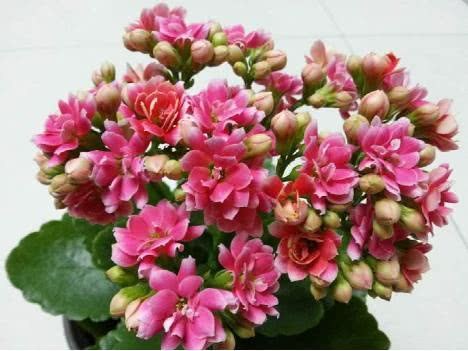
In the editor's impression, Kalanchoe is much like moss rose, possessing extremely tenacious vitality. That is indeed the case. Kalanchoe can be propagated in several ways, but to reduce the workload for fellow gardeners, the editor has selected one of the easier methods to operate, for everyone's reference.
The best time to take Kalanchoe cuttings is in May-June or September-October; propagation during this period roots easily and gives the best results. So what exactly does the cutting process involve? First, choose a mature fleshy stem; remember, fellow gardeners, do not use weak, spindly branches for cuttings, as the survival rate will be low. Next, cut a 5-6 cm length, then insert it into sandy soil, water it, and cover it with plastic film. After doing all this, place the pot in an environment with a suitable temperature; the optimal temperature range is between 15-20 degrees.
Of course, you can also choose to propagate with leaves. Fellow gardeners can pick off robust, thick leaves, wait for the wounds to slowly dry, then lay them flat or insert them at an angle in sandy soil. Keep the sandy soil moist and let the leaves slowly grow new shoots.
Notes:
The propagation medium must not be treated carelessly, as it determines whether the stems can take root. The editor suggests using clean yellow sand, sandy loam, or nutrient soil as the medium; moreover, the medium must be disinfected, and a 0.1% potassium permanganate solution can be used for disinfection.
If inserting directly into the medium, there are also requirements for the insertion depth; it is best to insert to 1/2 or 2/3 of the way. After firming the soil, fellow gardeners should water thoroughly in one go, but do not overwater, otherwise the fleshy stems or leaves will easily rot, and then you will have to start all over again.
Freshly cut fleshy stems cannot tolerate strong light, so it is best to place them under diffused light, and there is also no need to fertilize them.
There is also the issue of the cut ends: the upper cut should be flat, while the lower cut can be made at an angle; this helps prevent water loss from the upper cut that could cause the cutting to fail.
Finally, note that once new axillary buds and leaves have grown, they can be transplanted.